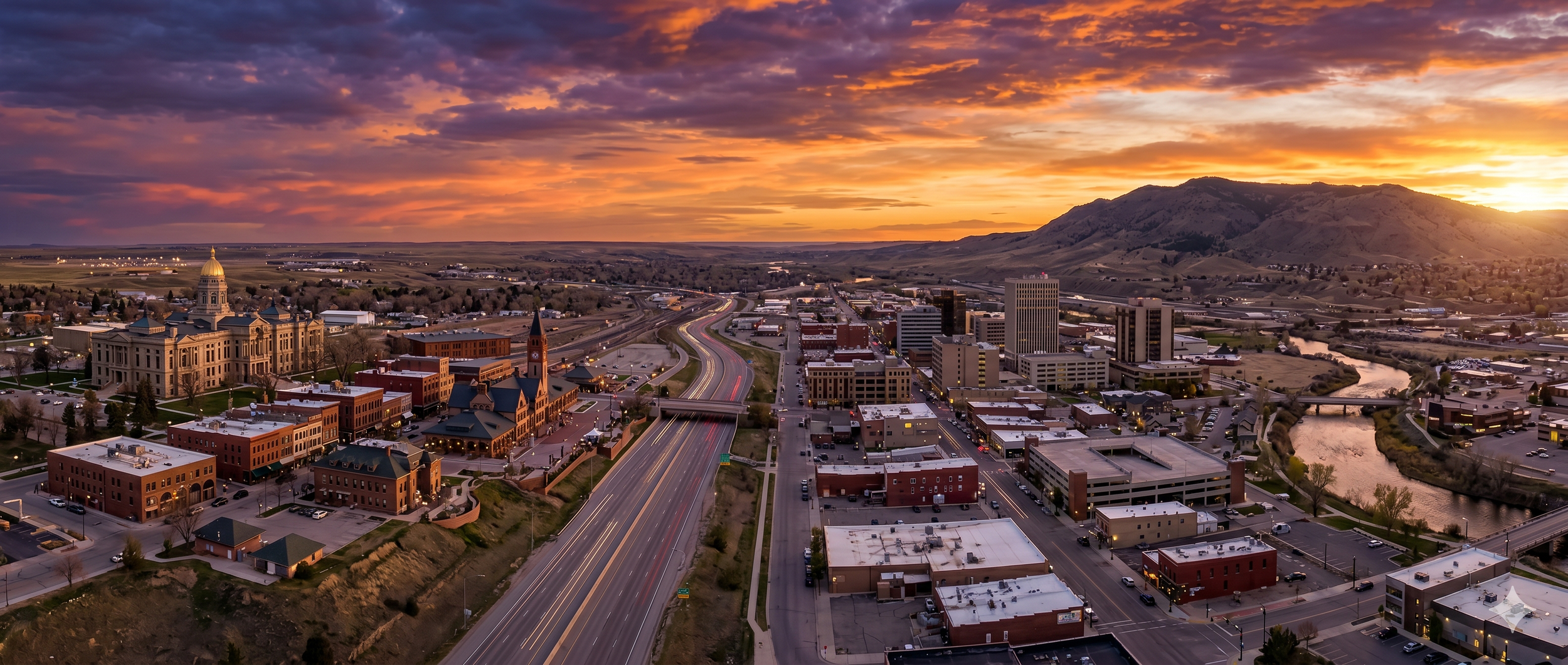
Cheyenne, WY — National Doorstep Operational Compliance Hub: Household Hazardous Waste + Electronics (Residential Free Daily Limit) — City Transfer Station
Important Compliance Note:
“Compliance Hub” is National Doorstep terminology used to identify a practical local waste,
recycling, and special-material disposal resource.
It is not an official City of Cheyenne or Laramie County facility designation.
National Doorstep provides operational waste and recycling guidance and service support—not legal advice,
a government inspection, regulatory certification, or a guarantee of compliance.
Property owners and managers should verify property-specific waste rules with the City,
the property's actual waste/recycling provider, and other applicable authorities.
Last compliance review: August 14, 2026.
In Cheyenne, the
City of Cheyenne Transfer Station — 220 N. College Drive, Cheyenne, WY 82001
is an important local resource for
Household Hazardous Waste (HHW) and
electronic waste.
[1]
City guidance states that ignitable, corrosive, toxic, poisonous, and other qualifying household hazardous materials
should not be disposed of with ordinary trash.
The City's HHW program accepts materials including
oil-based paint, pesticides, herbicides, flammable liquids, gasoline, paint thinners,
acids, pool chemicals, antifreeze, and batteries.
[1]
Why This Works: Separate Household HazMat, Electronics & Recycling From Ordinary Waste
Household Hazardous Waste:
qualifying HHW is accepted through the City's dedicated program during its specific operating schedule.
[1]
Electronics:
City and County residents may currently bring up to
three pieces of electronic waste per day at no cost.
[1]
Glass:
Cheyenne's current City single-stream recycling program accepts empty
brown, clear, and green glass food and beverage containers.
[4]
Apartment distinction:
properties using a private recycling provider should follow that provider's actual accepted-material
and preparation rules rather than assuming every private multifamily recycling container follows
the City's residential single-stream program.
- Transfer Station: 220 N. College Drive, Cheyenne, WY 82001 [1]
- HHW examples: Oil-based paint, pesticides, herbicides, solvents/paint thinners, gasoline, pool chemicals, antifreeze & batteries [1]
- Residential e-waste allowance: Up to 3 pieces/day at no cost for City & County residents [1]
- City recycling glass: Empty brown, clear & green food/beverage glass containers accepted [4]
Household Hazardous Waste (HHW): Strict Hours + Mid-Day Closure
HHW Drop-Off Hours:
Tuesday–Friday:
9:00 AM–2:30 PM
Lunch Closure Tuesday–Friday:
12:00 PM–12:30 PM
Saturday:
7:00 AM–10:30 AM
[1]
Critical timing rule:
HHW service is closed from 12:00 PM–12:30 PM Tuesday through Friday,
so schedule HHW drop-off outside that period.
[1]
Property Manager HHW Note:
the City's program is designed around household hazardous waste.
Residents can use the household program for qualifying materials generated in their homes.
Property management should not automatically aggregate large quantities of resident chemicals,
maintenance-shop materials, contractor waste, or other property/business-generated materials
and assume they can be handled as an ordinary resident HHW load.
The City specifically instructs users with
large quantities to contact the Sanitation Division at 307-637-6440.
Property managers should confirm the correct disposal pathway before transporting consolidated or business-generated material.
[1]
Electronics: Residential Free Daily Limit — Commercial Disposal Is Different
The City currently accepts a broad range of electronic waste at the Transfer Station, including:
desktop computers, laptops, tablets, e-readers, modems, drives, monitors, keyboards,
mice, cameras, televisions, printers, scanners, copiers, wires, cables, batteries,
and vape/e-cigarette devices.
[1]
Residential daily allowance:
City and County residents may bring
up to three pieces of electronic waste per day at no cost.
[1]
City guidance states that electronic components contain hazardous materials and
must not be disposed of in the landfill.
[1]
Property-Owned / Commercial Electronics:
do not apply the residential three-item free allowance to property-management or other commercial electronics.
The City states that commercial entities are charged the City's
current contracted electronics-recycling cost plus 10% for handling and processing.
Commercial users should contact the Solid Waste Division for current pricing.
[1]
This means a resident-owned television or computer and a property-owned office computer,
access-control device, maintenance electronic, or other business asset may have different disposal costs and procedures.
City Waste Containers: Keep HHW & E-Waste Out
City guidance for waste containers states that materials such as
oil, gasoline, paint, stain, pesticides, fluorescent bulbs, batteries, and similar hazardous waste
should not be placed in waste containers.
[5]
The City likewise states that items containing electronic components—including televisions,
stereos, computers, and cell phones—cannot be placed in City waste containers and directs users
to the Transfer Station's electronics program.
[5]
Private apartment dumpster distinction:
where a multifamily community uses a private commercial hauler, property management should also follow
that provider's prohibited-material and special-waste rules.
City container guidance should not be represented as the contractual acceptance list for every private hauler.
Glass Recycling: City Single-Stream Program Accepts Food & Beverage Glass
Cheyenne's current City single-stream recycling program accepts
empty brown, clear, and green glass food and beverage containers.
[4]
City recyclables must be
dry, clean, loose, and not bagged.
[4]
The City's current recycling list does not treat all types of glass alike.
Items such as mirrors, cookware/bakeware glass, window glass, auto glass, ceramics, and similar materials
are excluded from the City's single-stream recycling container.
[4]
Property manager takeaway:
if the apartment property uses private recycling collection, publish the private recycler's actual
accepted-material list rather than automatically copying City single-stream instructions.
Latex Paint Is Not HHW — Dry Completely Before Trash Disposal
Cheyenne does not classify latex paint as household hazardous waste.
City guidance says latex paint may be placed in regular trash
only after the paint has completely dried out.
[1]
City-recommended preparation:
residents may add kitty litter or sawdust to speed the drying process.
[1]
Do not confuse latex paint with oil-based paint.
Oil-based paint is identified by the City as household hazardous waste and should follow the HHW pathway.
[1]
Property Manager Operating Priorities — Cheyenne & Laramie County
- Confirm the Property's Waste Provider: determine whether the community uses City service, a private commercial hauler, or another authorized arrangement before issuing resident waste and recycling instructions.
- Keep HHW Out of Ordinary Waste: direct residents with qualifying household hazardous materials to the City's HHW program and current accepted-material guidance. [1]
- Respect HHW Hours: Tuesday–Friday HHW service is 9:00 AM–2:30 PM with a 12:00–12:30 PM lunch closure; Saturday HHW service is 7:00–10:30 AM. [1]
- Separate Resident Electronics From Property Electronics: residents may qualify for the City's free three-item daily allowance, while commercial entities are charged. [1]
- Do Not Landfill E-Waste: City guidance states that electronic components must not be disposed of in the landfill. [1]
- Manage Battery Fire Risk: batteries should follow the City's special-waste/electronics pathways rather than being placed loose in waste containers. A damaged or improperly discarded battery can create a serious collection and compaction hazard. [1] [6]
- Publish Accurate Glass Rules: the City program accepts empty brown, clear, and green food/beverage glass; private apartment recycling providers may have different requirements. [4]
- Handle Latex Paint Correctly: latex paint is not HHW; completely dry it before regular-trash disposal under City guidance. Oil-based paint follows the HHW pathway. [1]
- Call Before Large Consolidated Loads: the City instructs users with large quantities to contact the Sanitation Division. Property management should verify the correct pathway before consolidating resident or property-generated special waste. [1]
- Maintain Resident Education: keep move-in materials, resident portals, signage, and valet-trash instructions aligned with current City and property-hauler requirements.
- Document Recurring Problems: maintain records of prohibited-material incidents, resident communications, photographs, contamination concerns, bulk-waste issues, and communications with the property's waste provider.
How National Doorstep Fits Into the Property's Waste System
Compliance is operational.
National Doorstep helps multifamily property management reduce improper placement of
household hazardous materials, electronics, batteries, and other special-handling materials
by standardizing resident waste routines.
In Cheyenne, that can include resident education directing qualifying HHW to the Transfer Station
during the correct HHW hours, routing resident electronics through the appropriate electronics program,
distinguishing property-owned electronics from resident-owned devices,
and providing accurate instructions for latex paint and recycling.
National Doorstep operates upstream from off-site garbage and recycling hauling.
At participating communities, properly prepared resident-setout material can be moved from apartment doors
to property-designated dumpsters, compactors, recycling containers, or other authorized collection points
on private property under ownership or management authorization.
National Doorstep does not replace the property's municipal, commercial, private, or otherwise required
off-site waste and recycling provider unless a separate lawful service arrangement expressly provides otherwise.
Need help reviewing your Cheyenne apartment waste and recycling setup?
National Doorstep can review your doorstep workflow, resident instructions,
special-waste procedures, electronics routing, recycling instructions,
contamination process, and coordination with the property's existing waste/recycling provider.
Request a Free Waste & Recycling Operational Compliance Review
Regulatory Disclaimer:
National Doorstep Pickup, LLC is a private service provider and is not affiliated with the
City of Cheyenne, Laramie County, any City department, any waste/recycling provider,
or any other valet trash company referenced on this page.
This page provides general operational and educational information and is not legal advice,
a government inspection, official disposal determination, regulatory certification,
permit approval, or guarantee of compliance.
Facility hours, accepted materials, fees, eligibility rules, recycling requirements,
waste-provider acceptance rules, and municipal procedures may change.
Property owners and managers should verify current requirements with the City of Cheyenne,
the property's actual waste/recycling provider, and other authorities having jurisdiction.
EEAT Sources: [1] City of Cheyenne — Transfer Station (220 N. College Drive; HHW materials & hours; latex paint; residential/commercial electronics rules) | [2] City of Cheyenne — Household Hazardous Waste | [3] City of Cheyenne — Electronic Waste | [4] City of Cheyenne — 2026 Single-Stream Recycling Guide (glass; accepted materials; recyclables loose/not bagged) | [5] City of Cheyenne — Waste Container Restrictions (HHW & electronics) | [6] City of Cheyenne — Battery / Sanitation Truck Fire & Special-Waste Guidance | [7] City of Cheyenne — 2026 Solid Waste Fee Schedule
Casper, WY — National Doorstep Operational Compliance Hub: Household Hazardous Waste + Electronics + Recycling — Casper Regional Solid Waste Facility
Important Compliance Note:
“Compliance Hub” is National Doorstep terminology used to identify practical local waste,
recycling, and special-material resources.
It is not an official City of Casper or Natrona County facility designation.
National Doorstep provides operational waste and recycling guidance and service support—not legal advice,
a government inspection, regulatory certification, permit approval, or a guarantee of compliance.
Property-specific disposal requirements should be confirmed with the City of Casper,
the property's actual waste/recycling provider, and other applicable authorities.
Last compliance review: August 14, 2026.
In Casper, the
Casper Regional Solid Waste Facility — 1886 Station Road, Casper, WY 82609
is the City's primary local resource for resident-generated
household hazardous waste, rechargeable batteries, electronics, recycling, and other special-handling materials.
[1]
For apartment communities, the compliance goal is to keep household hazardous materials,
rechargeable batteries, electronic waste, and other materials restricted by City guidance
or the property's actual hauler out of ordinary garbage and recycling containers.
Casper Regional Solid Waste Facility — Location & Hours
Facility:
Casper Regional Solid Waste Facility
Address:
1886 Station Road, Casper, WY 82609
[1]
Regular Facility Hours:
Monday–Saturday, 7:30 AM–4:00 PM.
[1]
Seasonal Residential Extended Hours:
the City currently provides extended
residential-only service from 4:00 PM–5:30 PM between April 1 and September 30.
Availability is limited to designated services during that extended period, so residents should confirm
the current operating schedule before making a special trip.
[1]
- Facility: Casper Regional Solid Waste Facility
- Address: 1886 Station Road, Casper, WY 82609 [1]
- Regular Hours: Mon–Sat, 7:30 AM–4:00 PM [1]
- Resident HHW: Currently accepted at no charge; no appointment required for ordinary household quantities [2]
Household Hazardous Waste — City Disposal Pathway
Casper residents may currently drop off qualifying
household hazardous waste at no charge without an appointment.
[2]
The City's current hazardous-waste guidance includes materials such as
gasoline, pesticides, automotive oil, paint, aerosol cans, household cleaners,
rechargeable batteries, and other qualifying household hazardous materials.
[2]
These materials should be routed through the City's appropriate special-waste program
rather than being placed into ordinary City garbage containers where prohibited.
Critical Property Manager Distinction:
the Casper facility's household hazardous-waste program is for
resident-generated household hazardous waste.
The City expressly states that the facility
cannot accept hazardous waste from commercial entities.
[2]
Maintenance-shop chemicals, property-management supplies, contractor waste,
commercial cleaning chemicals, and other business-generated hazardous waste should therefore
not automatically be routed through the residential HHW program.
Property managers should identify an appropriate commercial or otherwise authorized disposal pathway
for business-generated hazardous materials.
Rechargeable Batteries — “If It's Chargeable, It's Not Trashable”
Casper specifically warns residents about the fire risk associated with
rechargeable batteries found in products such as cell phones, laptops,
vape devices, rechargeable toothbrushes, power tools, and other electronics.
[2]
Rechargeable batteries can be damaged or crushed during collection and compaction,
creating a serious fire risk.
The City's guidance summarizes the rule as:
“If it's chargeable, it's not trashable.”
[2]
Residents should route rechargeable batteries to the Solid Waste Facility's appropriate recycling/special-waste pathway
rather than placing them in ordinary garbage.
Electronics — Free City Recycling Option
The City currently states that
electronic devices and batteries can be recycled for free at the Casper Regional Solid Waste Facility.
[3]
Residents should use the City's electronics-recycling pathway for applicable household devices
rather than placing electronic waste in ordinary apartment garbage where prohibited by City guidance
or the property's waste provider.
Important:
acceptance criteria can change and not every electronic product necessarily follows the same handling process.
Verify the current City material list before transporting unusual or large electronic items.
Resident Electronics vs. Property-Owned Electronics:
do not automatically assume that a free residential recycling privilege applies to
property-management, office, maintenance, contractor, security-system, or other commercially generated electronics.
Before management transports business-owned electronics, confirm current commercial eligibility,
applicable charges, and accepted-material requirements with the Solid Waste Facility.
Apartment Property Managers — Residential SWF Passes Do Not Cover Business Waste
Casper's current Solid Waste Facility Pass rules distinguish
resident-generated waste from property-management and commercial waste.
[4]
The City specifically states that a property-management company's maintenance team
cannot use a residential SWF Pass to dispose of move-out trash.
Business-generated waste is not eligible for residential SWF Pass privileges.
[4]
Property manager takeaway:
a resident taking their own eligible household material to the facility is different from management
collecting abandoned furniture, move-out waste, maintenance materials, or other property-generated debris
and attempting to dispose of it under a resident privilege.
Casper Recycling Depots — Local Options for Accepted Recyclables
Casper operates a network of public
recycling depot locations throughout the community.
[5]
Current City locations include examples such as:
Viking Court
Huber Park
Meals on Wheels
Mike Sedar Park
Paradise Valley Pool
and additional City recycling locations.
[5]
Apartment resident option:
residents may use applicable City recycling depots for accepted materials.
Property manager distinction:
resident access to a public recycling depot should not automatically be represented as satisfying
every property-specific recycling commitment, lease obligation, ESG program, municipal requirement,
or private-hauler arrangement.
Follow Casper's Actual Recycling Material List
Casper's recycling depots accept designated recyclable materials, but the City's program is
not an unrestricted single-stream program for every recyclable-looking item.
[3]
Current City guidance includes specific preparation and material rules for categories such as
cardboard, plastics, aluminum beverage cans, and other accepted recyclables.
Property manager takeaway:
resident signage and valet-recycling instructions should match the
current City or private-recycler accepted-material list.
Do not use generic recycling instructions that may increase contamination.
Crucial Warning: Glass Is Not Accepted in Casper's City Recycling Program
This is important for resident education:
the City of Casper currently
does not accept glass through its recycling program.
[6]
The City explains that glass recycling was discontinued because transporting and processing the material
was not economically viable.
[6]
City-program guidance:
do not place glass jars and bottles in Casper City recycling depot containers.
Private apartment recycling distinction:
if an apartment property uses a private recycler, follow that provider's accepted-material rules.
Do not assume that Casper's City glass restriction automatically describes every private recycling contract.
Commercial & Multifamily Container Operations
Casper provides commercial solid-waste services and offers collection frequencies based on property needs,
including service up to multiple days per week.
[7]
Properties using City commercial collection should match container capacity and collection frequency to actual
resident waste generation rather than allowing recurring overflow.
Current City commercial guidance identifies additional charges associated with
overfilled containers and repeated violations of applicable solid-waste or bagging requirements.
[7]
Property manager takeaway:
repeated overflow is an operational warning that the community may need a larger container,
additional containers, increased pickup frequency, better bulk-waste procedures,
or stronger resident education.
Overflow & Litter Enforcement:
Casper Code Enforcement states that property owners or tenants are responsible for keeping property areas
free from litter and accumulated trash.
[8]
When litter or trash accumulates, the City may require correction.
If the condition is not corrected, the City may pursue cleanup at the responsible party's expense
or Municipal Court enforcement as allowed by applicable law.
[8]
The City specifically recommends increasing container capacity or pickup frequency when overfull containers
contribute to recurring litter.
[8]
Casper Multifamily Property Manager Operating Priorities
- Confirm the Property's Waste Provider: determine whether the community uses City commercial collection, a private hauler, or another authorized service arrangement.
- Separate Household HHW From Business HHW: residents may use the City's household program for qualifying residential materials; commercial hazardous waste is not accepted through that program. [2]
- Keep Rechargeable Batteries Out of Trash: follow City guidance for rechargeable batteries and battery-containing devices to reduce fire risk. [2]
- Route Electronics Appropriately: residents can use the City's current electronics-recycling pathway; property-owned or commercial electronics should be verified separately. [3]
- Do Not Use Resident SWF Passes for Management Waste: property-management move-out waste and business-generated material do not automatically qualify for residential disposal privileges. [4]
- Publish Accurate Recycling Instructions: use the current City or private-recycler accepted-material list rather than generic recycling guidance.
- Keep Glass Out of City Recycling: Casper's City recycling program currently does not accept glass. [6]
- Maintain a Bulk / Move-Out Procedure: document how residents and staff should handle furniture, mattresses, appliances, abandoned move-out waste, televisions, and other oversized materials.
- Prevent Overflow: increase container capacity or pickup frequency when repeated overflow occurs. [7] [8]
- Maintain Clean Enclosures: remove loose material and litter promptly and prevent recurring accumulation around dumpsters and compactors. [8]
- Document Service Issues: maintain photographs, resident notices, contamination reports, overflow records, bulk-waste incidents, and communications with the waste/recycling provider.
How National Doorstep Fits Into the Property's Waste System
Compliance is operational.
National Doorstep helps multifamily property management reduce improper placement of
hazardous materials, rechargeable batteries, electronics, glass contamination,
bulky waste, and other special-handling materials by standardizing resident waste routines.
In Casper, that can include resident education directing qualifying household hazardous materials
to the City's appropriate program, keeping rechargeable batteries out of garbage,
routing electronics through appropriate recycling pathways,
publishing accurate City or private-hauler recycling instructions,
and escalating recurring overflow or bulk-waste issues to property management.
National Doorstep operates
upstream from off-site garbage and recycling hauling.
At participating apartment communities, properly prepared resident-setout material can be moved from apartment doors
to property-designated dumpsters, compactors, recycling containers, or other authorized collection points
on private property under ownership or management authorization.
National Doorstep does not replace the property's municipal, commercial, private,
or otherwise required off-site waste or recycling provider unless a separate lawful service arrangement expressly provides otherwise.
Need help reviewing your Casper apartment waste and recycling setup?
National Doorstep can review your doorstep workflow, resident instructions,
recycling procedures, special-waste routing, rechargeable-battery guidance,
electronics procedures, bulk-waste process, enclosure conditions,
and coordination with the property's existing waste/recycling provider.
Request a Free Waste & Recycling Operational Compliance Review
Regulatory Disclaimer:
National Doorstep Pickup, LLC is a private service provider and is not affiliated with the
City of Casper, Natrona County, Casper Regional Solid Waste Facility,
any waste/recycling provider, or any other valet trash company referenced on this page.
This page provides general operational and educational information and is not legal advice,
a government inspection, official disposal determination, regulatory certification,
permit approval, or guarantee of compliance.
Facility hours, fees, accepted materials, residential eligibility,
commercial disposal requirements, recycling rules, municipal procedures,
and private-hauler acceptance standards may change.
Property owners and managers should verify current requirements with the City of Casper,
the Casper Regional Solid Waste Facility, the property's actual waste/recycling provider,
and other applicable authorities before relying on this information for a legal or regulatory determination.
EEAT Sources: [1] City of Casper — Trash & Recycling / Casper Regional Solid Waste Facility | [2] City of Casper — Household Hazardous Waste (resident HHW; prohibited commercial HHW; rechargeable battery guidance) | [3] City of Casper — Recycling & Composting (electronics and batteries; accepted recycling materials) | [4] City of Casper — Solid Waste Facility Pass FAQs (resident vs. business/property-management waste) | [5] City of Casper — Recycling Depot Locations | [6] City of Casper — Recycling FAQs (glass recycling discontinued; special-material guidance) | [7] City of Casper — Commercial Trash Service (service levels; container and commercial collection guidance) | [8] City of Casper — Litter & Trash Code Enforcement (property responsibility; overflow and cleanup)
Cheyenne, Casper, Laramie County, and Natrona County apartment owners, asset managers, regional managers, and on-site property managers: these markets operate under materially different waste and recycling frameworks.
Within the City of Cheyenne, Chapter 8.44 expressly states that mandatory recycling is in place for residential properties, including single-family homes, apartments, multiplex dwellings, trailer courts, and other properties serving residential customers.
Cheyenne's current 2026 Solid Waste Fee Schedule, effective July 1, 2026, separately classifies residential multi-units with commercial-type sanitation accounts. Commercial apartments are generally serviced by frontload containers unless the Solid Waste Administrator approves an exception, and recyclables are generally collected every other week.
In Casper, the City currently operates a community drop-off recycling system and also offers commercial garbage and recycling collection. No general City ordinance requiring every apartment property to provide onsite recycling was identified in this review. Property-specific development approvals, leases, contracts, service agreements, or other requirements should still be verified.
Important Regulatory Distinction — Cheyenne Penalties
Cheyenne's mandatory residential recycling provision appears in §8.44.010.
Separately, §8.44.030 — General Regulations establishes requirements addressing improper disposal, owner responsibility, containers, litter control, bagged trash, loose recyclables, wind control, sanitary container conditions, and other waste-handling rules.
A person violating §8.44.030 may be guilty of a misdemeanor punishable by a fine of up to $750, and each day of a continuing §8.44.030 violation constitutes a separate offense.
Do not describe $750/day as an automatic standalone fine for every recycling-program issue. The recycling mandate and the §8.44.030 general-regulations penalty should be stated separately.
Last regulatory review: August 14, 2026.
- Cheyenne Mandatory Residential Recycling: Chapter 8.44 expressly includes apartments and multiplex dwellings.
- Cheyenne Multifamily Service: commercial apartments are generally served with frontload containers; recycling is generally collected every other week under the current 2026 fee schedule.
- Casper Depot-Based Recycling: the City currently relies on community recycling depots while also offering commercial recycling services.
- Operational Compliance Support: National Doorstep can support onsite resident education, doorstep collection workflows, contamination identification, enclosure monitoring, and service documentation while ownership/management remains responsible for applicable requirements.
At a Glance: City of Cheyenne vs. City of Casper
City of Cheyenne
- Recycling Framework: Chapter 8.44 states that mandatory recycling applies to residential properties, expressly including apartments and multiplex dwellings.
- City Solid-Waste Service: each residence or building is generally required to subscribe to and pay for City solid-waste service, subject to applicable Code provisions and approved exceptions.
- Apartment Containers: the 2026 fee schedule places residential multi-units in the commercial/multifamily service category. Commercial apartments are generally serviced using frontload containers unless an exception is approved.
- Recycling Frequency: the current multifamily/commercial schedule states that recyclables are generally collected every other week.
- Loose Recycling: §8.44.030 requires recycling material to be placed loose rather than in plastic bags.
- Bagged Trash: ordinary waste placed in containers generally must be bagged to control litter, except for specified waste streams such as recyclables and yard waste.
- Owner Responsibility: the owner of property where waste is generated is responsible for disposal of that waste.
City of Casper
- Recycling Framework: Casper currently uses community recycling drop-off locations rather than universal curbside recycling.
- Apartment Mandate: no general City ordinance requiring every apartment property to provide onsite recycling was identified in this review.
- Commercial Service: Casper currently provides commercial garbage and recycling service up to six days per week, with service frequency configurable from one to six pickups per week.
- Commercial Recycling: City commercial recycling is available at reduced rates; properties should contact Solid Waste for the current service configuration.
- SWF Pass: residential SWF privileges depend on an eligible residential utility account. Property-management and other business waste does not qualify for residential SWF Pass use.
- Commercial Penalties: current City commercial guidance lists escalating $25/$50/$100 fees for bagging and solid-waste-rule violations and a $16-per-yard overfilled-bin fee.
Laramie & Natrona County Municipalities — Property Manager Waste & Recycling Information
Cheyenne is the jurisdiction in this regional review for which a clear mandatory residential recycling provision expressly covering apartments was verified. For smaller surrounding municipalities, the table uses a more conservative standard: “No comparable apartment-specific mandate identified in this review.” Property owners should verify current municipal code, service-provider rules, development approvals, and property-specific requirements before relying on a “no mandate” conclusion.
Table navigation: Swipe or scroll horizontally to view every column. The first column remains fixed.
| City / Area | Verified Recycling / Waste Framework | Relevant Information for Owners & Property Managers | Official / Primary Resources |
|---|---|---|---|
| Cheyenne (Laramie County) |
Verified mandatory residential recycling — expressly includes apartments. |
Chapter 8.44 states that mandatory recycling applies to residential properties including
apartments and multiplex dwellings.
The current 2026 Solid Waste Fee Schedule places residential multi-units in the commercial/multifamily container category. Commercial apartment configuration: apartments are generally serviced using frontload containers unless the Solid Waste Administrator approves an exception. Container type may otherwise depend on the route serving the property. Collection frequency: trash is generally collected weekly under applicable account schedules and recyclables every other week. Owner responsibilities: Chapter 8.44 addresses waste control, sanitary receptacles, closed containers, wind protection, bagged garbage, loose recyclables, and owner responsibility for waste generated at the property. If material is left outside dumpsters or residents fail to control waste and manual pickup is required, the City's current fee schedule allows an additional cleanup charge to the property owner. |
Chapter 8.44 Ordinance
2026 Solid Waste Fee Schedule Sanitation Division |
| Albin (Laramie County) |
No comparable apartment-specific recycling mandate identified in this review. |
Do not automatically apply Cheyenne Chapter 8.44 to an Albin property.
Property management should verify the current Town or contracted waste provider, commercial/multifamily account requirements, dumpster placement, pickup frequency, special-waste rules, and any local nuisance/property-maintenance provisions. Where recycling is offered voluntarily, resident instructions should match the actual provider's accepted-material list. |
Laramie County |
| Burns (Laramie County) |
No comparable apartment-specific recycling mandate identified in this review. |
Verify the Town's current sanitation arrangements before representing recycling as mandatory or municipally provided.
Property managers should maintain adequate waste capacity, prevent loose/wind-blown material, keep collection areas accessible, and maintain a separate procedure for bulky waste, electronics, batteries, hazardous materials, and other special waste. Because local service arrangements can change, confirm current dumpster and disposal procedures directly with the Town/provider. |
Town of Burns |
| Pine Bluffs (Laramie County) |
No comparable apartment-specific recycling mandate identified in this review.
Town Public Works currently provides municipal garbage collection. |
Pine Bluffs currently states that Town garbage collection occurs
twice per week and instructs customers to bag items before placing them in dumpsters.
The Town also publishes separate residential and business garbage rates. Apartment ownership should confirm whether a multifamily property is billed as residential, commercial, or under another account configuration. Do not promise an onsite recycling program unless the current Town/provider service has been verified. |
Pine Bluffs Garbage
Pine Bluffs Public Works |
| Unincorporated Laramie County | No countywide apartment recycling mandate identified in this review. |
Properties outside Cheyenne city limits should not assume access to City residential dumpsters or City multifamily accounts.
Cheyenne Chapter 8.44 states that county residents may use private haulers or dispose of eligible waste at the Transfer Station, subject to applicable rules and fees. Recyclable material generated outside Cheyenne may use designated public recycling pathways where permitted, but may not be deposited into City residential or commercial recycling containers as though it were generated at those accounts. Property managers should contract with an authorized provider appropriate for the property location and waste volume. |
Laramie County
Cheyenne Transfer Station |
| Casper (Natrona County) |
No general City apartment onsite-recycling mandate identified in this review.
City recycling currently uses community drop-off depots and optional commercial recycling services. |
Casper currently provides commercial garbage and recycling collection
six days per week, with container sizes from 1–8 cubic yards and service available from
one to six pickups per week.
Property-manager opportunity: commercial recycling is available at reduced rates, including cardboard and white-paper services. Property management can evaluate onsite commercial recycling instead of relying solely on resident self-haul. SWF Pass distinction: the residential Solid Waste Facility Pass is tied to an eligible residential utility account. A property-management maintenance team cannot use a resident pass for post-move-out waste, and business waste is not eligible for residential SWF Pass privileges. Keep recurring overflow, unbagged garbage, and loose litter under control through appropriate container size, collection frequency, and resident procedures. |
Casper Commercial Trash & Recycling
SWF Pass FAQs Recycling Depot Locations |
| Bar Nunn (Natrona County) |
No comparable apartment-specific recycling mandate identified in this review. |
Confirm the Town's current trash provider, property-account classification,
dumpster requirements, pickup frequency, bulk-waste procedures, and recycling availability.
Do not assume that Casper's residential SWF Pass privileges apply to Bar Nunn residents or apartment management. Where residents use Casper-area recycling infrastructure, verify current eligibility and material acceptance before publishing instructions. |
Town of Bar Nunn
Casper Recycling Depots |
| Mills (Natrona County) |
No comparable apartment-specific recycling mandate identified in this review.
Mills operates both residential and commercial sanitation services. |
Mills currently provides weekly residential curbside solid-waste collection and references free recycling through
Casper-area recycling depots.
Commercial/multifamily operations: Mills offers rear-load commercial collection with service frequency customizable to customer needs. The City's sanitation page requires commercial solid waste to be bagged and containers to be accessible to the collection truck. Property managers should evaluate whether a larger apartment property should be placed on an appropriately sized commercial rear-load account rather than relying on residential cart assumptions. The current Mills page also provides multiple commercial container sizes and pickup-frequency options. |
Mills Residential & Commercial Sanitation
Mills Sanitation Information |
| Evansville (Natrona County) |
No comparable apartment-specific recycling mandate identified in this review. |
Evansville's current Town information includes municipal trash-service procedures and an extra-pickup process.
Property managers should verify the exact multifamily/commercial service arrangement, dumpster account, collection frequency, bulk-item procedure, and current recycling access directly with the Town. Do not assume Casper's residential account privileges, SWF Pass rules, or commercial fee schedule automatically govern an Evansville property. |
Town of Evansville
Evansville FAQs |
| Midwest (Natrona County) |
No comparable apartment-specific recycling mandate identified in this review. |
Small-community solid-waste arrangements should be verified directly with the Town or current provider.
For any multifamily property, document:
|
Natrona County |
| Edgerton (Natrona County) |
No comparable apartment-specific recycling mandate identified in this review. |
Verify current waste service and local code requirements before representing recycling as mandatory or unavailable.
Apartment managers should maintain adequate garbage capacity and clear resident instructions for bulky waste, electronics, rechargeable batteries, household hazardous materials, and other special waste. Regional Casper recycling/disposal resources may be useful, but eligibility and account restrictions should be verified first. |
Natrona County |
| Unincorporated Natrona County | No countywide apartment recycling mandate identified in this review. |
Properties outside Casper should verify their private/municipal waste provider,
county requirements, and eligibility for regional disposal or recycling facilities.
The Casper Regional Solid Waste Facility serves a broad regional waste stream, but residential account privileges and City-specific SWF Pass rules should not be assumed to apply to commercial apartment operations outside Casper. Property management should maintain an appropriate commercial disposal pathway for move-out waste, bulk material, hazardous commercial waste, and other non-household material. |
Natrona County
Casper Regional Solid Waste Facility |
Cheyenne & Casper — Fines, Fees & Enforcement Snapshot
- Cheyenne — Mandatory Recycling: Chapter 8.44 expressly states that mandatory recycling is in place for residential properties, including apartments and multiplex dwellings.
- Cheyenne — §8.44.030 Penalty: a person violating the Chapter's General Regulations section may be guilty of a misdemeanor punishable by a fine of up to $750. Each day a continuing §8.44.030 violation persists constitutes a separate offense.
- Cheyenne — Do Not Overstate: the $750/day language should not be presented as an automatic standalone fine for every recycling mistake. The recycling mandate and §8.44.030 enforcement provision are legally distinct.
- Cheyenne — Cleanup Fees: the current 2026 fee schedule allows additional charges where material is left outside dumpsters or residents fail to control their waste and manual City cleanup is required.
- Cheyenne — Current Contamination Fees: the 2026 fee schedule identifies per-occurrence contamination/unbagged-trash charges for automated carts and larger dumpsters/Transfer Station loads. Verify the current fee before quoting a dollar amount in resident notices.
- Cheyenne — Illegal Container Placement: containers and contents placed within City limits in violation of Chapter 8.44 may be removed/disposed of, with an appropriate fee assessed to the owner under the current fee schedule.
- Casper — Commercial Bagging / Solid-Waste Violations: current City commercial guidance lists escalating $25, $50, or $100 per-incident fees.
- Casper — Overfilled Commercial Bins: current City guidance lists an $16-per-yard overfilled-bin charge.
- Casper — Habitual Callbacks: current commercial guidance lists a $25-per-incident habitual customer callback fee.
- Casper — Litter / Nuisance: accumulated trash and litter can result in corrective action, City cleanup at the responsible party's expense, or Municipal Court enforcement as allowed by applicable law.
Cheyenne, Casper, Laramie & Natrona County Multifamily Property Manager Checklist
Table navigation: Swipe or scroll horizontally to view every column. The first column remains fixed.
| Property Manager Task | Action / Regulatory or Operational Requirement | Helpful Official Resources |
|---|---|---|
| ☑ Confirm Exact Jurisdiction |
Determine whether the parcel is inside
Cheyenne, Casper, Albin, Burns, Pine Bluffs, Bar Nunn, Mills, Evansville,
Midwest, Edgerton, or an unincorporated county area.
Do not apply Cheyenne's mandatory-recycling ordinance to a property outside Cheyenne city limits. |
City of Cheyenne
City of Casper |
| ☑ Confirm Cheyenne Multifamily Service |
For a Cheyenne apartment property, confirm the City's assigned commercial/multifamily service configuration.
Commercial apartments are generally serviced through frontload containers unless an exception is approved by the Solid Waste Administrator. Confirm dumpster size, number of containers, pickup frequency, recycling container configuration, enclosure access, and any special-attention requirements directly with Sanitation. |
Cheyenne 2026 Fee Schedule |
| ☑ Keep Cheyenne Recycling Loose |
Cheyenne's Chapter 8.44 requires recycling material to be placed
loose rather than in plastic bags.
Resident education should clearly separate the property's trash-bag rules from recycling preparation rules. |
Chapter 8.44 |
| ☑ Bag Ordinary Cheyenne Trash |
Under Cheyenne's general regulations, waste placed in containers generally must be bagged,
except for specified streams such as recycling and yard waste.
Bags help prevent Wyoming wind and automated collection from scattering loose material. |
Cheyenne §8.44.030 |
| ☑ Control Wind & Overflow |
Keep dumpster lids closed when not being loaded, prevent wind and animals from scattering waste,
and address material left outside the container.
Where recurring overflow occurs, increase container size, add capacity, increase pickup frequency, or correct resident/bulk-waste procedures. |
Cheyenne Solid Waste Code
Casper Litter & Trash |
| ☑ Keep Containers Sanitary |
Cheyenne requires required containers/receptacles to be maintained in a clean and sanitary condition.
Establish an onsite procedure for spills, leaking bags, pet waste residue, loose food waste, grease, and recurring contamination. |
Chapter 8.44 |
| ☑ Confirm Casper Apartment Account Type |
Determine whether the property is on a
City commercial account, residential/shared-container arrangement, private/grandfathered account,
or another authorized service setup.
Do not assume a large apartment property receives the same services or privileges as an individual residential utility customer. |
Casper Commercial Trash |
| ☑ Evaluate Casper Commercial Recycling |
Casper currently provides commercial garbage and recycling service with customizable pickup frequency.
If an apartment property lacks onsite recycling, management can evaluate an authorized onsite commercial recycling arrangement rather than assuming residents must self-haul all recyclables to depots. |
Casper Commercial Recycling |
| ☑ Do Not Misuse Casper SWF Passes |
SWF Passes are issued to eligible City residential utility customers.
A renter qualifies only when the applicable City utility/trash account is in the renter's name under the City's current criteria. Property-management teams may not use resident SWF Passes for post-move-out trash, and business waste is not eligible for residential SWF Pass privileges. |
Casper SWF Pass FAQs |
| ☑ Keep Business HHW Separate |
Casper residents may use the City's household hazardous-waste program,
but the facility expressly does not accept hazardous waste from commercial entities.
Property-maintenance chemicals, contractor materials, business cleaning chemicals, or other commercial hazardous waste require the appropriate commercial disposal pathway. |
Casper Hazardous Waste |
| ☑ Keep Rechargeable Batteries Out of Trash |
Casper specifically warns that rechargeable batteries can cause fires when compacted.
Maintain separate resident guidance for cell phones, laptops, vape devices, power-tool batteries, rechargeable toothbrushes, and similar battery-containing products. |
Casper Battery Guidance |
| ☑ Build a Bulk / Move-Out Procedure |
Document how the property handles furniture, mattresses, appliances,
televisions, abandoned move-out material, construction debris,
and other oversized items.
Do not rely on resident disposal privileges to remove property-management-generated move-out waste. |
Casper SWF Rules
Cheyenne 2026 Fee Schedule |
| ☑ Route Doorstep Service Onsite |
Design valet-trash and recycling routes to terminate at
property-designated onsite containers serviced by the applicable City or authorized provider.
Where onsite recycling does not exist, provide residents with accurate self-haul depot guidance or help ownership evaluate an appropriate recycling-service arrangement. Do not represent doorstep collection as replacing a required municipal or authorized off-site hauling service. |
Cheyenne Sanitation
Casper Commercial Service |
| ☑ Maintain Operational Documentation |
Maintain a property waste/recycling file containing:
This is recommended operational documentation and should not be described as a government certification or guaranteed defense to enforcement. |
Cheyenne Sanitation
Casper Trash & Recycling |
How National Doorstep Supports Cheyenne & Casper Apartment Operations
National Doorstep operates upstream from off-site garbage and recycling hauling. At participating apartment communities, properly prepared resident-setout material can be moved from apartment doors to property-designated dumpsters, frontload containers, compactors, recycling containers, or other authorized onsite collection points on private property.
A structured doorstep program can support:
- consistent resident set-out procedures;
- trash-versus-recycling separation;
- resident education and reminders;
- contamination identification;
- documented service activity;
- reduced loose waste around collection areas;
- visibility into recurring overflow;
- bulk-waste escalation procedures; and
- coordination with the property's City or authorized waste/recycling provider.
National Doorstep provides operational compliance support. Property ownership or its authorized management remains responsible for applicable municipal, county, provider, lease, fire, building, nuisance, and other property-specific requirements.
Need help reviewing your Cheyenne, Casper, Laramie County, or Natrona County apartment waste setup? National Doorstep can review the property's doorstep workflow, resident instructions, container configuration, collection frequency, contamination procedures, bulk-waste process, special-waste guidance, and coordination with the existing waste/recycling provider.
Request a Free Waste & Recycling Operational Compliance ReviewThis page provides general operational and educational information and is not legal advice, a government inspection, official code determination, permit approval, regulatory certification, or guarantee of compliance.
Municipal codes, service rules, fee schedules, property classifications, collection contracts, accepted materials, residential privileges, commercial requirements, and enforcement procedures may change.
Statements that no comparable apartment-specific recycling mandate was identified mean only that no such mandate was verified in the sources reviewed for this update; they are not a legal conclusion that no property-specific recycling obligation can exist.
Property owners and managers should verify requirements for the specific property address with the applicable municipality or county, the property's waste/recycling provider, fire/building authorities, and other authorities having jurisdiction.
Authoritative Cheyenne, Casper & Regional Sources
City of Cheyenne:
Cheyenne Chapter 8.44 Amendment — Mandatory Residential Recycling & General Solid-Waste Rules
|
2026 Solid Waste Fee Schedule — Effective July 1, 2026
|
Sanitation Division
|
Recycling Program
City of Casper:
Trash + Recycling
|
Commercial Trash & Recycling
|
SWF Pass FAQs
|
Recycling Depot Locations
|
Household Hazardous Waste
|
Litter & Trash Code Enforcement
Other Municipal Sources:
Pine Bluffs — Garbage
|
Mills — Residential & Commercial Sanitation
|
Evansville — Official Site
|
Bar Nunn — Official Site
|
Laramie County
|
Natrona County
Interested in talking about how we can work together? Here's our contact info.
