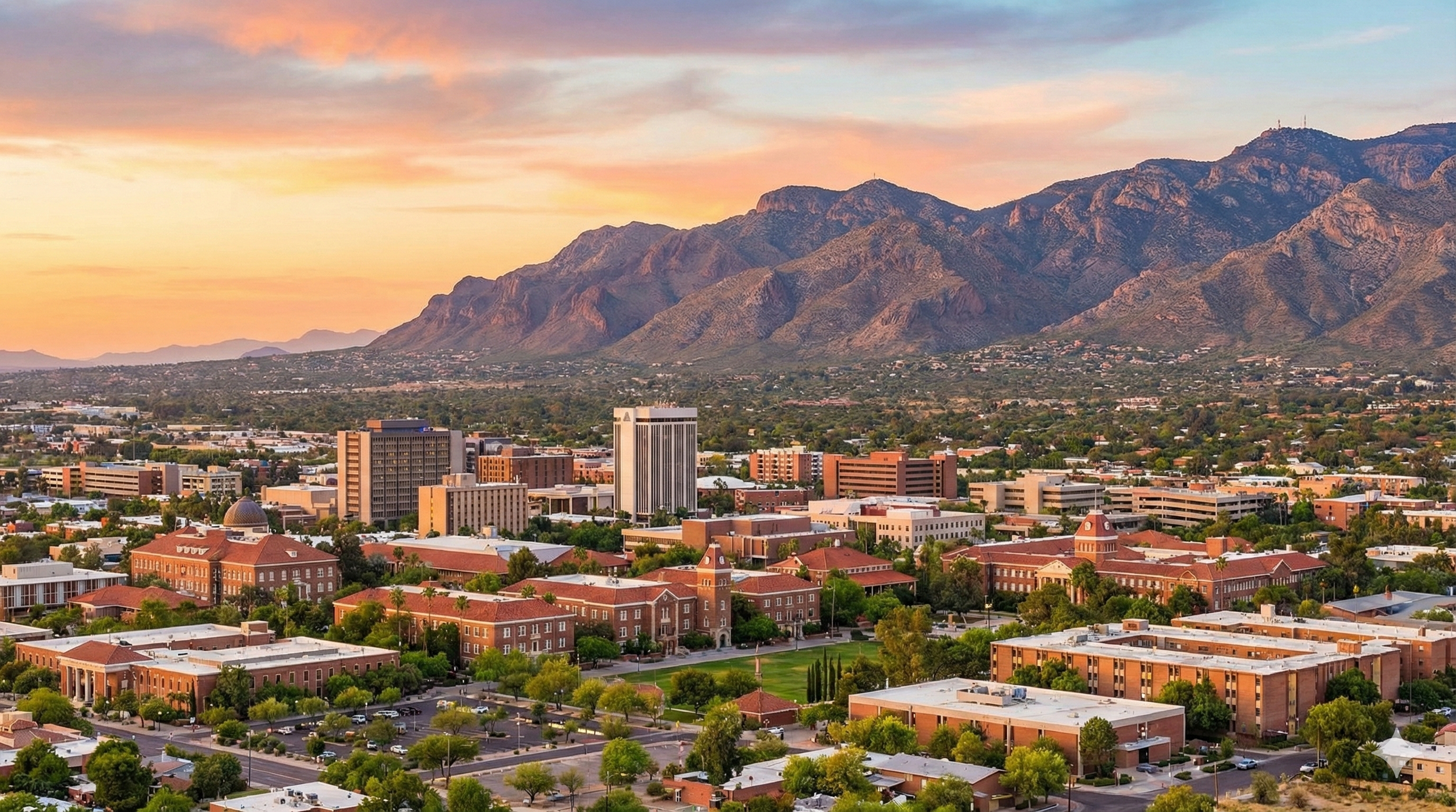
Regional Compliance Hub: Tucson, AZ
This regional hub helps communities direct residents to current City-listed and locally available disposal options for materials that should not be placed in standard trash or recycling containers under City guidance or community policy—especially Household Hazardous Waste (HHW), glass, and select electronics. The region’s primary HHW and self-haul destination is the City of Tucson’s Los Reales Sustainability Campus.[1] Residents should also follow their community’s written waste rules because property policies and private-hauler restrictions may be more specific than City guidance.
Household Hazardous Waste (Chemicals, Paint, Automotive Fluids): Thu–Sat Only
The City advises residents not to pour unused household hazardous waste down drains or place it in ordinary trash. Household chemicals, paint, pesticides, automotive fluids, batteries, and other accepted materials should be taken to the Los Reales HHW program or another appropriate collection site. Important: The Los Reales HHW station operates on a limited schedule and closes on the second Saturday of each month—confirm current requirements before traveling.[2][3]
- Facility: Los Reales Sustainability Campus HHW Drop-Off, 5300 E. Los Reales Rd., Tucson, AZ 85756[2]
- HHW Hours: Thursday, Friday, and Saturday (7:00 AM – 2:00 PM)[2]
- Closure Alert: HHW drop-off is closed on the 2nd Saturday of every month while the program conducts off-site collection events.[2]
- Cost & Residency: The program is free for City of Tucson residents. The City currently lists a $15 fee for residents of Marana, Oro Valley, Sahuarita, and unincorporated Pima County. Bring a driver’s license or current utility bill to establish residency.[2]
- Program Scope: This is a resident household-waste program. Property-generated, maintenance, consolidated, or business waste should be handled through an appropriate commercial waste provider or a disposal option confirmed with the City.
- Resident Action: Do not leave chemicals at dumpsters, gates, drains, or curbside piles—take accepted household materials to Los Reales HHW during operating hours.
Important Guidance: Tucson’s “Purple Bin” Glass Program
Tucson’s standard recycling instructions direct residents to place no glass in blue recycling containers and instead use designated purple glass drop-off sites.[4] A May 2026 City update clarifies that glass placed in the blue-bin stream may still be recycled; however, the City continues to encourage purple-bin use because separated glass can reduce shipping costs and improve the value recovered from the material.[5] Preferred practice: Take empty, clean, and dry glass bottles and jars to a City purple glass container.[6]
- City Instruction: Keep glass bottles and jars out of Tucson blue recycling containers and use a designated purple glass site whenever reasonably available.[4][5]
- Accepted in Purple Containers: Empty, clean, and dry glass bottles and jars only. Labels may remain, but caps and lids should be removed.[6]
- Do Not Include: Mirrors, window glass, drinking glasses, ceramics, light bulbs, or other non-container glass.
- Key Glass Drop-Off Locations:
-
East: Ward 2 Office, 7820 E. Broadway Blvd.[6]
South: Ward 5 Council Office, 4300 S. Park Ave.[6]
Midtown: Patrick K. Hardesty Center, 1100 S. Alvernon Way[6]
West: El Rio Center, 1390 W. Speedway Blvd.[6]
Electronics, Televisions & Computer Equipment: Use HHW or an E-Waste Recycler
The City of Tucson currently accepts many household electronic items through its HHW program, including televisions, computers, laptops, printers, scanners, cell phones, tablets, cables, chargers, and other small electronic devices.[7] Electronics should not be placed in blue recycling containers or left at apartment dumpster pads. The City’s detailed HHW acceptance list separately states that CRT computer monitors are not accepted, so residents should confirm current requirements or use a dedicated electronics recycler for CRT equipment.[3]
- City HHW Option: Many resident-generated household electronics, including televisions and standard computer equipment, may be taken to the Los Reales HHW program.[7]
- CRT Monitor Caution: The City’s detailed HHW list states that CRT computer monitors are not accepted. Confirm before transporting CRT equipment or use a dedicated local e-waste recycler.[3]
- Electronics Recycler (Local): Suburban Miners, 3820 E. Blacklidge Dr., Tucson, AZ 85716, currently advertises drop-off recycling for televisions, CRT equipment, computers, monitors, and other electronics. Confirm acceptance and any service conditions before visiting.[8]
- Retail Option: Participating Best Buy stores generally accept up to three qualified recycling items per household per day. Different limits, fees, and eligibility rules may apply to televisions, monitors, laptops, and specific product categories.[9]
- Resident Action: Do not leave televisions, monitors, computers, batteries, or other electronics at the gate, dumpster pad, or curb—use the City HHW program or a recycler that accepts the specific device.
Landfill & Bulk Waste (Furniture, Mattresses, Large Items)
If a bulky item cannot be handled through the property’s normal collection system, residents should first check the community’s written bulk-waste policy and the services attached to the property’s waste account. Tucson Code §15-16.3 states that commercial establishments primarily used as dwelling units are provided brush-and-bulky service as part of the City’s standard commercial APC collection service.[10] Properties using a private hauler or a different collection arrangement must follow their service contract and community procedures.
- Campus General Hours: Los Reales Sustainability Campus is open Monday–Saturday (6:00 AM – 5:00 PM) and closed Sundays. Holiday closures apply.[1]
- City-Service Properties: Property management should verify whether brush-and-bulky collection is included with the property’s City commercial collection account and obtain the applicable preparation and scheduling requirements.[10]
- Private-Hauler Properties: Follow the private-hauler agreement and community policy. Residents should not assume that a City residential collection schedule applies to a privately serviced apartment property.
- Accepted City Brush & Bulky Examples: The City lists furniture, carpet, certain appliances, limited tires, brush, lumber, scrap metal, and pipes as accepted materials, subject to placement and quantity requirements.[11]
- Not Accepted in Brush & Bulky: The City lists household hazardous waste, televisions, computer monitors, glass, mirrors, concrete, construction materials, and compressed-gas cylinders among materials not accepted through regular Brush & Bulky collection.[11]
- Resident Warning: Do not leave sofas, mattresses, appliances, or other large items at a curb, gate, alley, or dumpster pad without property authorization and an approved collection plan. Unauthorized placement may result in removal charges or enforcement.
- Action: Follow property management’s bulk policy. When approved collection is unavailable, use Los Reales or schedule a qualified private removal provider that accepts the specific material.
EEAT Sources: [1] City of Tucson: Los Reales Sustainability Campus | [2] City of Tucson: Household Hazardous Waste | [3] City of Tucson: What Can I Bring to HHW? | [4] City of Tucson: Recycling Services | [5] City of Tucson: Glass Recycling Update | [6] City of Tucson: Purple Glass Locations | [7] City of Tucson: Electronics Recycling | [8] Suburban Miners: Electronics Recycling | [9] Best Buy: Recycling FAQs | [10] Tucson Code §15-16.3 | [11] City of Tucson: Brush & Bulky
Compliance notice: This page summarizes publicly available disposal guidance and is not legal advice. Facility hours, fees, accepted materials, service eligibility, and private-hauler requirements may change. Residents and property managers should verify current requirements before transporting material.
Tucson property owners and community managers: simplify recycling operations while boosting resident satisfaction. National Doorstep’s valet trash & recycling service can support the City of Tucson’s environmental-services objectives by improving resident convenience, managing contamination, and supporting property operating goals — all with a turnkey program.
In Tucson, new multifamily, commercial, and industrial development—and qualifying expansions of existing sites—must comply with solid-waste and recycling collection, storage, access, screening, and site-plan standards under the City of Tucson Technical Standards Manual, §§ 8-01.3.0 through 8-01.5.0. These standards govern the design and operation of collection areas; they do not, by themselves, require every existing multifamily community to subscribe to recycling collection service. The City offers commercial recycling service to eligible Environmental Services customers and provides recycling information and program assistance to apartment managers.
- NOI & Property Value Support: A convenient sustainability amenity may support ancillary-revenue, resident-retention, and property-positioning objectives.
- Resident Convenience & Cleanliness: Doorstep recycling can help manage overflow and contamination when paired with appropriate containers, clear instructions, and hauler-approved procedures.
- Development Standards: New construction and qualifying site expansions must address applicable solid-waste and recycling storage, screening, capacity, access, and collection requirements.
- Local Program Alignment: Compatible with Tucson – Commercial Recycling Program and the City of Tucson Technical Standards Manual, Section 8.
At a Glance: Tucson, AZ
- Jurisdiction: City of Tucson (Pima County, Arizona)
- Mandate Type: Development and site-plan standards for solid-waste and recycling collection and storage. The cited standards do not establish a universal recycling-service mandate for every existing multifamily community.
- Applicability Threshold: Applies to new construction and qualifying expansions of existing sites as provided by Technical Standards Manual § 8-01.3.0 and UDC § 3.4.3.E. No dwelling-unit threshold is stated in the Section 8 applicability provision.
- Accepted in the City’s Standard Blue Stream: Clean paper, flattened cardboard, metal cans, and eligible plastic bottles, jugs, and containers marked #1, #2, or #5. Commercial and private-hauler acceptance rules should be confirmed with the property’s service provider.
- Not Accepted in the Standard Blue Stream: Garbage, food waste, plastic bags and film, household hazardous waste, electronics, Styrofoam, and bulky waste. Some film plastics and eligible Styrofoam materials may be accepted separately through Tucson’s voluntary residential orange-bin program.
- Glass Guidance: Tucson’s standard instructions direct customers to keep glass out of blue containers and take empty, clean, and dry bottles and jars to designated purple glass containers. Private-hauler requirements may differ.
- Reference (Technical Standards & Resources): City of Tucson Technical Standards Manual §§ 8-01.3.0 through 8-01.5.0; Environmental Services Commercial Recycling Program.
Technical Standards § 8-01.3.0 — Applicability · Technical Standards § 8-01.4.0 — All Development · Technical Standards § 8-01.5.0 — Multifamily, Commercial and Industrial · Commercial Recycling · Tucson Unified Development Code and Technical Standards
Property Manager Compliance & Operations Checklist
| Task | Action / Requirement | Resources / Links |
|---|---|---|
| ☑ Development & Storage Compliance | For new construction and qualifying site expansions, confirm that plans address the anticipated collection method and frequency, container capacity, screening, access, maneuvering, storage, and applicable enclosure standards. | Applicability · All-Development Standards |
| ☑ Existing Property Review | Do not assume an existing property must retrofit its collection area solely because it is already operating. Confirm whether a proposed expansion, redevelopment, permit, site-plan review, or service change triggers current standards. | Technical Standards § 8-01.3.0 |
| ☑ Service Setup | When recycling service is offered, coordinate collection through City Environmental Services or an applicable private commercial hauler. Confirm container sizes, collection frequency, accepted materials, contamination rules, fees, and account eligibility. | Commercial Recycling |
| ☑ Collection-Area Maintenance | Keep collection and storage areas accessible and free from obstructions, excess vegetation, and spilled liquids. Do not allow containers or enclosures to obstruct public access, traffic visibility, or drainage. | Location Standards · Operational Standards |
| ☑ Resident Education — Recommended | Provide service-provider-approved recycling instructions during move-in and near collection areas. Emphasize clean, empty, and dry materials; loose recyclables; flattened cardboard; and prohibited contaminants. | City Apartment-Recycling Assistance |
| ☑ Routine Audit — Recommended | Periodically inspect collection areas for overflow, contamination, damaged containers, access problems, spills, and service-capacity issues. Adjust collection frequency or container capacity when appropriate. | Maintain internal inspection records consistent with company policy. |
| ☑ Document Retention — Recommended | Keep current service agreements, accepted-material lists, collection schedules, site approvals, and resident instructions available for operational reference. | Retain documents according to company policy and applicable legal requirements. |
Tucson Recycling Summary — Checklist
- ☑ Jurisdiction Type: City of Tucson (Pima County)
- ☑ Mandate Type: Development and site-plan standards for solid-waste and recycling collection and storage; not a universal recycling-service mandate for all existing multifamily properties.
- ☑ Applicability Threshold: New construction and qualifying expansions of existing sites; no dwelling-unit threshold is stated in Technical Standards Manual § 8-01.3.0.
- ☑ Typical City Blue-Stream Materials: Clean paper, flattened cardboard, metal cans, and eligible #1, #2, and #5 plastic bottles, jugs, and containers.
- ☑ Standard Blue-Stream Exclusions: Plastic bags and film, garbage, food waste, HHW, electronics, Styrofoam, and bulky items.
- ☑ Special Programs: Eligible film plastics and certain Styrofoam materials may be accepted through Tucson’s voluntary residential orange-bin program. Program eligibility and preparation rules apply.
- ☑ Glass Guidance: Follow the property’s service-provider instructions. City guidance directs customers to use designated purple containers for empty, clean, and dry glass bottles and jars.
- ☑ Best Practices: Appropriate container capacity, accessible and screened collection areas, resident education, periodic inspections, contamination controls, and vendor verification.
- ☑ Compliance Notes: Confirm whether Technical Standards Manual Section 8 applies to a proposed construction, expansion, redevelopment, permit, or site-plan action. A doorstep program does not replace required site design, enclosure, access, storage, or collection capacity.
Sources reviewed August 2, 2026: City of Tucson Technical Standards Manual §§ 8-01.3.0 through 8-01.5.0; City of Tucson Environmental Services Commercial Recycling, Recycling Services, Glass Recycling, and Hard-to-Recycle Plastics Program webpages.
Compliance notice: This summary is provided for general informational purposes and is not legal, engineering, land-use, or permitting advice. Requirements may vary based on site conditions, development activity, service provider, approved plans, and subsequent regulatory changes. Confirm project-specific requirements with the City of Tucson and qualified professionals.
Interested in talking about how we can work together? Here's our contact info.
