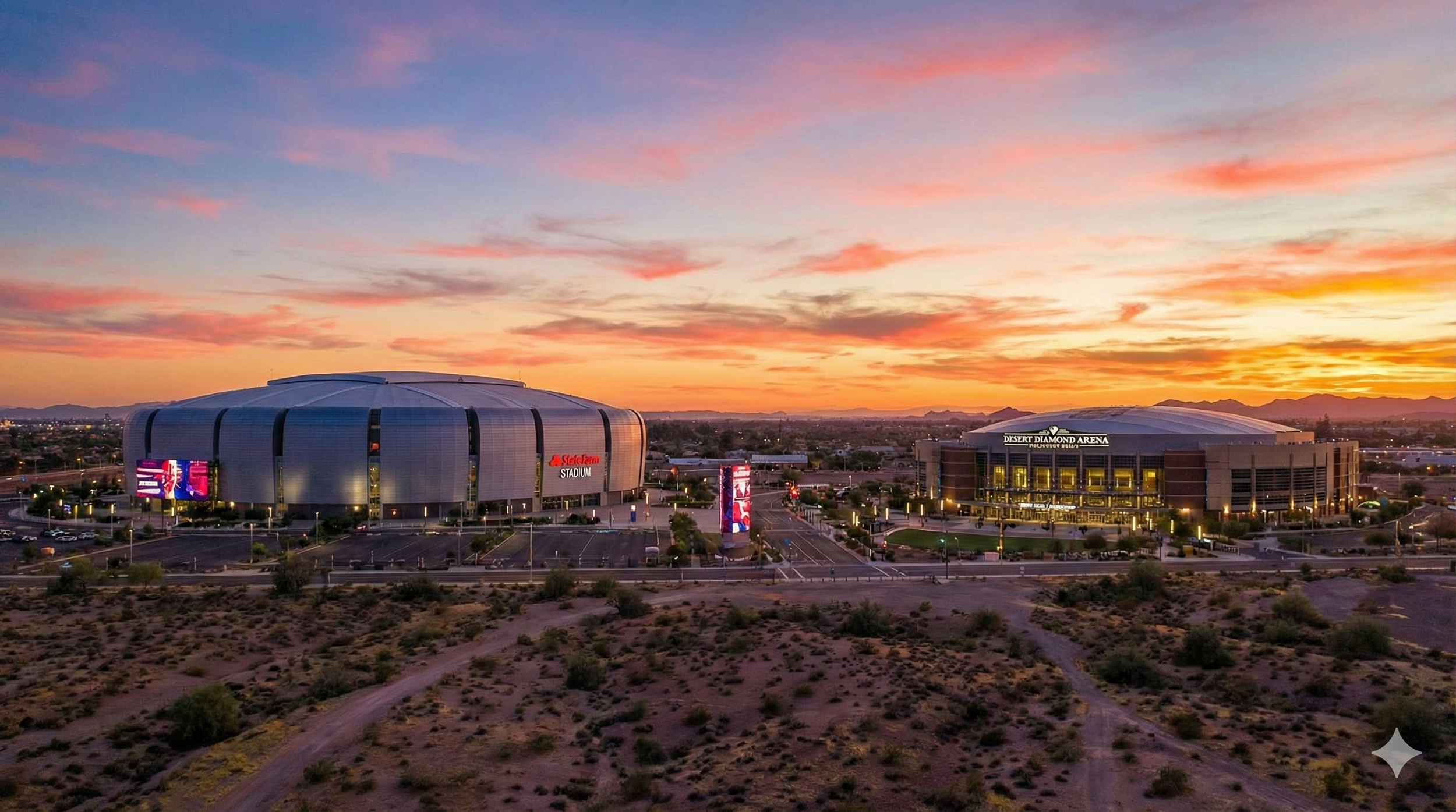
Regional Compliance Hub: Glendale, AZ
This regional hub directs residents to Glendale disposal resources for materials that should not be placed in ordinary trash or recycling and may also be restricted by apartment, property-management, or waste-hauler rules—especially paint, household chemicals, batteries, electronics, and bulk items. Important: Glendale’s seasonal Household Hazardous Waste appointment program is not for commercial use and expressly excludes service to apartments, condos, townhomes, and mobile-home parks. Residents of these housing types should use an authorized disposal option. The Glendale Municipal Landfill is one municipal self-haul option for qualifying household-generated materials, subject to the City’s acceptance rules and applicable fees.[1][2]
Glendale Municipal Landfill (Household Hazardous Waste + Electronics + Recycling Drop-Off)
The City’s Glendale Municipal Landfill provides a municipal self-haul option for certain household-generated hazardous materials and other approved waste. The Landfill site also provides designated recycling and electronic-waste drop-off areas for approved items.[2] Property-management and private-hauler requirements may be more restrictive, so residents should confirm item eligibility before transporting materials.
- Location: 11480 W. Glendale Avenue, Glendale, AZ 85307[2]
- Hours: Mon–Fri, 7:30 AM – 4:00 PM | Sat, 7:00 AM – 3:00 PM (Closed Sundays & official City holidays)[2]
- Payment: The Landfill currently accepts debit and credit cards only for customer transactions. Verify current rates and payment requirements before arrival.[2]
The “Apartment Gap” (Household Hazardous Waste)
The Limitation: Glendale’s seasonal HHW appointment-based collection program is not available for commercial use and expressly excludes service to apartments, condos, townhomes, and mobile-home parks.[1]
Disposal Options: Residents should use an authorized household-hazardous-waste or product take-back option. The Glendale Municipal Landfill lists certain household-generated HHW as acceptable, including paint and stains, antifreeze, motor oil and filters, other automotive fluids, pool chemicals, household chemicals, and pesticides. Acceptance is subject to the Landfill’s current containment, identification, quantity, customer-type, and fee requirements.[2]
Electronics Drop-Off (E-Waste)
Electronics should be managed according to the property’s rules, the waste hauler’s requirements, and the City’s current disposal guidance. Glendale residents may bring approved working and non-working electronics to the Glendale Municipal Landfill during regular operating hours, and the City currently identifies the approved electronic drop-off service as free for Glendale residents.[1][2] Approved examples include computers and computer components, networking equipment, electrical cords and adapters, cameras, phones, tablets, video-game equipment, cable boxes, modems, routers, power tools, electric motors, and stereo equipment. Televisions, printers, and appliances are not accepted through the Landfill’s electronic drop-off program. Call the Landfill before arrival for item-specific confirmation.[2]
Recycling Drop-Off (Including Glass)
If your apartment does not provide on-site recycling, the Landfill site includes a designated recycling drop-off area where customers may drop off approved paper, cans, plastic containers, cardboard boxes, and glass bottles. The City currently accepts these recycling drop-off items at no cost. Follow the blue directional signs and all posted container labels and on-site instructions.[2]
Crucial Warnings: Fees, Eligibility & Bulk Loads
- Reduced Rates / Monthly Fee Waiver: The City’s reduced residential rate and once-per-month fee waiver for a qualifying load of up to 2,000 pounds apply only to eligible single-family homes and duplexes located within Glendale city limits that receive City residential sanitation service. The City expressly states that apartment complexes, mobile-home parks, and other housing do not qualify for reduced rates.[2]
- Apartment Residents: Loads containing a mattress, sofa, or other non-recyclable bulk waste may be charged the applicable standard gate or special-handling fee. As of January 1, 2026, the City posts a standard gate rate of $55.58 per ton and a $50.58 minimum transaction fee. Rates and classifications are subject to change, so verify current charges before arrival.[2]
- Household HHW Only: The Landfill’s HHW acceptance is limited to household-generated hazardous waste. Commercially generated hazardous waste and household hazardous waste delivered by commercial haulers are not accepted through the household stream. Flammable liquids are accepted from residential customers only.[2]
- Container and Identification Rules: HHW liquids must be securely contained in the original container and/or clearly marked to identify the contents. Never mix materials, and contact the Landfill before transporting leaking, damaged, unknown, or unusually large containers.[1][2]
Latex Paint (Preferred Best Practice)
The City states that paint that is completely dried and rock solid may be bagged, securely tied, and placed in a refuse container. Liquid, partially liquid, leaking, or unidentified paint should be taken to an authorized HHW disposal option and managed under the receiving facility’s current container, labeling, quantity, and acceptance requirements.[1][2]
Battery Safety Warning (Lithium-Ion)
Never put lithium-ion batteries or devices containing lithium-ion batteries in household trash, recycling containers, apartment dumpsters, or compactors. These batteries can be damaged during collection, transportation, sorting, or compaction and create a serious fire risk. Use an approved battery vendor, electronics recycler, or household-hazardous-waste collection point instead. Before transporting a removable lithium-ion battery, the EPA recommends placing it in a separate plastic bag and/or covering its terminals with non-conductive tape to reduce short-circuit and fire risk.[3] Glendale also provides access to year-round battery drop-off locations and identifies certain rechargeable batteries weighing less than two pounds as eligible for recycling through an HHW event or battery vendor; however, the City’s appointment-based HHW collection service is not available to apartments and the other excluded housing types listed above.[1]
Compliance Note: This page provides general disposal guidance and does not replace City instructions, property rules, waste-hauler requirements, product-manufacturer instructions, or professional legal or environmental advice. Acceptance rules, fees, hours, and available programs can change. Confirm current requirements before transporting materials.
EEAT Sources: [1] City of Glendale: Household Hazardous Waste | [2] City of Glendale: Municipal Landfill | [3] U.S. EPA: Used Household Batteries
Glendale property owners and community managers: simplify recycling while supporting resident satisfaction, property presentation, and potential ancillary revenue. National Doorstep’s valet trash & recycling service can align with the City of Glendale’s recycling outreach and commercial-sanitation framework to help reduce contamination — all with a turnkey program.
In Glendale, the City provides residential trash & recycling services for eligible residential customers and offers commercial front-load and roll-off service for businesses and multifamily communities. Under Glendale City Code Chapter 18 – Garbage & Trash, qualifying multifamily properties may use the City’s commercial sanitation service, lawfully self-collect and dispose of their waste, or use a duly permitted third-party commercial sanitation service provider. There is no identified citywide requirement that every multifamily property provide recycling service. However, properties covered by A.R.S. §49-746 are subject to state service-choice and notice provisions, including advance notice before terminating municipal recycling or solid-waste service.
- Potential NOI & Property Value Support: A properly structured recycling amenity may support ancillary revenue, resident retention, and property presentation; financial results are property-specific and are not guaranteed.
- Resident Convenience & Cleanliness: Doorstep recycling pickup can help reduce overflow, loose materials, and litter when paired with adequate containers and consistent resident education.
- Container & Enclosure Practices: Maintain sufficient, approved containers and keep collection areas accessible and free from uncontained waste in accordance with applicable provisions of Chapter 18 – Garbage & Trash and the serving provider’s requirements.
- Local Program Alignment: Compatible with Glendale — Trash & Recycling Hub, Commercial Services/Rates and Glendale — Recycling.
At a Glance: Glendale, AZ
- Jurisdiction: City of Glendale (Maricopa County, Arizona)
- Mandate Type: No identified citywide multifamily recycling mandate. Recycling service is voluntary unless required by a property contract, lease provision, development condition, private covenant, service agreement, or another applicable requirement.
- Local Recycling-Mandate Threshold: None identified. Chapter 18 does not establish a unit-count threshold that independently requires Glendale apartment communities to offer recycling.
- State Multifamily Definition: For purposes of A.R.S. §49-746 and Glendale’s related service framework, a multifamily residential property generally means real property containing five or more dwelling units for rent or lease.
- State Notice Requirement: A covered property receiving municipal recycling or solid-waste management service must generally provide the municipality at least 60 calendar days’ notice before terminating that municipal service.
- Solid-Waste Service Options: Subject to Chapter 18, a qualifying multifamily property may use the City’s commercial sanitation service, lawfully self-collect and dispose of its waste while paying applicable fees, or use a duly permitted third-party commercial sanitation service provider.
- Accepted Materials Reference: Glendale’s current curbside guidance includes common paper and cardboard, metal food and beverage cans, eligible plastic bottles and containers, and glass bottles and containers. Commercial multifamily acceptance and preparation rules must be confirmed with the property’s actual recycling provider.
- Commonly Prohibited from Standard Recycling: Plastic bags and film, bagged recyclables, food and liquid residue, household hazardous waste, electronics, and bulky waste should not be placed in standard recycling containers. Provider-specific restrictions may be more stringent.
- References: Glendale — Trash & Recycling · Commercial Services/Rates · Glendale — Recycling · Glendale City Code — Chapter 18 · A.R.S. §49-746 — Private Recycling and Solid-Waste Services
Property Manager Operational and Compliance-Readiness Checklist
```| Task | Action / Guidance | Resources / Links |
|---|---|---|
| ☑ Solid-Waste Service Setup | Arrange compliant solid-waste collection and disposal. Subject to Glendale City Code Chapter 18, qualifying multifamily properties may use the City’s commercial sanitation service, lawfully self-collect and dispose of waste, or use a duly permitted third-party commercial sanitation service provider. Recycling may be added through the City or a qualified private provider, subject to current availability and program rules. | Commercial Services/Rates |
| ☑ Code Alignment | Follow Glendale City Code Chapter 18 – Garbage & Trash and related commercial-sanitation provisions governing waste storage, containers, enclosures, access, collection, transportation, disposal, and third-party provider permitting. | Glendale City Code — Chapter 18 |
| ☑ Municipal Service Change Notice | Before terminating municipal recycling or solid-waste management service, determine whether the property is covered by A.R.S. §49-746. A covered multifamily residential property must generally provide the municipality at least 60 calendar days’ advance notice. | A.R.S. §49-746 |
| ☑ Provider Authorization | Before contracting with a private waste or recycling company, confirm that the provider holds all permits and vehicle authorizations required to perform commercial sanitation or recycling services within Glendale. Contract terms should address what happens if the provider loses or fails to maintain required authorization. | Confirm authorization with the City and retain current provider documentation with the property’s service records. |
| ☑ Container & Enclosure Standards | Provide enough approved containers to accommodate the property’s collection needs. Maintain containers, pads, and enclosures in a clean and sanitary condition; prevent uncontained accumulation; keep access routes unobstructed; and follow applicable City and provider requirements for placement, clearances, weight limits, and service access. | Coordinate site-specific container and access requirements with the City or the serving provider. |
| ☑ Resident Onboarding — Recommended | Include current recycling instructions in move-in materials and community rules. Identify accepted materials, prohibited items, container locations, collection schedules, and the property contact for missed pickups or overflow. This is a recommended operational practice unless separately required by an applicable contract or property rule. | Glendale — Recycling |
| ☑ Signage & Education — Recommended | Use clear “What / What Not” signage at shared collection points. Base the signage on the property’s actual commercial-provider list rather than automatically applying residential curbside rules. Common guidance includes no plastic bags, no bagged recyclables, no HHW or e-waste, clean and empty containers, and flattened cardboard. | Use current City educational guidance as a reference and reconcile it with the serving provider’s accepted-material and contamination standards. |
| ☑ Contamination Review — Recommended | Periodically inspect recycling areas for contamination, overflow, blocked access, leakage, and uncontained waste. Adjust signage, education, container capacity, and collection frequency based on documented conditions. A monthly review is a recommended operating cadence, not an identified Glendale recycling-law requirement. | Maintain concise inspection notes or photographs when useful for ownership, staff, and vendor coordination. |
| ☑ Service Documentation | Keep current service agreements, pickup maps, provider contact information, accepted-material lists, and available permit documentation on file. Review the records after any provider, container, schedule, or accepted-material change. | Commercial Services Contact Information |
| ☑ Property Recycling Plan — Recommended | Consider maintaining a written property recycling plan that summarizes the provider, container types and locations, collection schedule, accepted materials, resident communications, contamination response, and escalation contacts. Update the plan following significant operational or vendor changes. This is a recommended management practice, not an identified citywide statutory requirement. | Attach the plan to the property operations manual and make it available to site staff and the serving provider. |
Glendale Recycling Summary — Checklist
- ☑ Jurisdiction Type: City of Glendale municipal sanitation framework, with City commercial service, lawful self-haul, and duly permitted third-party service options for qualifying multifamily properties.
- ☑ Mandate Type: No identified citywide multifamily recycling mandate. Recycling is voluntary unless another applicable contract, covenant, lease, development condition, or legal requirement applies.
- ☑ Local Recycling-Mandate Threshold: No unit-count threshold identified that independently requires a Glendale apartment community to provide recycling.
- ☑ State Applicability Threshold: A.R.S. §49-746 and Glendale’s related framework define covered multifamily residential property as property containing five or more rental dwelling units.
- ☑ Municipal Service Notice: A covered property must generally give the municipality at least 60 calendar days’ notice before terminating municipal recycling or solid-waste management service.
- ☑ Solid-Waste Requirement: Properties must ensure that solid waste is properly stored, collected, transported, and disposed of through a lawful service method.
- ☑ Commercial Recycling Guidance: Confirm all accepted materials, preparation rules, contamination standards, container requirements, and collection schedules with the property’s actual commercial recycling provider.
- ☑ City Curbside Reference: Glendale’s current residential guidance includes common paper and cardboard, metal cans, eligible plastic bottles and containers, and glass bottles and containers; materials should be clean, empty, dry, and unbagged.
- ☑ Commonly Prohibited: Plastic bags and film, bagged recyclables, HHW, electronics, food or liquid residue, and bulky items should not be placed in standard recycling containers.
- ☑ Compliance Notes: Follow Glendale City Code Chapter 18, use a duly permitted provider when contracting privately, maintain adequate containers and accessible collection areas, prevent uncontained waste accumulation, and comply with applicable state notice requirements before changing municipal service.
Primary sources reviewed: City of Glendale Trash & Recycling hub, Commercial Services/Rates page and Recycling guidance; Glendale City Code Chapter 18 – Garbage & Trash and related commercial-sanitation provisions; and A.R.S. §49-746 governing private-enterprise recycling and solid-waste services for covered commercial, industrial, and multifamily residential properties. City programs, accepted materials, fees, service availability, and code provisions may change; confirm current requirements before implementation or a provider change.
Compliance Disclaimer: This summary provides general operational information and is not legal advice. Property-specific obligations may also arise from zoning or development approvals, fire and building codes, leases, contracts, private covenants, lender requirements, or provider rules.
Interested in talking about how we can work together? Here's our contact info.
