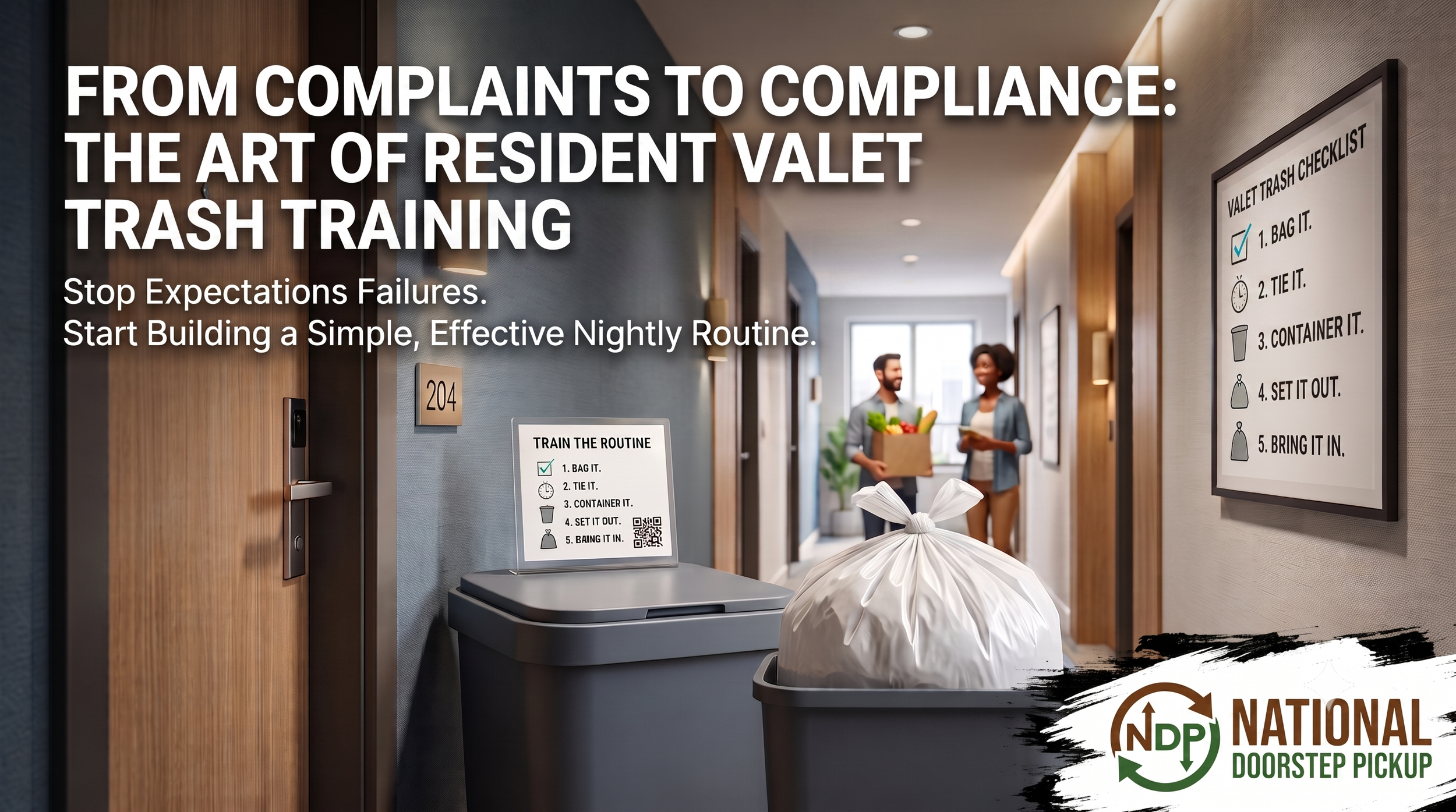
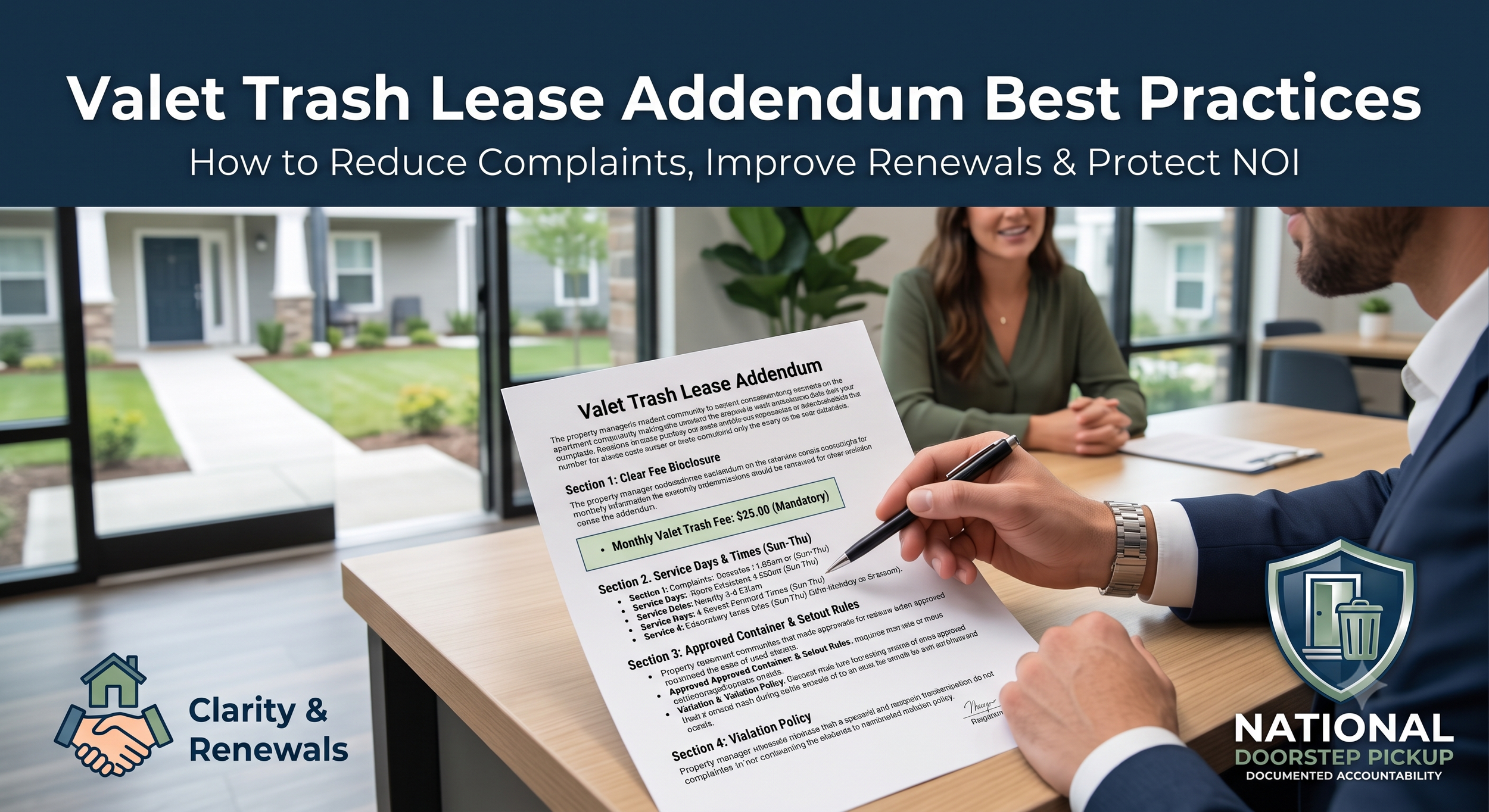
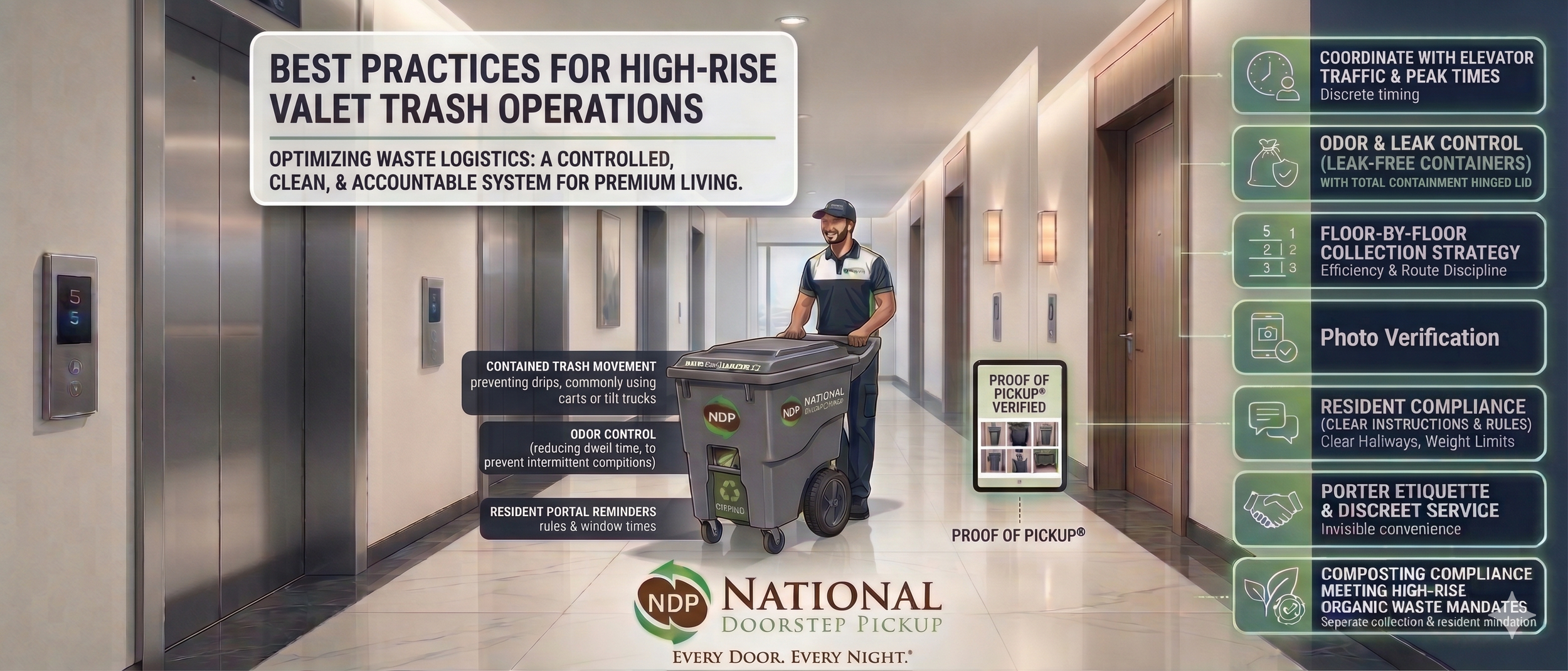
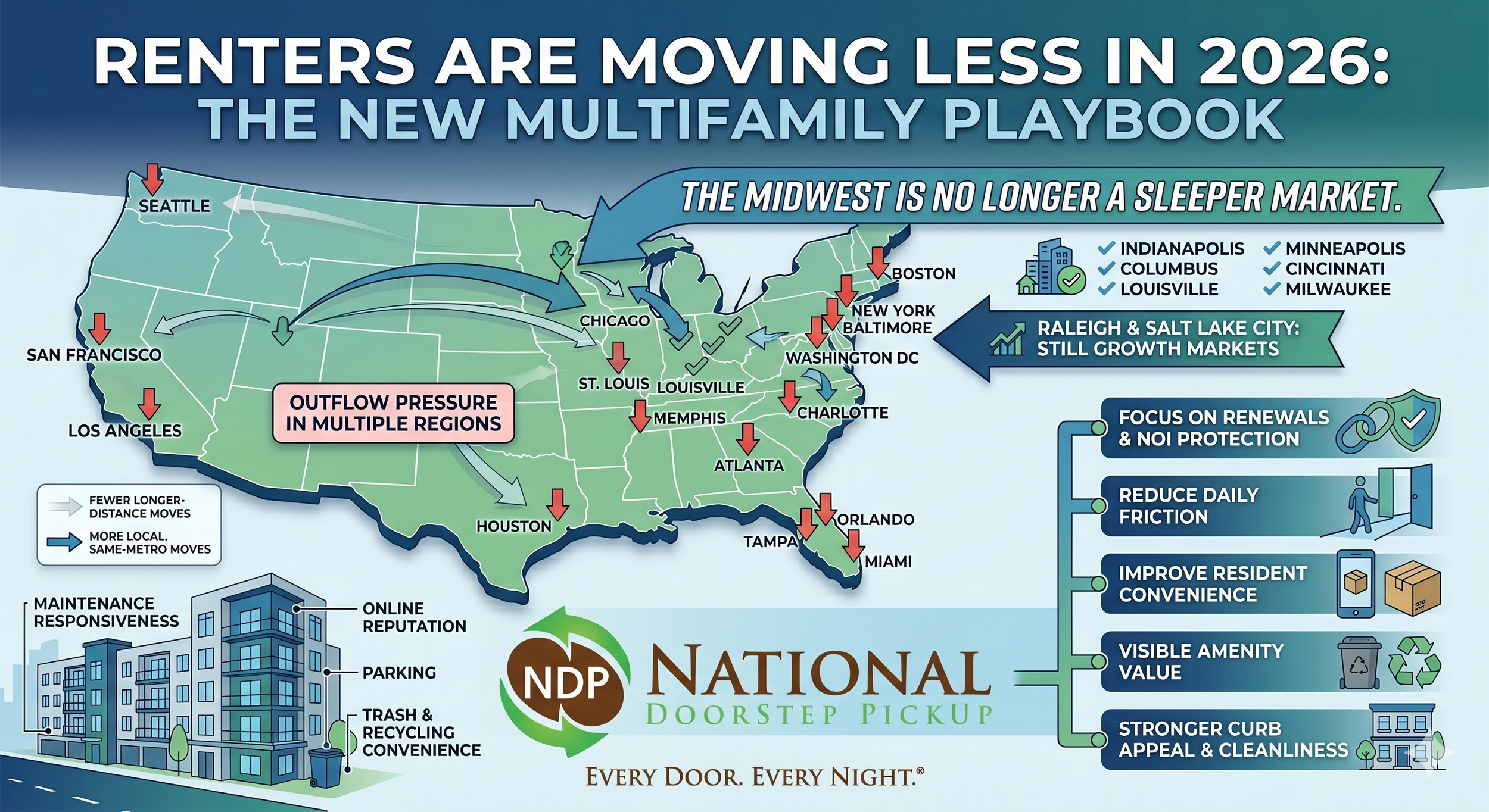
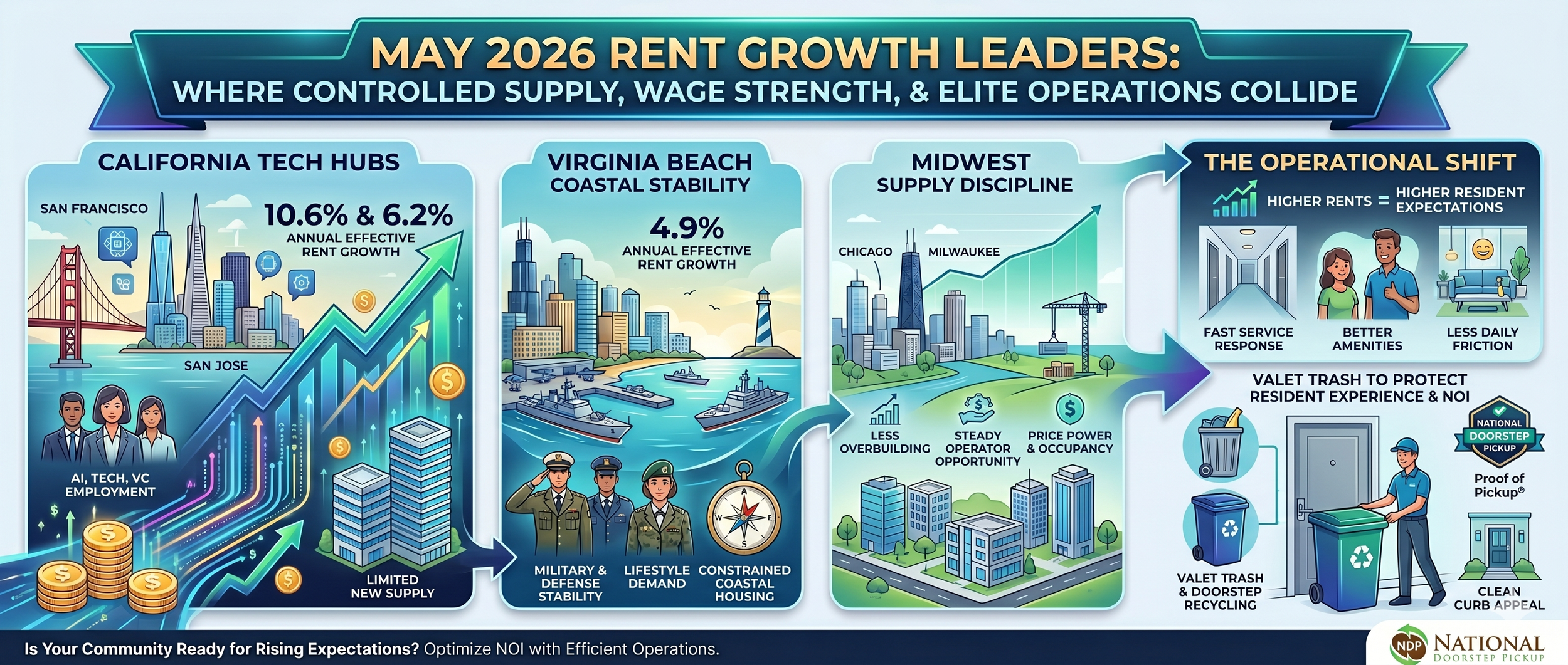
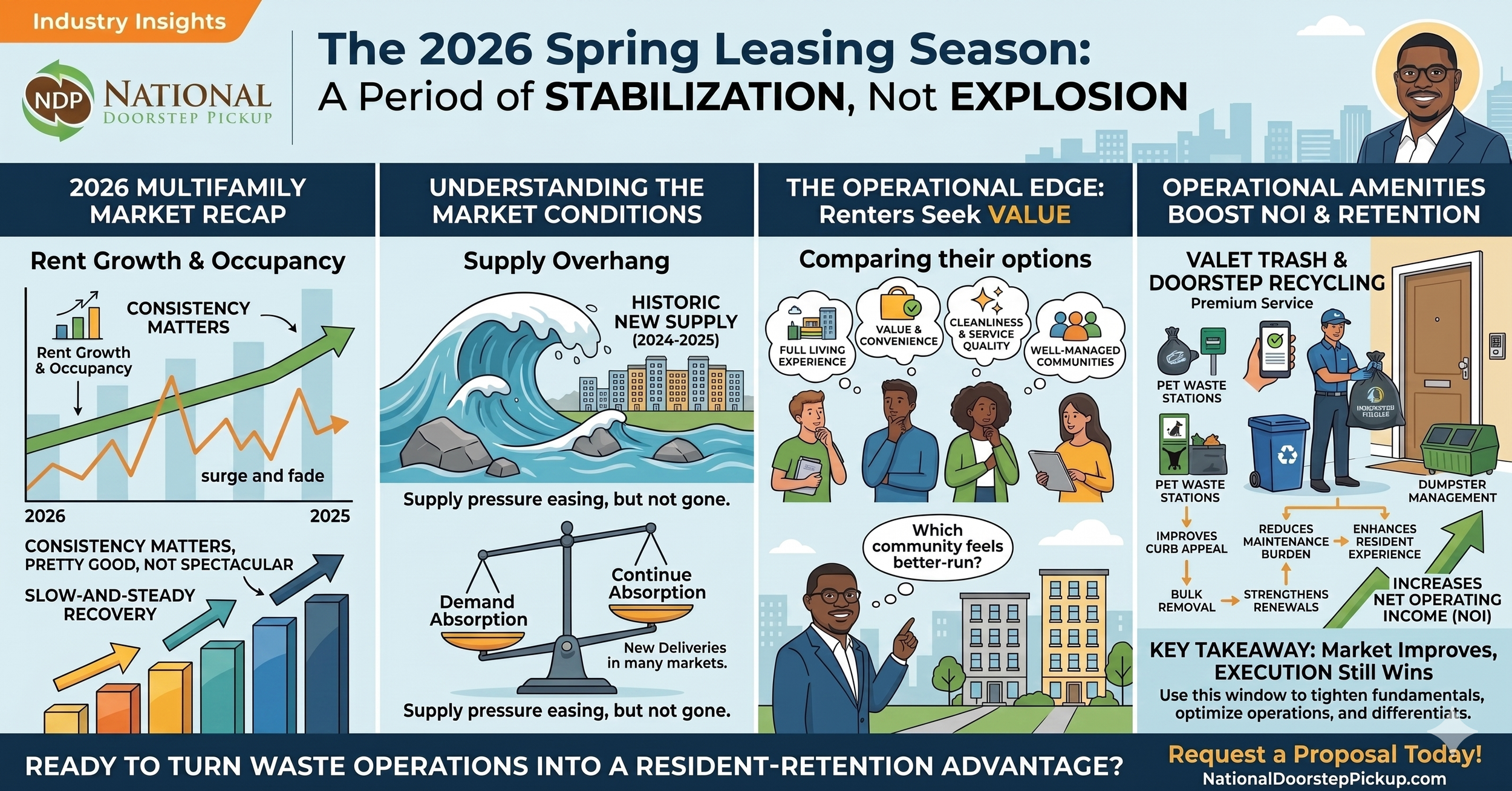
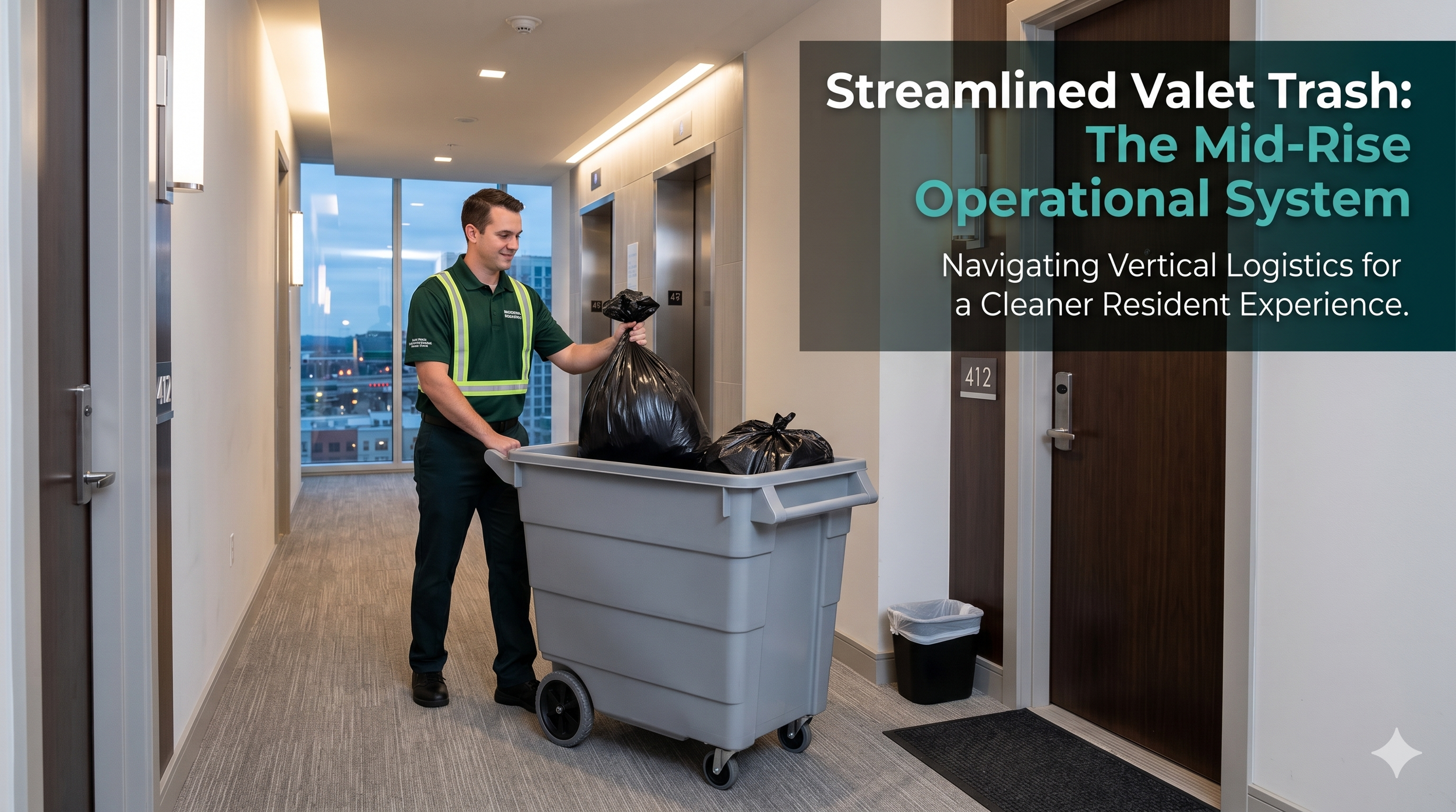
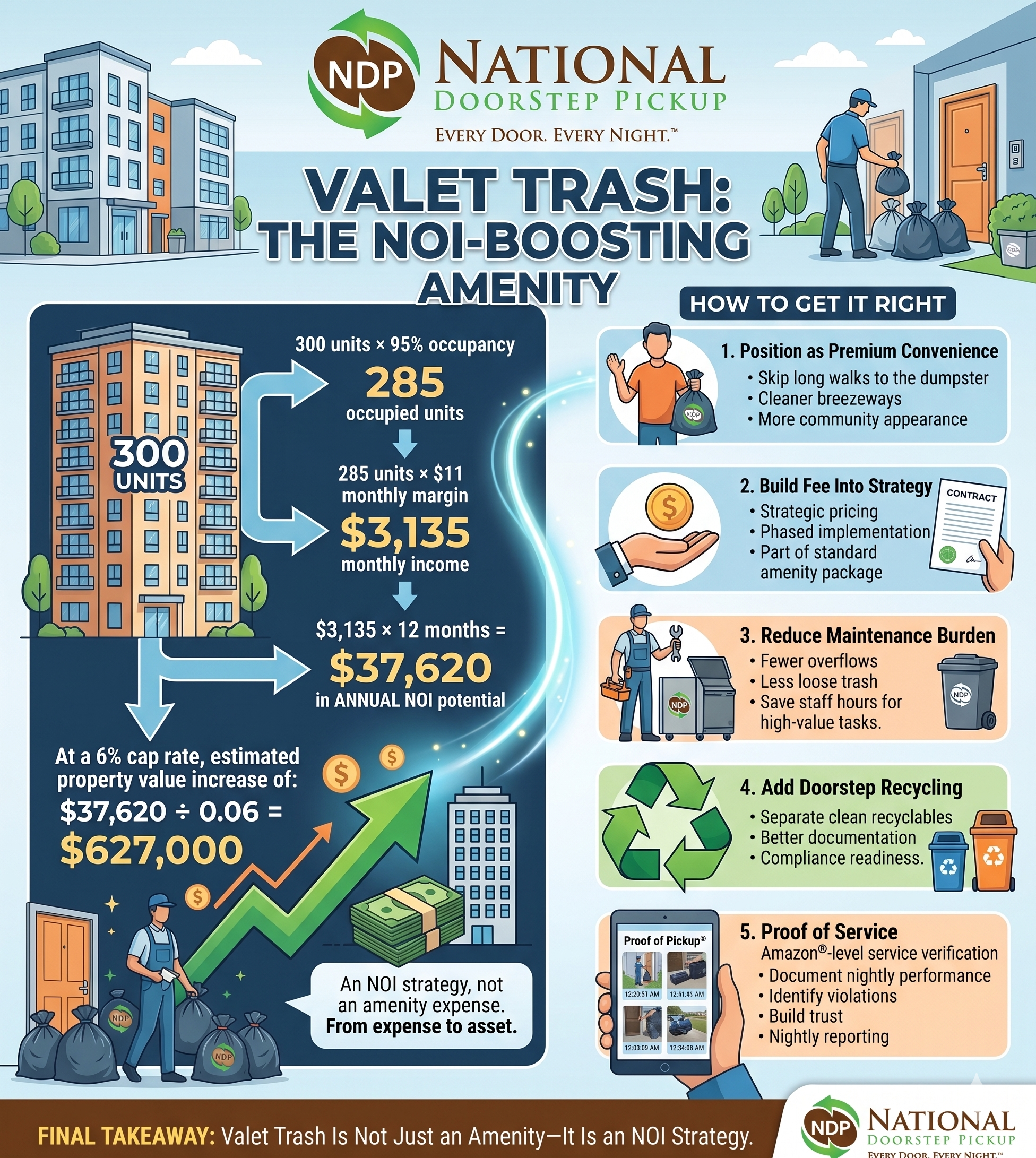
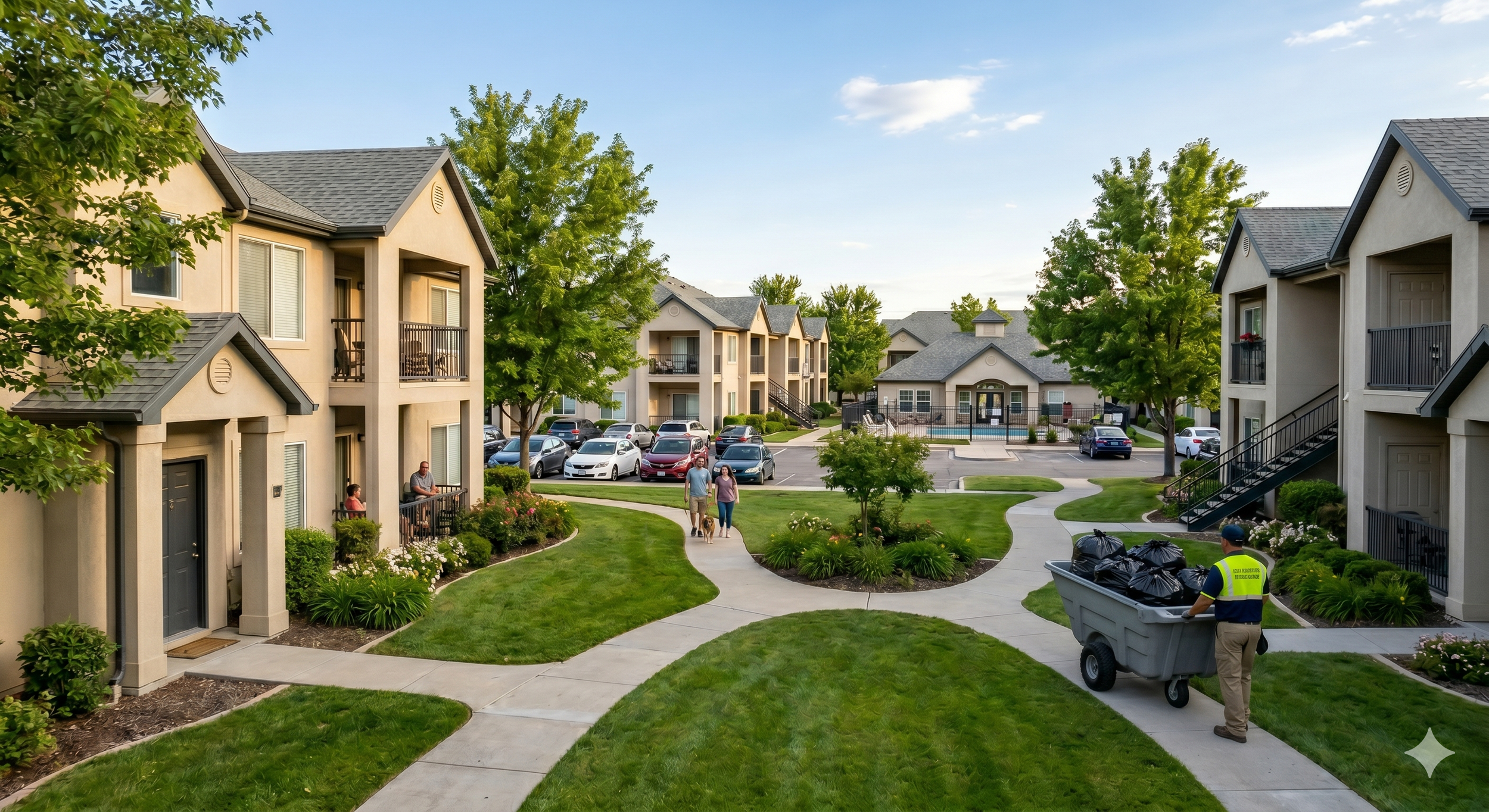
For apartment residents, the dreaded walk to the compactor isn't just a minor annoyance—it's a recurring friction point that quietly impacts lease renewals. What if you could transform this daily chore into your property’s best amenity? Discover why introducing door-to-door valet waste collection has become the secret engine driving unmatched resident retention, cleaner communities, and stronger Net Operating Income (NOI). Read more to see why convenience always wins.
🍀 The Easiest Resident Event That Fills the Clubhouse: A St. Patrick’s Day Potluck That Drives Community Engagement
🚨 Margin Is Tight. Rents Are Flat. Why Are You Letting Trash Eat Your NOI?
Multifamily operators are facing a tough reality: flat rents, climbing insurance premiums, and escalating hauling contracts. When top-line rent increases stall, smart operators pivot to margin engineering. Discover how optimizing your valet trash structure can significantly protect and grow your NOI.
🏆 Best of 2026: Valet Trash & Recycling Services (Multifamily Edition)
In 2026, multifamily success hinges on operational discipline and resident retention. As landfill fees rise and sustainability mandates grow, National Doorstep Pickup delivers the "Best of 2026" solution: a verifiable, tech-enabled valet trash service that boosts NOI, ensures compliance, and keeps communities clean 5 nights a week.
Why Investors Ask About Trash Operations During Due Diligence (and What Property Management Must Know)
In today’s competitive multifamily investment market, waste operations are no longer just an operational afterthought; they have become a critical focal point during due diligence. Institutional and private investors alike are increasingly zeroing in on trash management systems—specifically doorstep valet trash services—as key indicators of a property's operational sophistication and asset value.
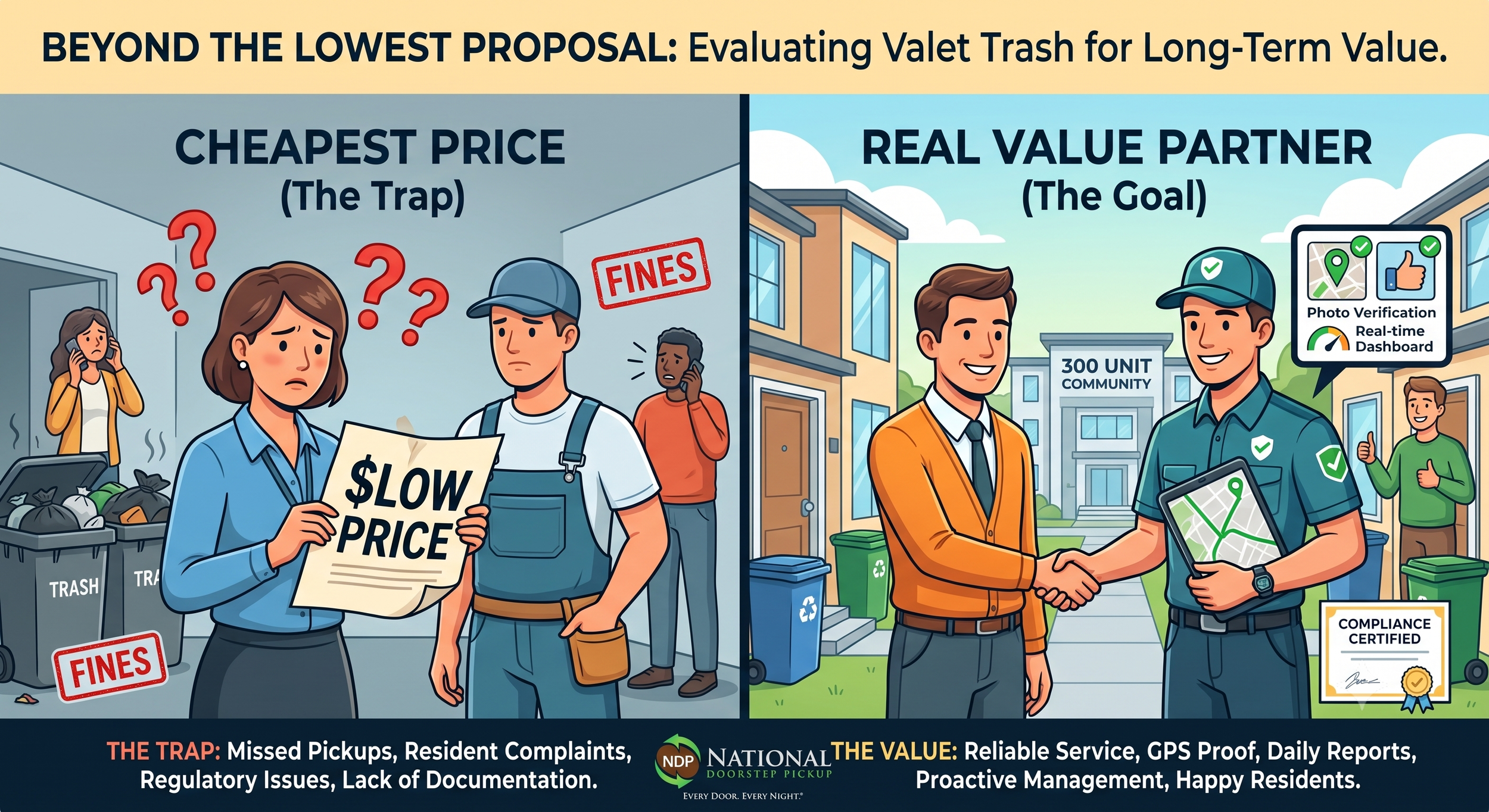
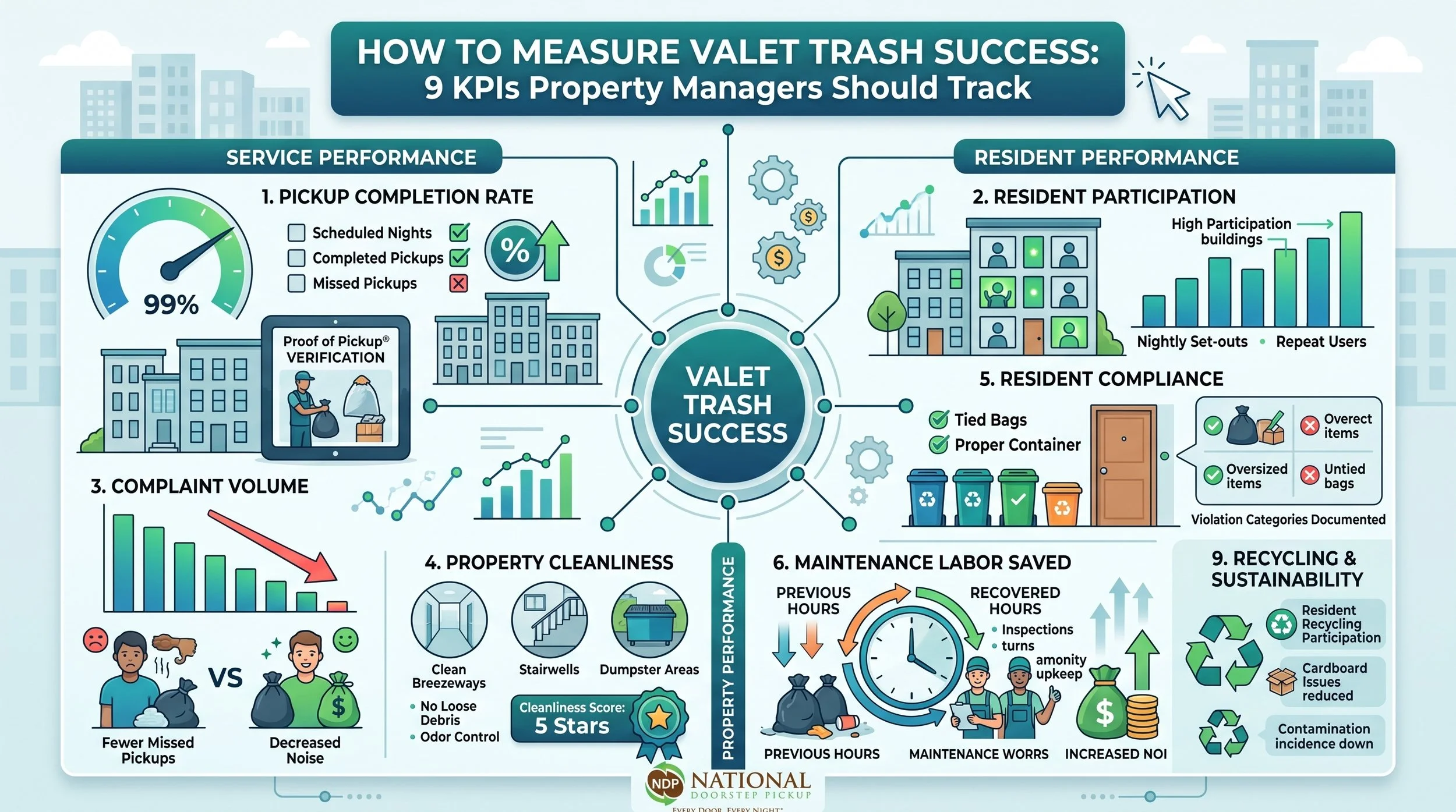
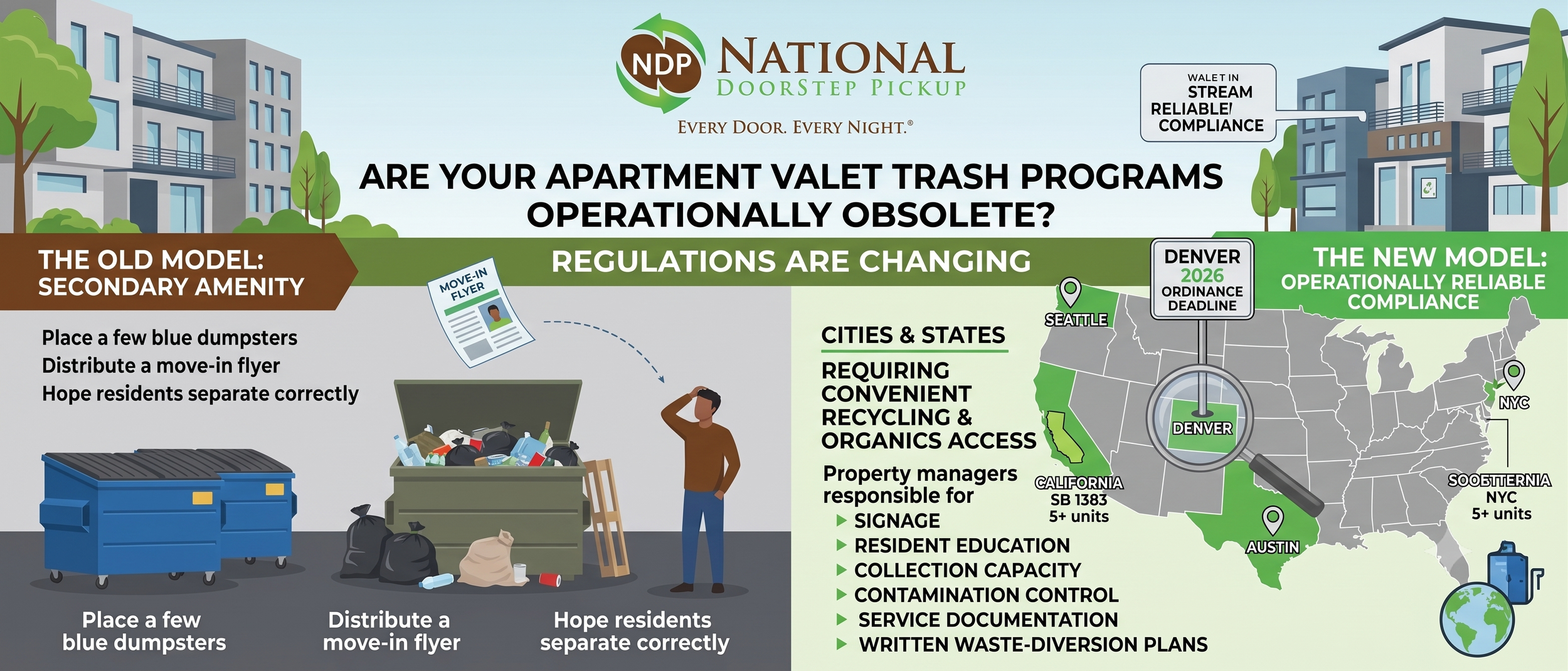
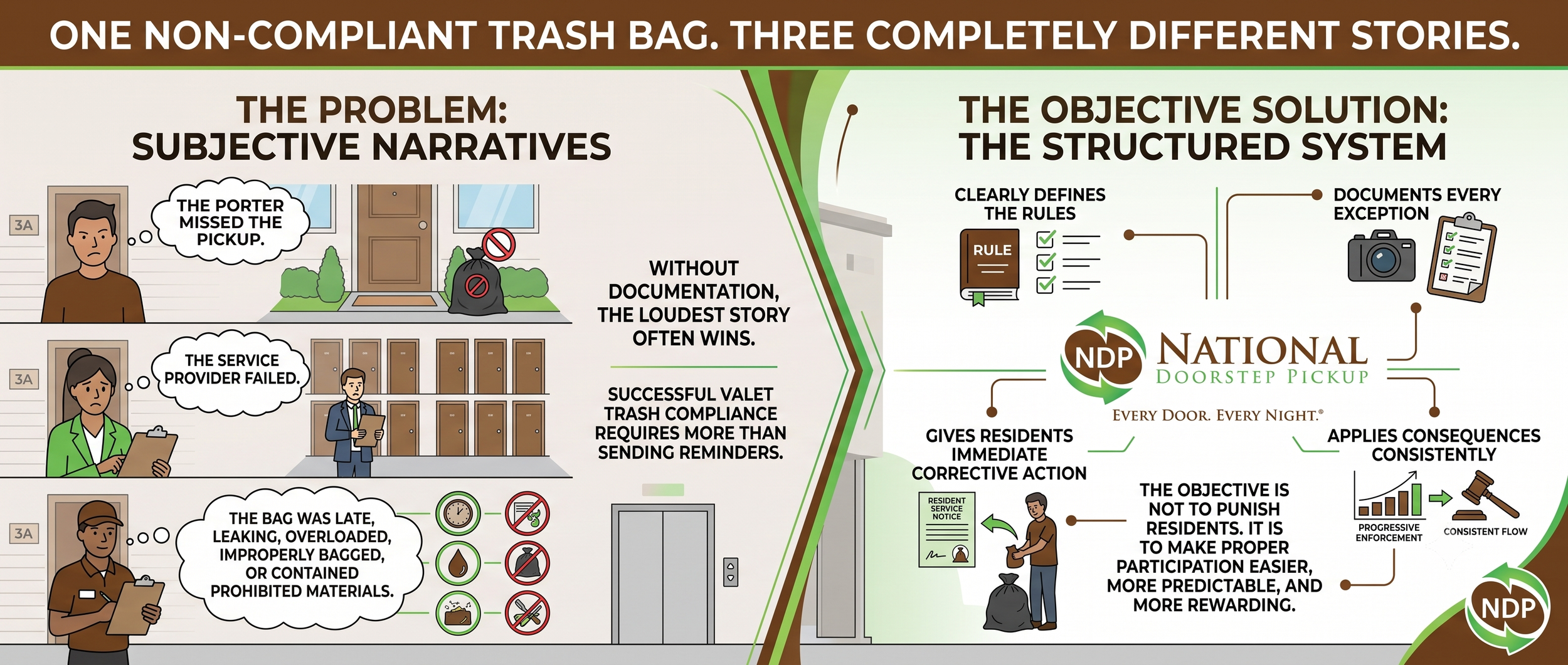
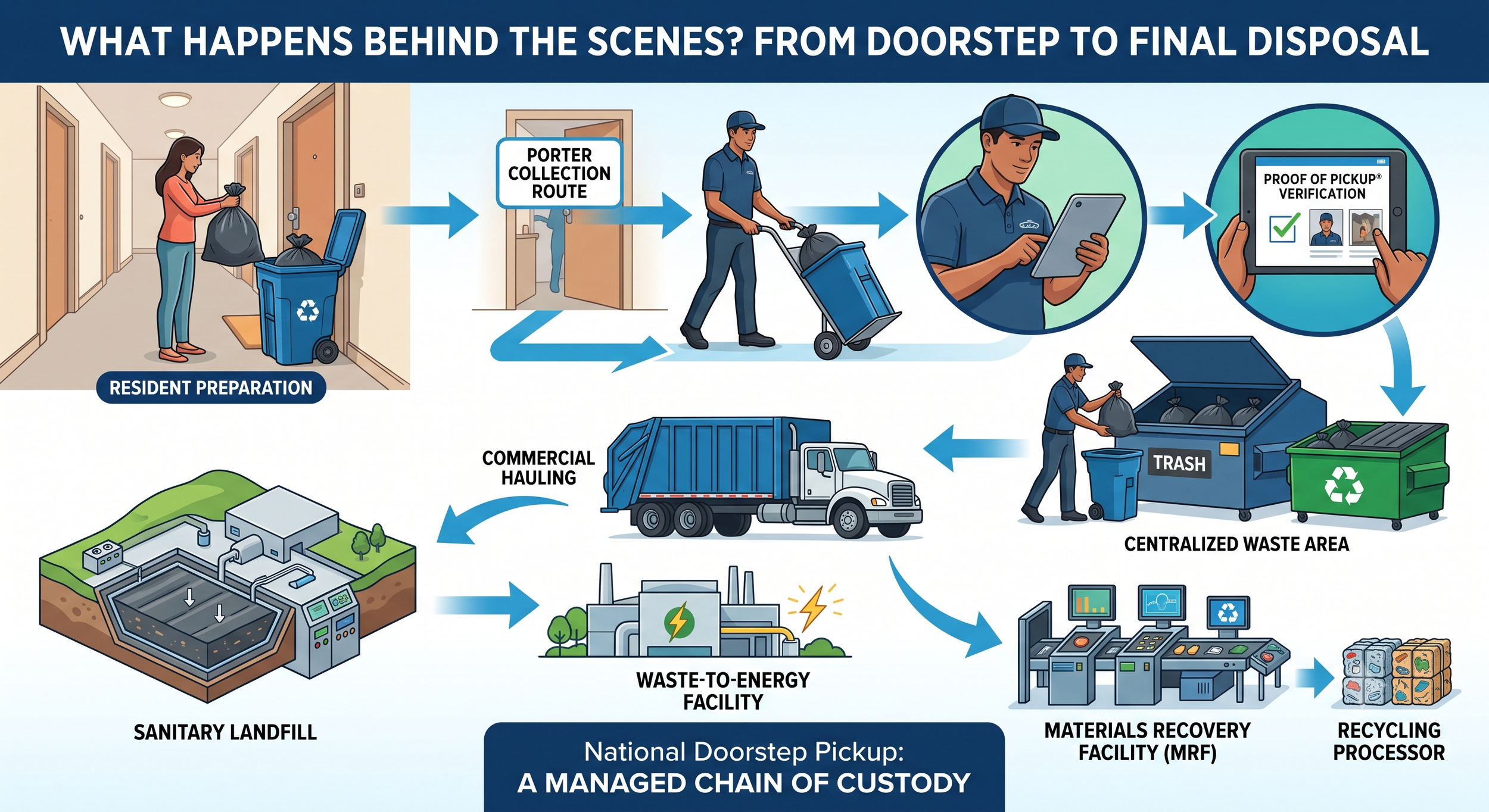
For investors, the scrutiny of trash operations is primarily driven by two factors: risk mitigation and asset value enhancement. Regarding risk, regulatory compliance is paramount. With cities and states expanding waste diversion mandates, non-compliance can lead to significant fines and reputational damage. Investors require assurance that an asset is shielded from these liabilities, looking for structured valet trash programs backed by standardized SOPs and "Proof of Pickup®" verification.
Beyond risk, effective trash operations are a powerful lever for increasing Net Operating Income (NOI). Valet trash is currently one of the most requested resident amenities, directly driving resident satisfaction and retention. Furthermore, a well-managed waste strategy eliminates common issues like overflowing dumpsters and messy hallways, thereby improving curb appeal and online reputation.
To prepare for this level of investor scrutiny, property management teams must be ready with a comprehensive due diligence checklist. This includes maintaining detailed documentation of collection routes and safety protocols, providing clear metrics on resident participation and cost allocations, and demonstrating strict adherence to local regulatory mandates.
Ultimately, trash operations have shifted from a tactical necessity to a strategic asset. By presenting a well-defined, data-backed waste strategy, property managers can significantly boost buyer confidence, secure favorable valuations, and ensure smoother financing processes. In the modern market, a clean, compliant, and documented trash operation is a clear signal of a valuable, well-managed asset.
Valet Trash for Class B/C Workforce Housing | Resident First Focus
Valet Trash for Class A Communities | Resident First Focus
Why Smart Property Managers Are Rethinking Waste & Recycling—and How It Directly Impacts NOI
The Amenity Residents Will Pay For: How Valet Trash Service Justifies Higher Rents and Stronger Retention
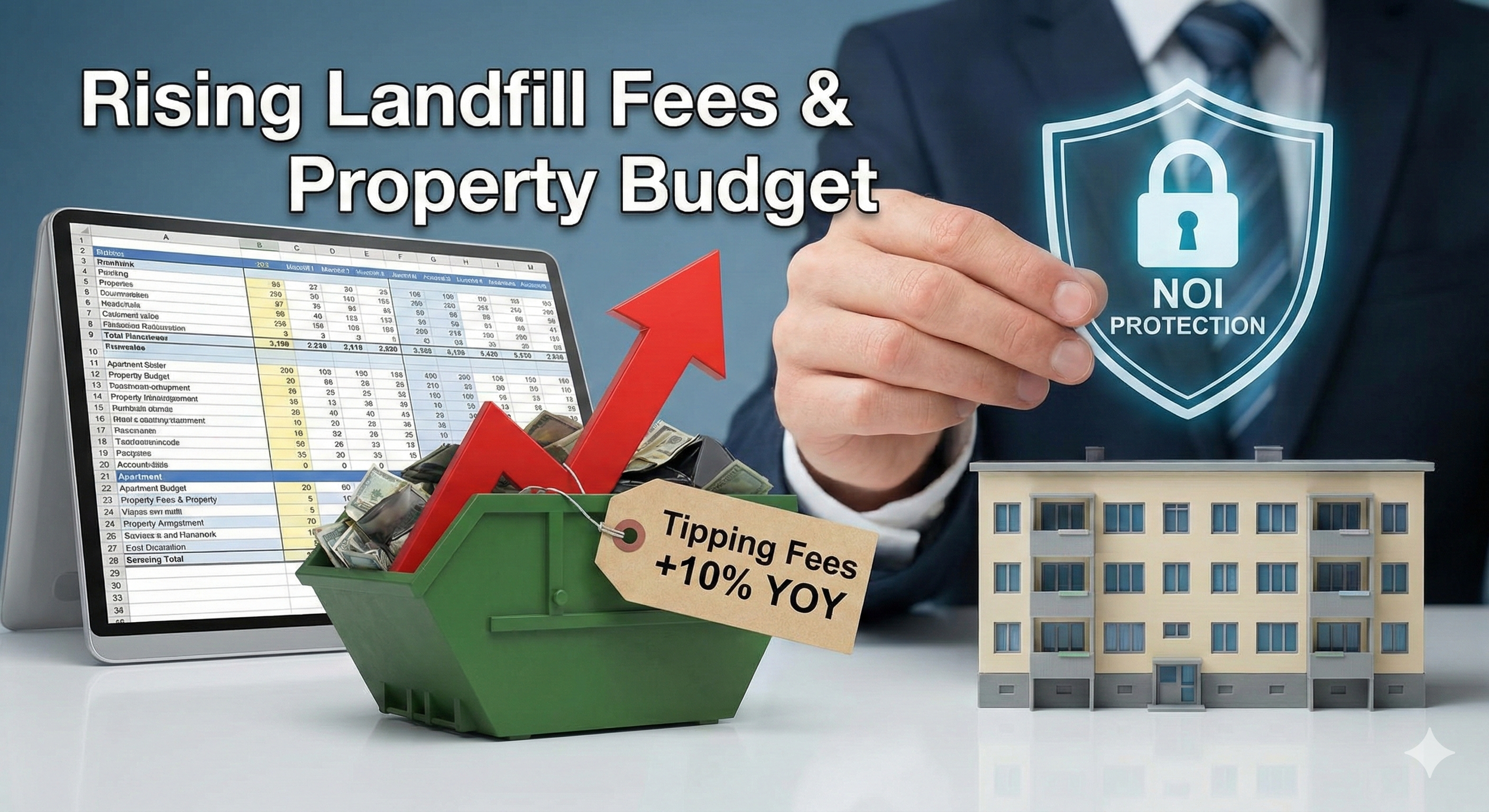
Rising Landfill Fees (10% YOY) Are Quietly Hurting Your Budget—Here’s How Property Management Can Protect NOI
Green Certification Is Earned Once. Sustainability Is Proved Every Night.
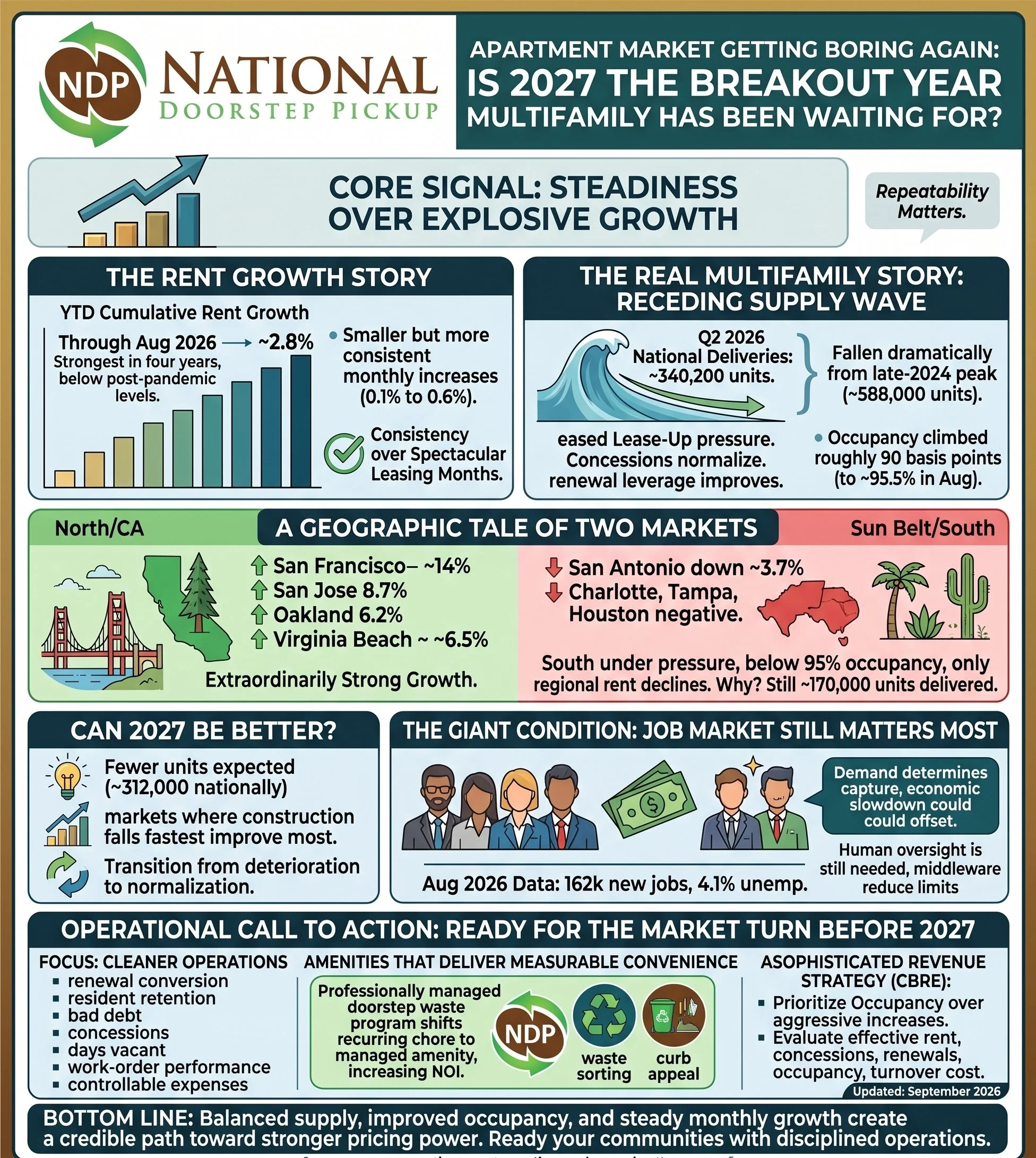
A 2026 Multifamily Outlook for Apartment Owners, Operators, and Property Leaders
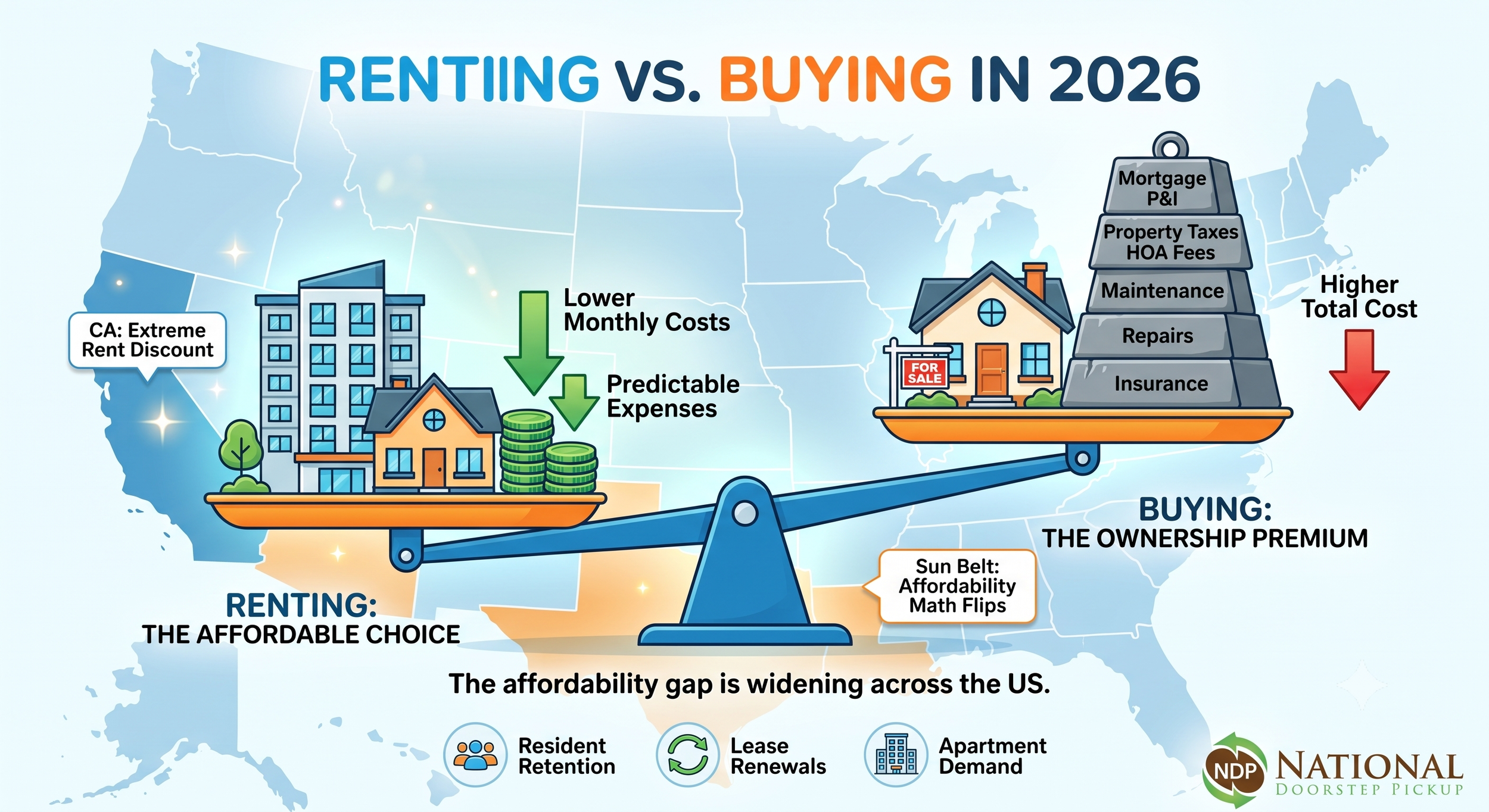
As 2025 closes, multifamily fundamentals are stabilizing after an unprecedented supply cycle. National occupancy remains near historical norms, construction is slowing sharply, and labor pressures—while still real—are becoming more predictable. Entering 2026, success will hinge less on rent growth and more on operational discipline, resident retention, and cost control. A-market competition remains intense, B markets are digesting peak deliveries, and C markets continue to offer stability. In this environment, ancillary services that improve daily convenience, protect compliance, and support NOI—such as valet trash—are emerging as essential tools rather than optional amenities.
Composting Made Simple for Multifamily Apartments
Composting is no longer an optional sustainability feature for multifamily housing. It is rapidly becoming a core operational requirement driven by municipal mandates, rising landfill costs, and increasing resident expectations for environmentally responsible living.
For property management, the challenge is not understanding why composting matters—it is understanding how to implement composting in a way that is compliant, operationally efficient, resident-friendly, and financially positive.
Urban Apartment Composting: Turn Waste Into a High-Value Amenity
Why Smart Property Management Is Turning Food Waste Into NOI: The Real Benefits of Composting for Apartment Communities
Why Smart Property Managers Are Launching Composting Programs Now—Before Regulations Force Their Hand
How Often Should GreenPlus™ Valet Trash Run?
The Frequency Sweet Spot: Why 5 Nights is the Industry Standard
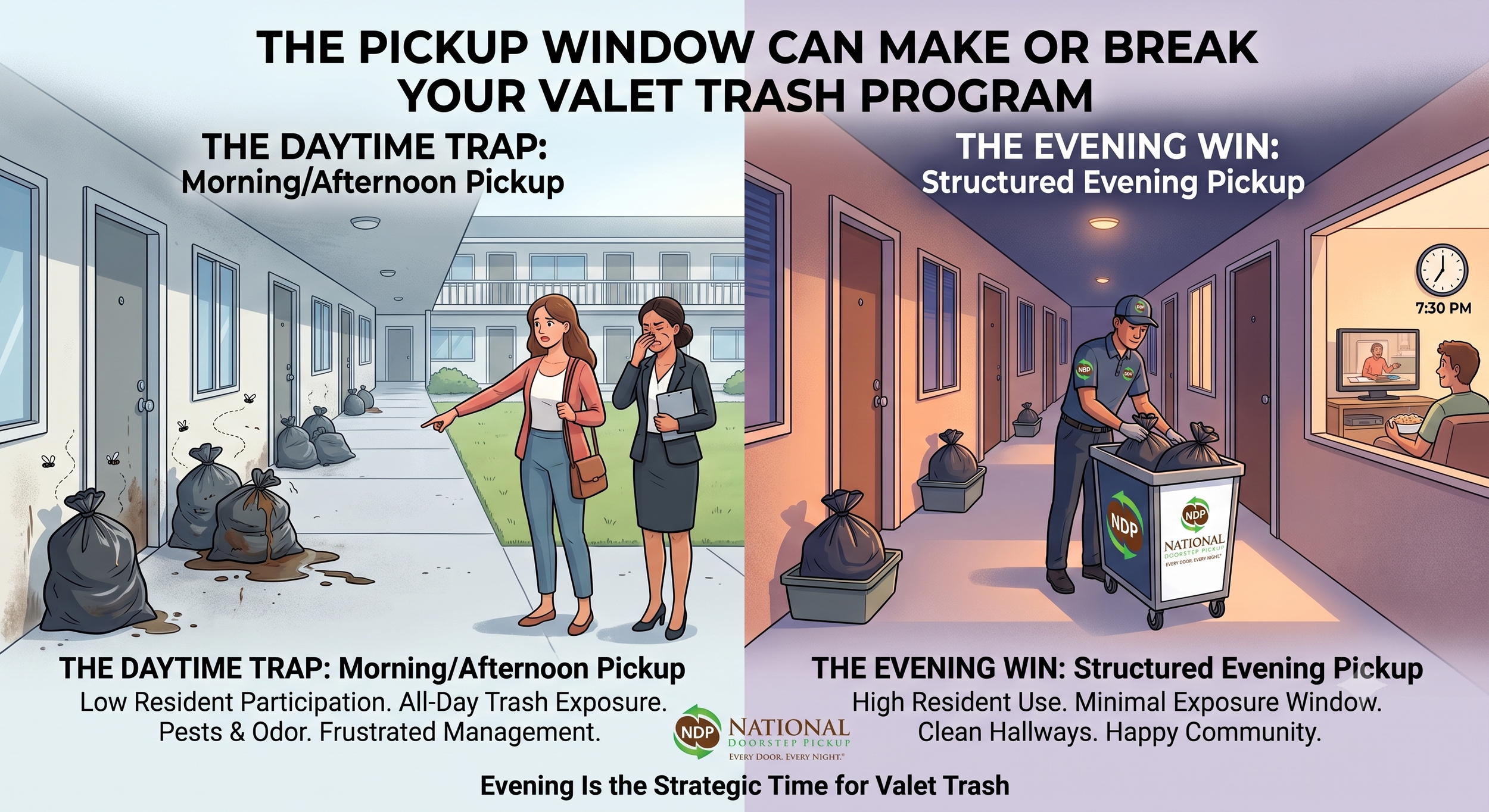
While residents produce waste every day, the valet trash industry has identified a "sweet spot" for collection frequency that maximizes convenience while maintaining operational efficiency: five nights per week, typically Sunday through Thursday, starting at 8:00 PM. Still, every community is different!
Why this schedule? It aligns perfectly with the natural rhythms of multifamily living. Sunday evening is critical for clearing weekend accumulation before the work week begins, while midweek pickups handle daily household waste. Friday and Saturday nights are generally excluded to allow residents privacy during their leisure weekends and to reduce foot traffic in hallways during social hours.
However, frequency means nothing without reliability. A missed pickup on a Tuesday means overflow on Wednesday. That is why Green Plus doesn't just commit to a schedule; we verify it. Utilizing our Proof of Pickup® technology, our uniformed porters scan each container, providing property managers with real-time data and visual confirmation that "Every Door. Every Night.®" is more than a slogan—it’s a verifiable reality.