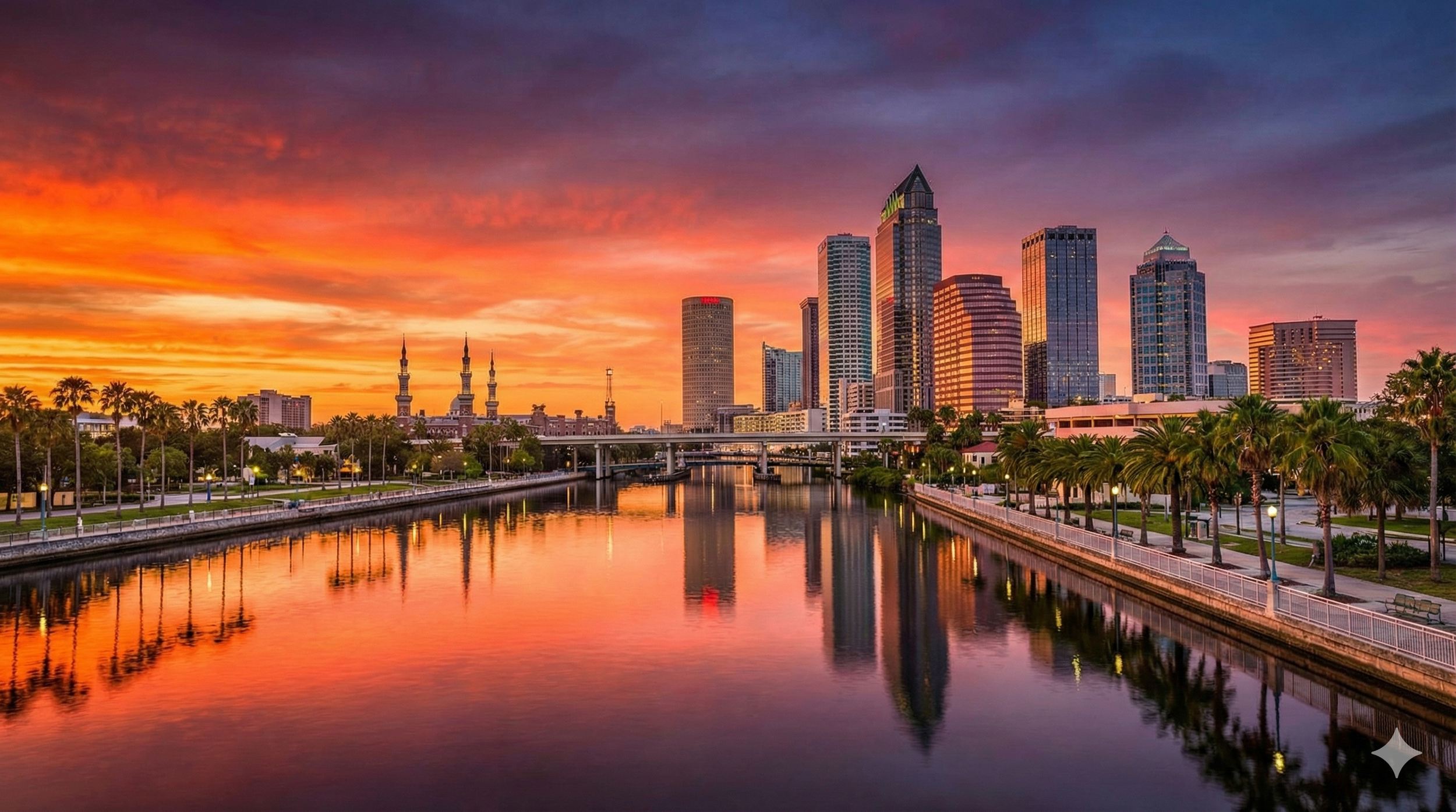
Regional Facility & Operating Guide: Electronics, Paint, Batteries & Multifamily Waste — City of Tampa / Hillsborough County, FL
This guide helps apartment residents and property teams identify published disposal options for eligible household-generated paint, electronics, rechargeable batteries and other materials requiring special handling. The correct service depends on whether the property is inside the City of Tampa solid-waste service area, in New Tampa, or elsewhere in unincorporated Hillsborough County. A Tampa mailing address does not by itself identify the governing collection system. [1][2][3]
City of Tampa Recycling Status:
Recycling is currently voluntary for Tampa residents and businesses.
The City does not currently provide regular commercial recycling collection to apartment or multifamily properties, and the City states that it does not have an ordinance requiring commercial recycling.
Apartment and multifamily management may contract with a private recycling company of its choice.
A limited City multifamily recycling pilot may be available to qualifying properties, but application does not guarantee participation.
[1][4]
Unincorporated Hillsborough County:
Most apartments, condominiums, townhomes and mobile-home developments use commercial solid-waste accounts.
Commercial garbage customers must use an authorized County franchise collector and generally require an approved Waste Profile before commercial collection begins.
Commercial recycling is an open-market service that may be provided by a company selected by property management.
[2][3]
Apartment Property-Management Limitation:
Individual residents may self-deliver eligible household-generated paint, electronics, batteries and household hazardous waste using the applicable residential program and required identification.
Property management should not assume that pooled resident material, abandoned items, maintenance waste, office waste, nonprofit waste, contractor-generated material or consolidated property loads remain eligible for residential drop-off.
Hillsborough County does not accept business waste at Community Collection Centers or household-hazardous-waste events.
Contact an authorized commercial vendor before transporting property-generated or commercially classified material.
[2][5]
Electronics & Paint Drop-Off — Monday–Saturday
The Northwest County Solid Waste Facility includes a Community Collection Center that accepts eligible residential paint, electronics, rechargeable batteries, lead-acid batteries and other listed household materials during normal operating hours. Eligible Tampa residents may use County facilities for specified household paint, batteries, electronics and HHW under the City–County arrangement. This does not create a general free-disposal entitlement for Tampa commercial or apartment-property waste. [5][6][7]
- Facility: Northwest County Solid Waste Facility — Community Collection Center[6]
- Address: 8001 W. Linebaugh Avenue, Tampa, FL 33625[6]
- Hours: Monday–Saturday: 7:30 AM–5:00 PM | Sunday: Closed[6]
- Residential Electronics Limit: No more than five accepted electronic items per household per month under current County guidance.[5]
- Paint Limit: No more than 10 one-gallon containers or five five-gallon containers per household per month; containers must be sealed and not leaking.[5][8]
- Accepted Battery Categories: Rechargeable and lead-acid batteries are accepted under County handling rules.[6][9]
- Identification: Bring a state-issued photo ID showing a Hillsborough County residential address. Depending on the material, a current property-tax assessment showing the applicable solid-waste assessment may also be required.[5][7]
Broader Household Hazardous Waste — Designated Saturdays
Broader household hazardous waste—including accepted cleaners, solvents, pesticides, pool chemicals, automotive fluids and other listed material—is collected at designated monthly HHW events rather than through the daily electronics-and-paint schedule. Electronics are handled through Community Collection Centers, not through monthly HHW events. [5][8]
- First Saturday: Sheldon Road Household Hazardous Waste Collection Site — 9805 Sheldon Road, Tampa, 8:00 AM–2:00 PM.[8]
- Second Saturday: South County Household Hazardous Waste Collection Site — 13000 U.S. Highway 41, Gibsonton, 8:00 AM–2:00 PM.[8]
- Third Saturday: Hillsborough Heights Household Hazardous Waste Collection Site — 6209 County Road 579, Seffner, 8:00 AM–2:00 PM.[8]
- Eligibility: Hillsborough County household residents—including renters and residents of apartments, condominiums, townhomes and manufactured homes—may use the program with the required residential identification. No business waste is accepted.[8]
City of Tampa Apartments — Voluntary Private Recycling
Recycling is not automatically implemented at Tampa apartment and multifamily properties. Property management may request proposals from private recycling companies and should document the provider, accepted materials, container type, collection frequency, contamination charges and processing destination. Once private service begins, residents must follow the contracted provider’s accepted-material list rather than assuming that every City residential-cart item is accepted. [1][10]
Tampa Apartment Resident Drop-Off:
City residents whose apartment community does not provide recycling may use the City’s self-service recycling drop-off at the McKay Bay Waste Management Resource Facility.
Recyclables must be loose and unbagged, cardboard must be flattened and all material must fit inside the recycling container.
Material left outside the container is treated as illegal dumping under the City’s published instructions.
[11]
Unincorporated Hillsborough County Multifamily Accounts
Most multifamily developments in unincorporated Hillsborough County use commercial dumpster service rather than County curbside carts. Commercial garbage collection must be obtained from an authorized County franchise collector and generally occur at least weekly. Containers must not be overfilled, and garbage should not be placed outside the approved container. Commercial recycling is open market and may be contracted separately. [2][3]
- Franchise Garbage: Obtain service from one of the County’s authorized commercial franchise collectors.[3]
- Waste Profile: Commercial customers generally require an approved County Waste Profile before a franchise collector begins service.[3]
- Recycling Provider: Property management may select a commercial recycling provider; recycling is not restricted to the garbage franchise collector.[3][12]
- Container Operations: Keep waste below the rim, keep lids closed where applicable and maintain clear access for the collection vehicle.[3]
- Resident Drop-Off: Individual multifamily residents may use specified no-cost residential programs with photo identification. That benefit does not authorize employees to transport consolidated property loads.[2]
S.W.E.E.P. Bulk Collection — Four Units or Fewer
Tampa’s S.W.E.E.P. bulky-debris program is reserved for residential customers with active City solid-waste accounts who live in single-family homes or multi-unit properties containing four units or fewer.
The program does not serve New Tampa, which receives Hillsborough County solid-waste service.
[13]
Apartment communities containing five or more units should not direct residents to place furniture, mattresses, appliances or other bulky items at the curb under the S.W.E.E.P. schedule.
Management should arrange a property-specific bulk service, special pickup, roll-off or other authorized disposal method.
McKay Bay Scale House — Eligibility, Fees & Exclusions
McKay Bay provides free disposal of specified bulky items only to qualifying Tampa residents with active City residential solid-waste accounts. The customer’s identification and proof of the active account must show the same name, and the waste must originate from the account address. The City defines residential property for this free-disposal purpose as property containing four or fewer housing units. [14]
- Facility: McKay Bay Scale House[14]
- Address: 114 S. 34th Street, Tampa, FL 33605[14]
- Hours: Monday, Tuesday, Thursday and Friday: 7:00 AM–5:30 PM | Wednesday and Saturday: 7:00 AM–3:30 PM | Sunday: Closed[14]
- Charges Apply To: Commercial waste, commercial vehicles, unusually large quantities, construction debris, household garbage, mixed loads, carpet and tires.[14]
- Not Accepted: Electronics, wet paint, fluorescent bulbs, hazardous waste, liquid waste, gasoline and other listed prohibited material.[14]
Glass & Recycling Carts — City Green vs. County Blue
Unincorporated Hillsborough County:
Clean, dry and empty glass bottles and jars are accepted in the County’s blue residential recycling cart.
Window glass, mirrors and other non-container glass are excluded.
[15]
City of Tampa:
Eligible City curbside customers use green recycling carts.
Apartment and commercial properties using private recycling must follow the accepted-material list supplied by their contracted provider.
Do not apply County blue-cart instructions automatically to a Tampa multifamily recycling program.
[1][10]
Rechargeable & Lithium-Ion Battery Preparation
Do not place rechargeable, lithium-ion, nickel-cadmium, nickel-metal-hydride or single-use lithium batteries in ordinary garbage or recycling.
Before residential drop-off, cover terminals with clear packing tape or place each battery in an individual zip-close plastic bag.
Do not dismantle batteries, and keep the battery type visible for facility staff.
Lead-acid batteries are handled separately.
[8][9]
Alkaline batteries are not accepted at County HHW collections and may be placed in garbage under current County guidance—not in recycling.
[8]
Off-Site Transportation & Self-Hauling
A doorstep collection provider should ordinarily transfer tied resident waste only to the property’s approved on-site container.
Recurring off-site transportation or self-hauling must comply with the governing City or County requirements.
[3][16]
Inside Tampa:
Commercial solid-waste haulers operating in the City service area require a City franchise agreement.
Businesses transporting their own solid or special waste require the applicable City self-hauler permit.
[16]
Unincorporated Hillsborough County:
Frequent commercial self-haulers must obtain County approval before disposal.
Commercial disposal fees apply, and an approved Waste Profile may be required.
[3]
Florida Post-2012 Development Provision
Section 403.706(2)(c), Florida Statutes, conditionally requires adequate recycling space and an adequate receptacle for certain newly developed multifamily or commercial properties receiving a certificate of occupancy on or after July 1, 2012, where the applicable local government has an established recycling program that provides receptacles and regular pickup. This is a development condition and does not create a universal statewide recycling mandate for every existing Tampa or Hillsborough County apartment property. [17]
Apartment Property-Manager Operating Checklist
- Confirm Jurisdiction: Determine whether the property is inside Tampa’s solid-waste service area, in New Tampa or elsewhere in unincorporated Hillsborough County.
- Confirm Account Type: Document whether the property has a City commercial account, County commercial account, private franchise service or another approved configuration.
- Maintain Required Garbage Service: Keep the applicable municipal or franchise garbage account active and appropriately sized.
- Document Voluntary Recycling: For Tampa apartments, retain the private recycling agreement and accepted-material list. For County apartments, record the open-market recycling provider separately from franchise garbage service.
- Right-Size Containers: Use unit count, bedrooms, occupancy, turnover, service frequency and compactor capacity to prevent overflow.
- Preserve Truck Access: Keep gates, parking areas, loading zones and enclosure approaches clear for service vehicles.
- Publish a Bulk Procedure: Do not apply S.W.E.E.P. or free McKay Bay residential eligibility to five-or-more-unit apartment properties without verification.
- Separate HHW and Electronics: Direct residents to self-deliver eligible household material. Do not transport pooled property waste through residential programs.
- Limit Valet Scope: Ensure doorstep collection ends at the approved on-site container unless the provider holds the required franchise, permit or disposal approval.
- Retain Documentation: Keep contracts, Waste Profiles, permits, container maps, invoices, resident notices, contamination logs, photographs and disposal receipts.
Operational Notice: Facility hours, limits, accepted materials, City pilot availability, County franchise providers, disposal fees and account classifications may change. Confirm current requirements before transporting hazardous, unusual, pooled or commercially generated waste. This page provides general operational information and is not legal advice, a regulatory certification or a guarantee that a particular material or load will be accepted.
Authoritative Government Sources: [1] City of Tampa Recycling FAQs — voluntary recycling, apartment guidance, private commercial recycling and no commercial mandate | [2] Hillsborough County Multifamily Trash and Recycling — commercial accounts and resident drop-off eligibility | [3] Hillsborough County Commercial Garbage and Recycling — franchise collectors, Waste Profiles, self-hauling and open-market recycling | [4] City of Tampa Multifamily Commercial Recycling Pilot — qualifying-property application and limited availability | [5] Hillsborough County Paint and Electronics — limits, residential eligibility and business-waste exclusion | [6] Northwest County Solid Waste Facility — address, hours and accepted materials | [7] Hillsborough County Disposal Services for Tampa and Temple Terrace Residents | [8] Hillsborough County HHW — accepted material, monthly sites, paint limits and household eligibility | [9] Hillsborough County Battery Recovery — battery preparation and drop-off locations | [10] City of Tampa Commercial Recycling — private service information | [11] City of Tampa Recycling Drop-Off Station — McKay Bay self-service rules | [12] Hillsborough County Commercial Recycling — open-market provider structure | [13] City of Tampa S.W.E.E.P. — four-or-fewer-unit eligibility and New Tampa exclusion | [14] McKay Bay Scale House — hours, free-disposal eligibility, charges and excluded materials | [15] Hillsborough County Recycling — County blue-cart glass guidance | [16] City of Tampa Private-Hauler Franchise and Self-Hauler Permit Requirements | [17] Florida Statutes §403.706 — conditional post-July 1, 2012 recycling-space provision
Northwest County Solid Waste Facility — Community Collection Center
Address: 8001 W. Linebaugh Avenue, Tampa, FL 33625
Regional Facility & Operating Guide: Household Chemicals, Batteries, Electronics & Multifamily Waste — Pinellas County, FL
This guide helps apartment residents and property teams identify Pinellas County’s published disposal and recycling options for eligible household-generated chemicals, paint, rechargeable batteries, electronics and other materials requiring special handling. Trash and recycling collection is managed differently by Pinellas County’s cities and towns, unincorporated areas and the Lealman Solid Waste Collection and Disposal District. A mailing address that says Clearwater, Largo, St. Petersburg or another municipality does not necessarily establish that the property is inside that city. [1]
Pinellas County Multifamily Recycling Status:
Pinellas County has 24 cities and towns, and each municipality manages or contracts for its own recycling collection program.
Pinellas County Solid Waste does not provide routine trash or recycling collection outside the Lealman district.
In unincorporated areas, property owners select a licensed trash and recycling hauler.
County data shows that multifamily recycling access remains incomplete, and current County sources reviewed do not establish one universal, countywide unit-triggered recycling mandate for every apartment or condominium property.
Property management must confirm the applicable city, district, private-hauler contract and account classification.
[1][2][3]
Apartment Property-Management Limitation:
Pinellas County’s Household Hazardous Waste program is for Pinellas County households only.
Individual residents should ordinarily self-deliver qualifying household-generated material and present the required government-issued identification.
Property management should not assume that pooled resident chemicals, abandoned paint, maintenance products, office waste, contractor waste, hobbyist waste, nonprofit waste or consolidated property loads remain eligible for free household disposal.
Businesses, hobbyists, haulers and nonprofits must use the County’s business collection pathway or another authorized commercial vendor.
[4][5]
Household Hazardous Waste Center — St. Petersburg
Pinellas County’s main Household Hazardous Waste Center accepts eligible household chemicals, paint products, rechargeable batteries, selected single-use batteries, automotive fluids, fluorescent lamps and other published materials at no charge to Pinellas County households. The Center accepts household chemicals and batteries—not ordinary plug-in electronics. Material limits are per vehicle per day, commercial or industrial-grade material is excluded and loads are evaluated upon arrival. [4][6]
- Facility: Pinellas County Household Hazardous Waste Center[4]
- Address: 2855 109th Avenue N., St. Petersburg, FL 33716[4][6]
- Weekday Hours: Tuesday–Friday: 7:00 AM–5:00 PM; closed Monday.[6]
- Saturday Hours: First and third Saturday of each month: 7:00 AM–5:00 PM.[6]
- Sunday: Closed.[6]
- Identification: Government-issued identification is scanned to verify Pinellas County residency.[4]
HHW North — Clearwater (Select Saturdays)
HHW North provides a second household-chemical collection location in north Pinellas County. It operates only on select Saturdays, so residents should verify the County calendar before travel. Like the main Center, HHW North is limited to eligible household chemicals and batteries and no longer accepts ordinary electronics. [4][6]
- Facility: Pinellas County HHW North[4]
- Address: 29582 U.S. Highway 19 N., Clearwater, FL[4][6]
- Hours: Select Saturdays: 9:00 AM–2:00 PM; consult the current HHW calendar for operating dates.[4][7]
Household Chemical Limits & Packaging
Pinellas County publishes per-vehicle, per-day household limits. Current examples include five gallons each of oil and antifreeze, up to two five-gallon DOT containers total of gasoline and diesel, 12 fluorescent bulbs, and a combined paint-product limit of 20 one-gallon containers and five five-gallon containers. Vape devices are limited to 12, and e-bike batteries are limited to one. Customers exceeding household limits may be referred to the business collection program. [4]
- Do: Place containers upright in a box or tray and use packing material to reduce breakage.
- Leaking Containers: Place a leaking container in a clear sealed bag, then place it in a box or tray.
- Transport: Keep chemicals in the trunk or truck bed, away from passengers.
- Never Mix: Do not combine chemicals or pour materials into one container.[4]
Electronics — Separate from the HHW Program
Pinellas County’s HHW Center and HHW North no longer recycle ordinary electronics such as televisions, computer monitors and other plug-in devices.
Electronics that do not contain rechargeable batteries may be reused or recycled through a listed electronics recycler, placed in garbage if they fit and are otherwise acceptable, or delivered to the County Solid Waste Disposal Complex for a fee.
Large items should be coordinated with the applicable municipality or private hauler.
[6][8]
Electronics with Rechargeable Batteries:
Remove the battery and take it to a battery drop-off location.
When the battery cannot be removed, take the entire device to a battery drop-off center identified through the County’s Where Does It Go? Search Tool.
[8][9]
Business Electronics & Chemical Collection
Eligible businesses—including an apartment property when management or maintenance operations generate the waste—may use Pinellas County’s Business Electronics and Chemical Collection events at contractor-negotiated rates. The business must qualify as a Very Small Quantity Generator, generally generating less than 220 pounds of hazardous waste and less than 2.2 pounds of acute hazardous waste per month and remaining within the applicable accumulation limits. [5][10]
- Schedule: Second Wednesday of each month: 9:00 AM–4:00 PM under the County’s 2026 schedule.[5]
- Location: 2857 110th Avenue N., St. Petersburg, FL 33716.[5]
- Cost: Businesses pay the County contractor’s published or negotiated rates.[5]
- Call Ahead: Confirm eligibility, pricing, packing restrictions, unknown wastes and larger quantities before transport.[5]
- Documentation: Retain the disposal receipt and any hazardous-waste determination in the property’s environmental file.[5][10]
Municipal vs. Unincorporated Multifamily Collection
If a property is inside a Pinellas County city or town, that municipality manages the trash and recycling program directly or through a contracted provider. If a property is in an unincorporated area, the owner selects a licensed trash and recycling hauler and should request service proposals based on unit count, container type, access, frequency, recycling materials and contamination terms. Some licensed providers serve only businesses and multifamily developments, while others have limited service territories. [1]
- Confirm Jurisdiction: Use the County address-lookup tool rather than relying on the mailing city.[1]
- Confirm Provider Authority: Use the municipality’s provider or a County-listed licensed hauler for unincorporated property.[1]
- Document Recycling Separately: Ask whether recycling is municipal, included with garbage, subscription-based or separately contracted.
- Do Not Generalize: A St. Petersburg, Clearwater, Largo, Dunedin, Pinellas Park or beach-community program should not be applied to a property outside that municipality.
Lealman District — Four-Unit Boundary
Pinellas County provides district collection in East Lealman through a Municipal Services Benefit Unit and a contracted hauler. The district covers qualifying single-family, duplex, triplex and quadplex residential units. Multifamily residences containing more than four dwelling units are not included and must maintain an appropriate private or commercial service arrangement. Curbside recycling for covered Lealman residential units is subscription-based. [11]
Countywide Mixed Recycling Guidance
Pinellas County publishes a standardized list of materials accepted across mixed-recycling curbside and drop-off programs:
glass bottles and jars, plastic bottles and jugs, metal food and beverage cans, food and beverage cartons, and paper and cardboard.
Materials should be clean, dry, empty and unbagged, with caps and lids removed.
Property managers should still confirm the contracted provider’s current rules.
[12]
Do not place bagged recycling, plastic bags or film, foam packaging, food, liquids, cords, wires, hoses, tarps, batteries or ordinary electronics in mixed-recycling containers.
[12]
Free Mixed-Recycling Drop-Off Centers
Pinellas County and its municipalities maintain more than 30 mixed-recycling drop-off centers available to residents without charge. These sites accept the County’s standard mixed-recycling materials. They are resident self-service locations and should not be used as an apartment property’s commercial collection system or for consolidated management loads without approval. [13]
Rechargeable & Lithium Battery Fire Prevention
Rechargeable batteries and devices containing them must not be placed in garbage or mixed recycling.
Pinellas County identifies these batteries as a leading cause of fires in collection vehicles and processing facilities.
Residents should remove the battery and use a listed battery drop-off location; when removal is not possible, the entire device should go to a battery drop-off center.
[9][14]
Property management should maintain a written procedure for abandoned e-bikes, scooters, power tools, cordless vacuums, laptops, phones, vape devices and damaged battery packs.
Damaged, swollen, leaking or overheated batteries should be isolated from ordinary waste and managed through an appropriate professional disposal pathway.
Solid Waste Disposal Complex — Bulk & Self-Haul
The Pinellas County Solid Waste Disposal Complex accepts qualifying waste for a fee. Passenger cars, pickup trucks and vans may be charged published flat fees, while larger vehicles, modified vehicles and trailers are generally weighed and charged by ton. Apartment residents and management should confirm material acceptance, personal protective equipment, vehicle classification and current fees before travel. [15][16]
- Facility: Pinellas County Solid Waste Disposal Complex[15]
- Address: 3095 114th Avenue N., St. Petersburg, FL 33716[15]
- Hours: Monday–Friday: 6:00 AM–6:00 PM | Saturday: 7:00 AM–5:00 PM | Sunday: Closed[15]
- Fees: Current disposal fees vary by vehicle and load; verify the County fee page before travel.[16]
- Apartment Operating Rule: Do not permit sofas, mattresses, appliances, renovation debris or move-out loads to accumulate beside the enclosure. Arrange municipal pickup, private-hauler bulk service, roll-off service or lawful self-haul.
Florida Post-2012 Development Provision
Section 403.706(2)(c), Florida Statutes, conditionally requires adequate recycling space and an adequate receptacle for certain newly developed multifamily or commercial properties receiving a certificate of occupancy on or after July 1, 2012, where the applicable local government has an established recycling program that provides receptacles and regular pickup. This is a development condition and does not create a universal statewide recycling mandate for every existing Pinellas County apartment property. [17]
Apartment Property-Manager Operating Checklist
- Confirm Jurisdiction: Determine whether the property is inside a city or town, in unincorporated Pinellas County or inside the Lealman service district.
- Confirm Account Classification: Document whether the property uses municipal residential service, municipal commercial service, a private multifamily account or another approved configuration.
- Maintain Authorized Garbage Service: Use the municipality’s provider or a County-listed licensed hauler for unincorporated property.
- Document Recycling Access: Confirm whether on-site recycling is included, subscription-based or separately contracted and retain the current accepted-material list.
- Right-Size Containers: Use occupied units, bedrooms, seasonal demand, turnover, collection frequency and compactor capacity to prevent overflow.
- Preserve Access: Keep gates, parking areas, loading zones, enclosure aprons and overhead clearances available to collection vehicles.
- Publish a Bulk Process: Identify the approved municipal, hauler, roll-off or self-haul option before residents place furniture or appliances outside.
- Separate HHW from Electronics: HHW centers accept household chemicals and batteries but no longer accept ordinary plug-in electronics.
- Keep Business Waste Commercial: Use Business Collection Events or an authorized vendor for maintenance-generated chemicals, pooled resident materials and property electronics.
- Control Batteries: Keep rechargeable batteries and battery-powered devices out of garbage and recycling and maintain a safe abandoned-device procedure.
- Limit Valet Scope: Doorstep collection should ordinarily end at the property’s approved on-site container unless off-site hauling authority has been confirmed.
- Retain Documentation: Keep contracts, provider approvals, container maps, resident notices, contamination logs, photographs, business-waste determinations and disposal receipts.
Operational Notice: Facility schedules, municipal providers, licensed-hauler service areas, material limits, disposal fees and recycling rules may change. Confirm current requirements before transporting hazardous, unusual, pooled or commercially generated waste. This page provides general operational information and is not legal advice, a regulatory certification or a guarantee that a particular material or load will be accepted.
Authoritative Government Sources: [1] Pinellas County Collection: Trash & Recycling — municipal contacts, unincorporated licensed haulers and Lealman distinction | [2] Pinellas County Recycling Resources for Municipalities — multifamily access data and countywide program information | [3] Pinellas County Reduce, Reuse and Recycle — municipal and unincorporated service structure | [4] Pinellas County Household Hazardous Waste Collection — eligibility, accepted chemicals, limits, packaging and excluded materials | [5] Pinellas County Business Electronics and Chemical Collection — VSQG eligibility, schedule, location, rates and receipts | [6] Pinellas County Facility Hours — HHW Center, HHW North and electronics exclusion | [7] Pinellas County HHW Program Calendar — current operating dates | [8] Pinellas County Electronics Disposal — ordinary electronics and rechargeable-battery distinctions | [9] Pinellas County Battery Disposal — battery-powered devices and free drop-off guidance | [10] Pinellas County Small Quantity Generator Program — hazardous-waste categories and business duties | [11] Pinellas County Lealman FAQ — covered properties, four-unit boundary and subscription recycling | [12] Pinellas County Recycling FAQ — accepted mixed recyclables, contamination and participation options | [13] Pinellas County Mixed-Recycling Drop-Off Centers — resident sites and accepted materials | [14] Pinellas County Rechargeable-Battery Fire Prevention | [15] Pinellas County Solid Waste Disposal Complex Hours | [16] Pinellas County Disposal Fees — vehicle and weight-based charges | [17] Florida Statutes §403.706 — conditional post-July 1, 2012 recycling-space provision
Pinellas County Solid Waste Disposal Complex
3095 114th Avenue N., St. Petersburg, FL 33716
Regional Facility & Operating Guide: Household Chemicals, Paint, Electronics, Batteries & Multifamily Waste — Pasco County, FL
This guide helps apartment residents and property teams identify Pasco County’s published options for eligible household-generated chemicals, paint, electronics, batteries, bulk waste and recyclable materials. Pasco County does not directly collect routine curbside trash or recycling. Collection is provided by licensed private haulers, while incorporated municipalities may maintain separate municipal or franchise arrangements. A New Port Richey, Dade City, Zephyrhills, Land O’ Lakes, Wesley Chapel, Holiday, Hudson or Spring Hill mailing address does not by itself determine the governing collection system. [1][2]
Pasco County Recycling Status:
Recycling is currently voluntary in Pasco County.
The County does not pick up recycling; the customer’s private trash hauler provides the collection schedule and transports accepted recyclables to the processing facility.
The residential curbside recycling program is intended for single-family residential units and multifamily units being serviced as single-family.
Properties using dumpsters may arrange recycling for an additional charge or use an appropriate recycling drop-off option.
[2]
Apartment Dumpster Service:
Not every licensed hauler provides dumpster service.
Property management must confirm container size, collection frequency, access requirements, additional recycling cost and service territory directly with the selected hauler.
Pasco County establishes maximum dumpster charges based on container size and service frequency, but the County does not manage the property’s daily collection schedule.
[1]
Apartment Property-Management Limitation:
Pasco County’s household hazardous-waste centers are available to Pasco County residents and do not accept commercial or business waste.
Individual residents should ordinarily self-deliver eligible household-generated material.
Property management should not assume that pooled resident chemicals, abandoned paint, maintenance products, office waste, contractor-generated material or consolidated property loads remain eligible for the residential program.
Businesses must follow the County’s hazardous-waste generator requirements and use a person or facility authorized to receive the material.
[3][4]
West Pasco Resource Recovery — HHW, Electronics, Recycling & Disposal
The West Pasco Resource Recovery facility provides household hazardous-waste, electronics, recycling and solid-waste services under the County’s published material, residency and fee rules. Pasco County residents may deliver eligible household material, while commercial waste and larger property-generated loads require the appropriate commercial pathway and fees. [1][3]
- Facility: West Pasco Resource Recovery[1][3]
- Address: 14606 Hays Road, Spring Hill, FL[1][3]
- Published Hours: Monday–Saturday: 7:00 AM–4:30 PM[1][3]
- Residency: Proof of Pasco County residency is required for resident services; out-of-county waste is not accepted.[1]
- Commercial Loads: Commercial and licensed-hauler loads may be directed through the applicable West Pasco commercial disposal process and fee schedule. Residential HHW eligibility does not extend to business waste.[1][3]
East Pasco Transfer Station — Residential Use Only
The East Pasco Transfer Station provides residential HHW, electronics, recycling and self-haul options for eligible Pasco County residents. The County states that the East Pasco Transfer Station does not accept commercial waste. Construction and demolition debris must be directed to the West Pasco facility or another authorized commercial facility. [1][5]
- Facility: East Pasco Transfer Station[1]
- Address: 9626 Handcart Road, Dade City, FL[1][3]
- HHW and General Facility Hours: Monday–Saturday: 7:00 AM–4:30 PM[1][3]
- Recycling-Center Hours: The County recycling page currently lists Monday–Saturday: 7:00 AM–4:00 PM; verify the intended service area before travel.[2]
- Commercial Restriction: No commercial loads are accepted at East Pasco.[1][5]
Residential HHW, Paint & Electronics — Current Limits and Fees
Pasco County accepts selected household hazardous waste and electronics from eligible residents at the West and East facilities. Some materials are free within daily household limits, while televisions, computer equipment and propane tanks carry item fees. Approval and additional disposal charges may apply when published household limits are exceeded. [3]
- Computer Monitor, Tower or Laptop: $5 per item.[3]
- Television Up to 35 Inches: $5 per item.[3]
- Television 36 Inches or Larger, Projection or Console: $10 per item.[3]
- 20-Pound Propane Tank: $5 per tank.[3]
- Gasoline or Diesel: First 10 gallons per day free; larger amounts require approval and may be charged per gallon.[3]
- Antifreeze: First 10 gallons per day free; larger amounts require approval.[3]
- Latex and Oil-Based Paint: First 30 gallons per day free; larger amounts require approval and may be charged at the current disposal rate.[3]
- Household Batteries, Cooking Oil and Fluorescent Lamps: Accepted at no charge under current residential program rules.[3]
Not Accepted Through Residential HHW:
Commercial or business waste, prescription medication, sharps, ammunition, biomedical waste, explosives, fireworks, acetylene cylinders, radioactive material and drums of any size are excluded.
Contact the appropriate law-enforcement, healthcare, commercial hazardous-waste or specialty program for these materials.
[3]
Business Hazardous Waste & Generator Classification
Apartment management, maintenance operations and contractors may become regulated hazardous-waste generators when they generate, collect or store qualifying hazardous material. Pasco County identifies the federal generator categories according to monthly generation and accumulation levels. Very Small Quantity Generators must ensure that hazardous waste is delivered to a person or facility authorized to handle it. [4]
- Very Small Quantity Generator: Generates 220 pounds or less per month of hazardous waste or 2.2 pounds or less of acutely hazardous waste and may not accumulate more than 2,200 pounds.[4]
- Small Quantity Generator: Generates more than 220 pounds but less than 2,200 pounds per month and must comply with EPA identification, accumulation, manifest, container and land-disposal requirements.[4]
- Property-Manager Action: Inventory maintenance chemicals, abandoned resident material and contractor waste before transportation. Contact Pasco County Environmental Compliance or an authorized commercial vendor when generator status or disposal requirements are uncertain.
Pasco County Recycling — Voluntary and Hauler-Provided
Pasco County does not require residents or apartment properties to recycle under the Countywide program described on its current recycling page. The County does not collect recycling; licensed haulers establish the customer’s recycling schedule. A customer paying for twice-weekly residential curbside garbage service may already have once-weekly recycling included, but dumpster service does not include recycling unless it is separately arranged and paid for. [1][2]
Accepted Mixed Recycling — No Glass
Pasco County’s current mixed-recycling list accepts aluminum cans, cardboard, metal food cans, paper and plastic bottles and containers numbered 1, 2, 3, 4, 5 and 7.
Items must be clean and dry.
Property managers should still obtain the current accepted-material list from the contracted hauler.
[2]
Do not place glass, juice or milk cartons, wet or dirty material, plastic bags, Styrofoam, cords, hoses, other tanglers, oversized items or very small loose items in Pasco County mixed recycling.
[2]
Resident Recycling Drop-Off Locations
Residents who use dumpster service or do not have curbside recycling may use an appropriate County recycling drop-off location. These are resident self-service options and should not be treated as an apartment property’s commercial hauling system or used for consolidated management loads without County approval. [2]
- West Pasco Recycling Center: 14606 Hays Road, Spring Hill — Monday–Saturday, 7:00 AM–4:30 PM.[2]
- East Pasco Recycling Center: 9626 Handcart Road, Dade City — Monday–Saturday, 7:00 AM–4:00 PM.[2]
- Holiday Area Recycling: Anclote Gulf Park, 2305 Baillies Bluff Road — Tuesday–Saturday, 7:30 AM–3:30 PM.[2]
- Land O’ Lakes Area Recycling: Senior Services Center, 6801 Wisteria Loop — Monday–Friday, 8:00 AM–3:30 PM.[2]
Bulk Waste & Self-Haul
Pasco County residents may bring large or bulky items to County solid-waste facilities or request assistance from their trash hauler. Proof of residency is required. Residents who do not hire a hauler may deliver up to eight bags of residential garbage per day to the West or East facility without a disposal charge. This resident allowance does not apply to apartment management, business, contractor or commercial loads. [1]
- Furniture and Mixed Loads: Current County rate is $104.03 per ton, or $5.20 per 100 pounds.[1]
- Construction Debris: Accepted at the West Pasco facility only at the current tonnage rate.[1]
- Refrigerators and Air Conditioners: Current published fee is $3 per item.[1]
- Tires: Item or tonnage charges and East Pasco quantity limits apply; confirm the current schedule before travel.[1]
- Apartment Operating Rule: Do not allow sofas, mattresses, appliances, renovation debris, pallets or move-out waste to accumulate beside the dumpster. Arrange hauler bulk service, a roll-off, licensed commercial transport or lawful self-haul.
Commercial Solid-Waste Assessment vs. Collection Charges
Pasco County’s annual solid-waste disposal assessment funds the County disposal system; it does not pay the private hauler for collection and transportation.
Commercial parcels receive a separate annual assessment that may be calculated using building square footage and a generator factor or verified hauler records.
Unpaid assessments may be subject to penalties and lien activity.
[5]
Property managers should keep the County disposal assessment, private collection agreement, recycling service, bulk charges and contamination fees separated in budgeting and contract review.
Municipal Properties & City Limits
Incorporated Pasco County municipalities may use their own municipal departments, exclusive providers, franchise agreements, account classifications and rates. For example, the County’s licensed-hauler list identifies the City of Zephyrhills as serving addresses within its city limits, while New Port Richey provides city-contracted residential and commercial collection. Confirm the parcel boundary and municipal solid-waste rules before applying unincorporated County collection instructions. [1][6]
Off-Site Transportation & Commercial Collection Licensing
A doorstep collection provider should ordinarily transfer tied resident waste only to the property’s approved on-site container. Pasco County publishes a commercial collection license for companies collecting and disposing of solid waste in unincorporated Pasco County. Third-party off-site transportation should not begin until the provider’s County licensing, municipal authority, vehicle requirements, disposal account and material acceptance have been verified. [7]
Florida Post-2012 Development Provision
Section 403.706(2)(c), Florida Statutes, conditionally requires adequate recycling space and an adequate receptacle for certain newly developed multifamily or commercial properties receiving a certificate of occupancy on or after July 1, 2012, where the applicable local government has an established recycling program that provides receptacles and regular pickup. This is a development condition and does not create a universal statewide recycling mandate for every existing Pasco County apartment property. [8]
Apartment Property-Manager Operating Checklist
- Confirm Jurisdiction: Determine whether the property is in unincorporated Pasco County or inside an incorporated municipality before selecting a hauler or applying a collection schedule.
- Confirm Account Classification: Document whether the property is serviced as single-family curbside, residential dumpster, commercial dumpster or another municipal configuration.
- Use an Authorized Hauler: Maintain service with the municipality’s provider or a licensed Pasco County hauler serving the property’s territory.
- Separate Collection from Assessment: Budget the County disposal assessment separately from private-hauler collection, recycling and bulk charges.
- Document Voluntary Recycling: If the property offers recycling, retain the service agreement, container map, accepted-material list, frequency and contamination terms.
- Right-Size Containers: Use occupied units, bedrooms, turnover, pickup frequency and compactor capacity to prevent overflow and extra lifts.
- Preserve Collection Access: Keep gates, parking areas, enclosure aprons and approach lanes available to the hauler.
- Publish a Bulk Procedure: Distinguish resident self-haul, private-hauler bulk service, commercial roll-off service and prohibited enclosure dumping.
- Keep HHW Residential: Direct residents to self-deliver qualifying household material. Do not transport pooled or property-generated waste through the household program.
- Manage Electronics and Batteries: Keep televisions, computers, lithium batteries and rechargeable devices outside ordinary trash and recycling and follow the applicable fee and disposal route.
- Limit Valet Scope: Ensure doorstep collection ends at the approved on-site container unless the provider holds the required County or municipal authority for off-site transportation.
- Retain Documentation: Keep hauler contracts, licenses, assessments, container maps, resident notices, contamination logs, photographs, HHW determinations and disposal receipts.
Operational Notice: Facility hours, disposal fees, accepted materials, licensed-hauler territories, municipal providers and recycling rules may change. Confirm current requirements before transporting hazardous, unusual, pooled or commercially generated waste. This page provides general operational information and is not legal advice, a regulatory certification or a guarantee that a particular material or load will be accepted.
Authoritative Government Sources: [1] Pasco County Trash Information — licensed haulers, dumpster service, self-haul, bulk fees and east/west facility restrictions | [2] Pasco County Recycling — voluntary status, accepted materials, hauler-provided collection and drop-off locations | [3] Pasco County Household Hazardous Waste — resident eligibility, facilities, hours, accepted items, limits and fees | [4] Pasco County Small Quantity Generator Program — generator classifications and authorized-disposal duties | [5] Pasco County Solid Waste Assessment — commercial assessment, liens, facility limits and collection-cost distinction | [6] City of New Port Richey Trash Services — municipal residential and commercial service example | [7] Pasco County Utilities Documents and Forms — commercial solid-waste collection license | [8] Florida Statutes §403.706 — conditional post-July 1, 2012 recycling-space provision
West Pasco Resource Recovery
Address: 14606 Hays Road, Spring Hill, FL
East Pasco Recycling Center:
9626 Handcart Road, Dade City
Tampa Bay Multifamily Waste, Recycling & Property Operations Guide
Tampa Bay apartment owners, regional property managers and community managers: solid-waste and recycling systems change at municipal and county boundaries. National Doorstep Pickup provides doorstep collection, resident education and waste-area operating support designed to complement—not replace—the property’s required municipal, franchise or private-hauler service.
This guide covers major markets in Hillsborough, Pinellas and Pasco counties. It distinguishes municipal service, unincorporated-county service, commercial-account requirements and voluntary recycling arrangements. A mailing city does not determine jurisdiction, and no single Tampa Bay recycling mandate, fine schedule or service provider applies to every apartment property.
- Base Garbage Service: Maintain the applicable municipal, exclusive-franchise or licensed commercial collection account.
- Recycling Status: Confirm whether recycling is municipal, private/open-market, included, subscription-based, separately billed or unavailable.
- Valet Scope: Doorstep collection should ordinarily transfer tied bags to the property’s approved on-site dumpster or compactor.
- Containers & Access: Right-size service, keep waste inside containers, preserve truck access and obtain enclosure or compactor approval where required.
- Bulk & Move-Out Waste: Use the jurisdiction’s special pickup, hauler bulk service, roll-off or lawful self-haul procedure.
- HHW & Batteries: Individual residents may use qualifying household programs; pooled, maintenance-generated and contractor waste requires separate review.
At a Glance: Three-County Operating Framework
Hillsborough County
- Tampa: City garbage system; multifamily/commercial recycling is generally private and voluntary.
- Unincorporated communities: Franchise commercial garbage, approved Waste Profile and open-market recycling.
- Temple Terrace and Plant City: Separate municipal commercial and multifamily systems.
Pinellas County
- Municipal variation: Each city or town manages or contracts its collection program.
- Unincorporated property: Owner selects a County-listed licensed hauler.
- Multifamily access: County data shows recycling access is not universal; verify property service directly.
Pasco County
- Unincorporated communities: Licensed private haulers; recycling is voluntary and dumpster recycling costs extra.
- Municipal variation: New Port Richey, Dade City and Zephyrhills maintain separate City systems.
- Assessment: County disposal assessments are separate from private-hauler collection charges.
Tampa Bay Apartment Property-Manager Operating Matrix
Swipe or drag horizontally to view the full table. The market column remains fixed.
| Market / Jurisdiction | Base Service Structure | Recycling / Multifamily Status | Property-Manager Priorities | Official Sources |
|---|---|---|---|---|
| Tampa Hillsborough County municipality |
City Solid Waste serves properties within the City service area. For recycling purposes, apartment and multifamily properties generally use private commercial recycling providers; the property’s garbage account classification depends on its City service configuration. | No current City commercial or multifamily recycling mandate. Commercial recycling is voluntary and open market. A limited City multifamily recycling pilot may be available to qualifying properties. | Confirm City service boundaries, garbage account classification, private recycling terms and any private-hauler or self-hauler authorization. New Tampa and some Tampa mailing addresses may instead use Hillsborough County service. | Tampa Recycling FAQs Tampa Solid Waste Commercial Recycling |
| St. Petersburg Pinellas County municipality |
The City provides commercial trash collection inside city limits. Container type, service frequency, access and special pickup should be coordinated with City Sanitation. | The City does not currently offer recycling collection for commercial properties. Apartment and commercial management should contract with a private recycling provider when offering on-site recycling. | Keep City trash service and private recycling contracts separate. Confirm container access, bulk procedures and the private provider’s accepted-material list before issuing resident instructions. | St. Petersburg Commercial Trash St. Petersburg Sanitation |
| Clearwater Pinellas County municipality |
Clearwater provides residential, commercial and multifamily solid-waste service. Collection schedules vary for commercial and multifamily customers, and the City provides dumpster, roll-off and commercial-container services. | The City offers commercial recycling options, including separately managed cardboard collection. Current container type, materials and frequency should be confirmed with Clearwater Solid Waste and Recycling. | Document the City-assigned schedule, container type and recycling stream. Keep cardboard-only dumpsters free of plastic bags, foam and packaging, and arrange bulky-item service rather than staging items beside containers. | Clearwater Solid Waste Services Clearwater Commercial Trash |
| Largo Pinellas County municipality |
Largo provides business and multifamily trash and recycling services, including containers, pickup, repair and replacement. The City also operates resident recycling drop-off resources. | On-site recycling is available through the City’s business and multifamily service structure. Account configuration and accepted materials should be confirmed directly with Largo Solid Waste. | Right-size containers for occupancy and turnover, keep access clear, use the City’s current accepted-material guidance and separate resident drop-off information from the property’s recurring commercial service. | Largo Business and Multifamily Services Largo Sustainable Business Guide |
| Pinellas Park Pinellas County municipality |
The City coordinates garbage and recycling through its utility-billing and contracted-hauler system. Current public materials provide residential and commercial-disposal contacts but do not establish one universal apartment configuration. | Recycling service is available, but multifamily container type, frequency and account status should be confirmed with the City and current hauler. No current unit-triggered apartment recycling mandate was identified in the reviewed City sources. | Obtain written confirmation of apartment service, recycling container type, bulk handling and commercial disposal options. Keep automotive fluids, batteries, paint and household chemicals out of ordinary collection. | Pinellas Park Garbage Collection FAQ Pinellas Park Recycling FAQ |
| Dunedin Pinellas County municipality |
Dunedin Solid Waste provides front-load commercial service to businesses, shopping centers and multifamily communities, with container sizes and frequency tailored to the property. | Commercial and multifamily recycling is open market. Property management may select a recycling provider, while the City may assist with implementation and a waste audit. | Keep City garbage and private recycling agreements distinct. Obtain management approval for multifamily bulky or appliance pickups and confirm that electronics are not included in ordinary multifamily bulk collection. | Dunedin Commercial Services Dunedin Garbage and Recycling |
| Safety Harbor Pinellas County municipality |
The City collects apartments and townhomes on commercial routes, with dumpster service ranging from once weekly to five days per week depending on property needs. | Apartment complexes receive City recycling service in 90-gallon toters under the published Sanitation program. Accepted materials and container quantity should be confirmed with the City. | Coordinate dumpster and recycling capacity together, keep commercial access unobstructed and use City special-pickup procedures for excess bulk, appliances or materials outside regular service. | Safety Harbor Sanitation Division Safety Harbor Sanitation FAQ |
| Tarpon Springs Pinellas County municipality |
Tarpon Springs operates municipal solid-waste, recycling and yard-waste programs. Public curbside information primarily addresses residential service; apartment and commercial configurations should be confirmed with Solid Waste. | Municipal recycling and drop-off resources are available. The current public source reviewed does not establish a unit-triggered apartment mandate or one standard multifamily container arrangement. | Confirm whether the apartment uses City carts, commercial containers or another approved arrangement. Schedule construction debris and bulky items separately and route household chemicals through Pinellas County HHW resources. | Tarpon Springs Solid Waste Tarpon Springs Recycling Tarpon Springs HHW |
| Oldsmar Pinellas County municipality |
Oldsmar uses Coastal Waste & Recycling for residential solid waste, residential recycling and commercial solid-waste service. | Residential recycling is part of the contracted system. Multifamily and commercial recycling availability, container type and billing should be confirmed with the City and contractor. | Verify whether the apartment account includes recycling or requires a separate arrangement. Document bulk and yard-waste rules and do not extend residential curbside allowances to commercial containers without approval. | Oldsmar Garbage and Recycling Oldsmar Utility Billing |
| Seminole Pinellas County municipality |
The City references Waste Pro services and maintains municipal recycling information. The public source reviewed does not provide one detailed multifamily or commercial container framework. | Recycling service is available through the City’s current contracted system, but apartment eligibility, container type and billing should be confirmed directly with the City and Waste Pro. | Confirm whether the property is actually inside Seminole city limits, because many Seminole mailing addresses are unincorporated. Obtain written service classification, recycling frequency and bulk-item rules. | City of Seminole Recycling City of Seminole |
| St. Pete Beach Pinellas County municipality |
Waste Connections provides the City’s collection services and directly bills property owners. Residential collection information is published, while multifamily and commercial terms should be confirmed with the contractor. | The City continues to provide recycling opportunities, but the current public page does not establish one universal apartment container configuration or unit-triggered mandate. | Confirm direct billing, container ownership, recycling availability, bulk handling and storm-debris procedures. Coastal properties should secure enclosure gates, carts and loose cardboard before severe weather. | St. Pete Beach Garbage and Recycling St. Pete Beach Public Services |
| Brandon Unincorporated Hillsborough County |
Most multifamily properties use commercial dumpster service through an authorized County franchise collector. An approved Waste Profile is generally required before service begins, and collection is ordinarily at least weekly. | No general unit-triggered onsite apartment recycling mandate was identified. Commercial recycling is open market and may be contracted separately from franchise garbage service. | Confirm the parcel is unincorporated, obtain the Waste Profile, prevent overfilling and waste outside the dumpster, preserve truck access and document any separate recycling provider. | Hillsborough Commercial Garbage and Recycling Hillsborough Multifamily Guidance |
| Riverview Unincorporated Hillsborough County |
Most apartment properties use commercial dumpster or compactor service through an authorized County franchise collector under the commercial account framework. | Commercial recycling is optional and open market. Individual residents may use qualifying County household programs, but management may not consolidate property loads into residential drop-off programs. | Right-size service for rapid-growth occupancy, preserve enclosure access, create a separate move-out bulk process and maintain records for franchise garbage and private recycling. | Hillsborough Commercial Garbage and Recycling Hillsborough Multifamily Guidance |
| Town 'n' Country Unincorporated Hillsborough County |
Commercial multifamily service is provided through County-authorized franchise collectors. County commercial-container and disposal requirements apply rather than City of Tampa rules unless the parcel is inside City limits. | Recycling is not automatically included with a multifamily commercial garbage account. Property management may select an open-market commercial recycling provider. | Verify jurisdiction carefully because Tampa mailing addresses are common. Keep dumpster setbacks, access, lid closure and overflow controls documented and use County facilities only under the correct residential or commercial rules. | Hillsborough Commercial Garbage and Recycling Hillsborough Waste Facilities |
| Temple Terrace Hillsborough County municipality |
Temple Terrace provides commercial waste collection to businesses and multifamily establishments. Properties may use compactors, front-load dumpsters or other City services, with City-approved enclosures. | The City provides front-load, roll-off and compactor services for solid waste and recycling needs. The exact multifamily recycling arrangement should be confirmed with Public Works. | Obtain City approval for enclosures and container placement, select adequate frequency, keep access clear and route HHW, electronics and paint through the City-referenced Hillsborough County household programs when individually resident-generated. | Temple Terrace Commercial Services Temple Terrace Sanitation and Recycling |
| Lutz Primarily unincorporated Hillsborough County |
Most multifamily properties use County commercial service through an authorized franchise collector. Some Lutz mailing addresses may cross service or county boundaries, so the parcel must be verified. | Commercial recycling is open market and property-specific. County residential roll-cart schedules should not be applied to apartment dumpsters. | Confirm county and municipal boundaries, hauler territory and Waste Profile. Maintain rural-road and gate access, prevent waste outside containers and document private recycling separately. | Hillsborough Commercial Garbage and Recycling Hillsborough Multifamily Guidance |
| Plant City Hillsborough County municipality |
Plant City operates municipal solid-waste service for residential, commercial, multifamily and trailer-park accounts. The City provides dumpster, roll-off, open-top and compactor service. | The City operates a recycling program, but the exact multifamily container type and frequency should be confirmed through Solid Waste and Utility Billing. | Document the per-unit or commercial account, service container and frequency. Avoid blocked, overloaded or unapproved-material conditions that can produce non-pickup or return-trip charges, and schedule special pickups in advance. | Plant City Solid Waste Plant City Solid Waste Fees |
| Valrico Unincorporated Hillsborough County |
Apartment communities generally use commercial dumpster service through an authorized County franchise collector, with an approved Waste Profile and service normally at least weekly. | No general County apartment recycling mandate was identified. Commercial recycling may be contracted through an open-market provider. | Right-size service for occupancy and move-outs, keep material inside the container, separate landscaping and contractor debris, and retain franchise and recycling agreements. | Hillsborough Commercial Garbage and Recycling Hillsborough Multifamily Guidance |
| Westchase Unincorporated Hillsborough County |
Most multifamily properties follow the County commercial account framework and use an authorized franchise collector. HOA or mixed-use arrangements do not replace County commercial requirements. | Commercial recycling is open market. Resident household drop-off privileges do not authorize pooled management loads or recurring commercial transport. | Confirm account ownership among the property, master association and commercial tenants. Keep enclosure access, gate codes, bulk procedures and recycling contamination terms clearly allocated. | Hillsborough Commercial Garbage and Recycling Hillsborough Multifamily Guidance |
| Wesley Chapel Unincorporated Pasco County |
Pasco County does not collect routine curbside waste. Property owners select a licensed hauler; dumpster size, frequency and territory are determined with the provider. | Recycling is voluntary. Dumpster service does not automatically include recycling and generally requires a separate paid arrangement. Residential curbside recycling applies only where units are serviced as single-family. | Confirm the licensed hauler and dumpster terms, separate the County disposal assessment from collection charges, and do not treat County resident drop-off sites as the property’s recurring commercial system. | Pasco Trash Information Pasco Recycling |
| Land O' Lakes Unincorporated Pasco County |
Routine collection is provided by licensed private haulers rather than Pasco County. Not every hauler provides dumpster service, and territories may vary. | Recycling is voluntary and property-specific for dumpster accounts. A County recycling drop-off is available in the Land O’ Lakes area, but eligibility and recurring property-load use should be confirmed. | Verify hauler licensing, container frequency, recycling cost and off-site transport authority. Keep resident self-drop-off guidance separate from management hauling. | Pasco Trash Information Pasco Recycling |
| New Port Richey Pasco County municipality |
The City uses its current solid-waste collection services provider for residential, commercial and multifamily accounts. Commercial service level and rates are based on container type and collection frequency. | City recycling and solid-waste arrangements are governed through the municipal service system. Multifamily properties should confirm whether recycling is included, separately provided or privately arranged. | Use the City-authorized provider, confirm commercial container and enclosure requirements, keep gates closed except during use or service and arrange special or excess pickups through the approved process. | New Port Richey City Trash Services New Port Richey City Services |
| Dade City Pasco County municipality |
Dade City coordinates municipal garbage and recycling service through its current collection arrangement. Current public guidance provides household collection schedules; apartment and commercial account terms should be confirmed with Public Works. | Recycling service is available within the City system. The reviewed public source does not establish one universal multifamily container arrangement or a unit-triggered apartment mandate. | Confirm City limits, account classification, dumpster service, recycling container and frequency. Route commercial, renovation and property-generated HHW through authorized commercial pathways rather than household collection. | Dade City Solid Waste and Recycling Dade City Trash and Recycling |
| Zephyrhills Pasco County municipality |
Zephyrhills Sanitation provides municipal residential and commercial service, including City-furnished commercial refuse containers and roll-off options. | The City offers biweekly residential curbside recycling. Multifamily and commercial recycling configuration should be confirmed with Public Works rather than inferred from the residential schedule. | Document the City commercial account, container size, pickup frequency and any recycling arrangement. Keep paint, chemicals, batteries, electronics, tires and other excluded materials outside ordinary curbside or dumpster service. | Zephyrhills Sanitation Zephyrhills Programs and Services Zephyrhills Curbside Recycling |
Enforcement & Documentation Snapshot
- No Single Regional Fine Schedule: Tampa, St. Petersburg, Clearwater, the Pinellas municipalities, Hillsborough County, Temple Terrace, Plant City, Pasco County and the Pasco municipalities use separate ordinances and enforcement procedures.
- Tampa Litter Enforcement: Tampa publishes local litter classifications ranging from $75 to $450 depending on the cited offense. These are not apartment-recycling fines.
- Florida Litter Law: Florida Statutes §403.413 currently imposes a $150 civil penalty for qualifying smaller noncommercial litter violations. Larger, commercial-purpose or hazardous-waste dumping may carry criminal consequences under the statute.
- County Commercial Rules: Unincorporated Hillsborough properties must use authorized franchise garbage collection, complete required setup and prevent overflow or waste outside containers. Unincorporated Pinellas and Pasco properties must use providers authorized for their service area.
- Documentation: Contracts, photographs, resident notices and corrective-action records can help management respond to service or inspection issues, but they do not guarantee avoidance of citations, fines, cleanup charges or service interruption.
Tampa Bay Apartment Property-Manager Checklist
Swipe or drag horizontally to view the complete checklist. The task column remains fixed.
| Task | Action / Requirement | Documentation |
|---|---|---|
| ☑ Confirm Jurisdiction | Verify the parcel’s incorporated city, unincorporated county and utility service area. Do not rely on the mailing city. Tampa, Clearwater, Largo, Seminole, Lutz, Spring Hill and New Port Richey mailing addresses commonly cross service boundaries. | Parcel lookup, utility bill, municipal confirmation and provider service map. |
| ☑ Classify the Account | Identify whether the property is municipal residential, municipal multifamily, commercial dumpster, private-hauler, compactor, roll-off or another approved account. Record the unit count and container type. | Certificate of occupancy, unit count, utility account and provider email. |
| ☑ Use the Authorized Provider | Inside a municipality, use the City or its contracted provider. In unincorporated Pinellas or Pasco, use a licensed hauler. In unincorporated Hillsborough, use an authorized franchise collector for commercial garbage. | Current service contract, franchise or license confirmation and invoices. |
| ☑ Separate Garbage and Recycling Duties | Document whether recycling is municipal, private/open-market, subscription-based, included with garbage, separately billed or unavailable. Never assume that a residential curbside program applies to a centralized apartment dumpster. | Recycling agreement, accepted-material list, container map and collection schedule. |
| ☑ Complete Required Commercial Setup | For unincorporated Hillsborough properties, obtain the required Waste Profile and maintain at least the County-approved collection frequency. For municipal systems, obtain required enclosure, compactor or container approval. | Waste Profile, approved site plan, enclosure approval and service-start documentation. |
| ☑ Right-Size Capacity | Use occupied units, bedrooms, student or seasonal occupancy, move-out volume, pickup frequency and compactor capacity to prevent overflow and extra lifts. | Capacity worksheet, container inventory, overflow logs and extra-service invoices. |
| ☑ Preserve Access | Keep gates, private roads, loading zones, parked vehicles, landscaping and overhead clearances from blocking the service vehicle. Maintain level, serviceable pads and keep enclosure gates secured. | Site map, gate code instructions, photographs and missed-service records. |
| ☑ Control Contamination | Use the exact City or provider accepted-material list. Keep plastic bags, foam, food, liquids, batteries, electronics, cords and other excluded materials out unless expressly accepted. | Resident guide, permanent signs, contamination notices and rejected-load records. |
| ☑ Publish a Bulk Process | Separate routine garbage from furniture, mattresses, appliances, pallets, renovation debris and storm debris. Use the applicable municipal special pickup, hauler bulk service, roll-off or lawful self-haul pathway. | Bulk calendar, vendor agreement, resident notices and disposal receipts. |
| ☑ Protect Residential Drop-Off Programs | Individual residents may use qualifying household programs. Management, maintenance, porters and vendors should not transport pooled resident, property-generated or contractor waste through residential programs without approval. | Facility eligibility confirmation, employee instructions and waste determinations. |
| ☑ Manage Batteries and HHW | Keep rechargeable batteries and battery-containing devices out of garbage and mixed recycling. Maintain a separate response for abandoned paint, chemicals, e-bikes, scooters, vapes and damaged batteries. | HHW procedure, vendor contacts, incident log and disposal receipts. |
| ☑ Limit Valet Scope | Doorstep collection should ordinarily transfer tied resident waste to the property’s approved on-site container. Verify franchise, permit, license, disposal account and material authority before any recurring off-site transportation. | Valet scope of work, provider authorization, vehicle documentation and disposal records. |
| ☑ Prepare for Storms | Secure carts, enclosure gates, cardboard and loose material. Separate ordinary waste, vegetative debris, construction debris and disaster debris according to the controlling jurisdiction’s post-storm instructions. | Hurricane plan, staging map, resident alerts and emergency vendor list. |
| ☑ Retain Records | Keep contracts, invoices, City or County approvals, container maps, resident notices, photographs, contamination logs, missed-pickup reports, corrective actions and disposal receipts. | Dated digital compliance folder and annual operations review. |
City of Tampa Recycling FAQs
Hillsborough County Commercial Garbage & Recycling
Hillsborough County Multifamily Trash & Recycling
Pinellas County Collection: Trash & Recycling
Pinellas County Multifamily Recycling Access Data
Pasco County Trash Information
Pasco County Recycling
Florida Statutes §403.413 — Florida Litter Law
Florida Statutes §403.706 — Local Government Solid-Waste Responsibilities
Need a Tampa Bay apartment waste and recycling operations review? Request a Free Tampa Bay Waste & Recycling Operations Review. National Doorstep Pickup can evaluate doorstep collection flow, container capacity, resident education, recycling feasibility and documentation practices. The review provides operational support and is not legal advice, a regulatory certification or a guarantee against citations, fines, service charges, cleanup costs or enforcement.
Information reviewed August 4, 2026. Providers, rates, accepted materials, pilot programs, service areas and municipal procedures may change. Confirm current requirements directly with the applicable government and service provider.
Interested in talking about how we can work together? Here's our contact info.
