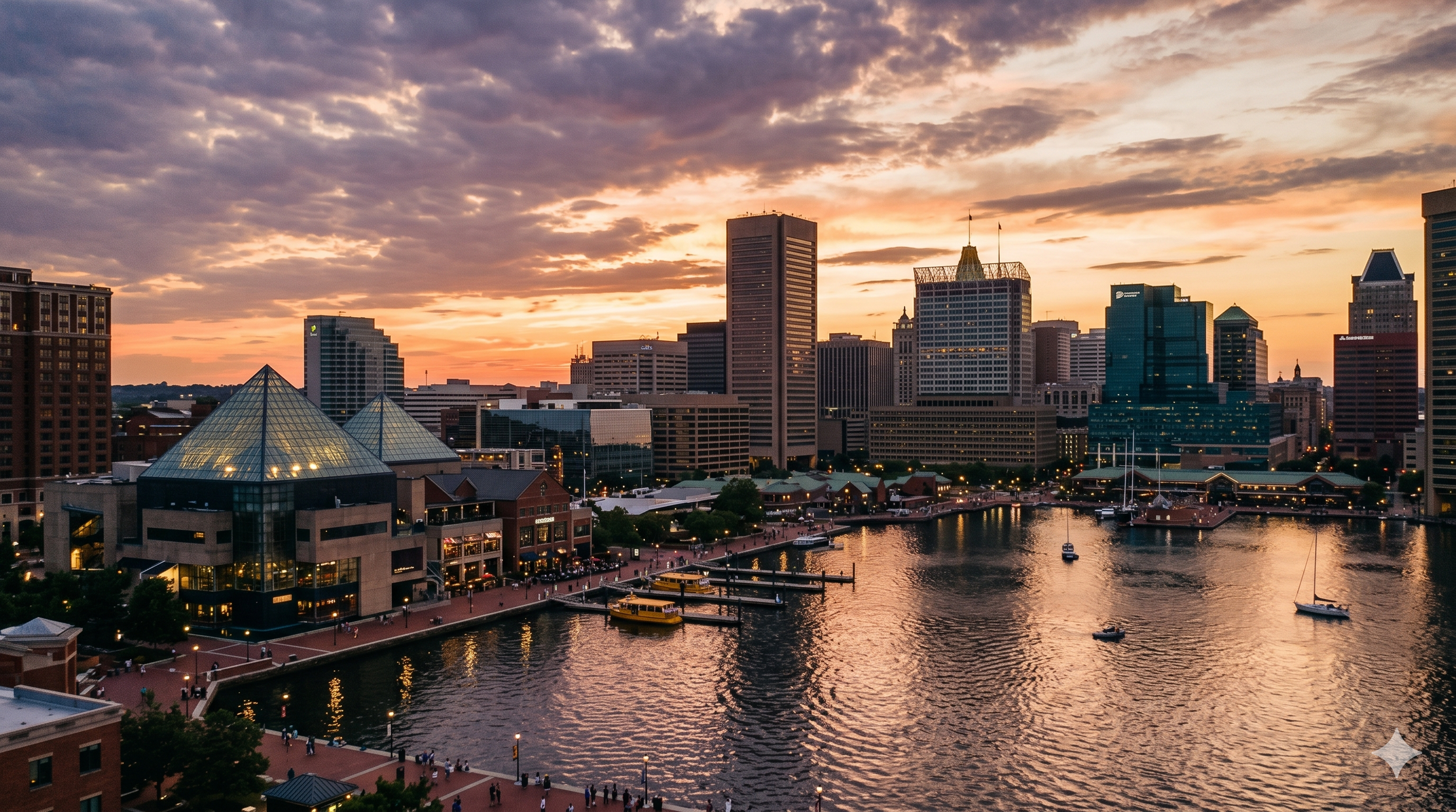
Baltimore, Maryland | Baltimore Metro Multifamily Services
Baltimore, MD Valet Trash & Doorstep Recycling for Apartments
Technology-verified onsite doorstep trash collection for Baltimore high-rises, mid-rises, garden-style apartments, condominiums and student housing. Improve resident convenience and support Maryland’s multifamily recycling mandate and Baltimore City’s Apartment Building and Condominium Recycling (ABCR) program with property-specific routes, collection documentation and optional recycling education.
Every Door. Every Night.®
Five-night standard: Sunday–Thursday · Proof of Pickup® · Optional GreenPlus™ · Property-specific routes and pricing
Multifamily Property Management Benefits
Convenient Doorstep Collection & More Consistent Waste Operations
Shared elevators, long walks to collection rooms and confusing recycling rules can create resident complaints and recurring onsite work. National Doorstep Pickup provides a defined private-property collection process with digital route records and resident instructions.
Resident Convenience
Scheduled collection of eligible household trash from approved doorstep locations reduces routine trips to centralized dumpsters or waste rooms.
Proof of Pickup®
The Porter App supports route records, photo verification and collection-exception documentation for property oversight.
Recycling Education
Optional GreenPlus™ reinforces source separation, accepted-material guidance and resident communication consistent with the property’s lawful recycling arrangement.
Potential NOI Benefits
A properly structured resident amenity may support ancillary revenue and selected operational efficiencies. Actual financial outcomes vary by property.
See apartment management benefits and model property economics with the GreenPlus™ Profit Calculator.
Five-Night Onsite Collection
How Baltimore Apartment Valet Trash Works
1. Approved Setout
Residents place properly bagged household waste in approved containers and building-authorized locations during the property's setout window.
2. Porter Collection
Porters move eligible waste to designated onsite garbage containers. Separately collected recyclables remain separate when optional recycling is contracted.
3. Documented Service
Proof of Pickup® and the Porter App support route, photo and service-exception reporting for property management.
Onsite versus offsite: National Doorstep's standard role is authorized private-property doorstep-to-container portering. It does not replace licensed or otherwise authorized downstream haulers or other authorized downstream collection providers, and it does not include offsite hauling, disposal or recycling processing.
Explore how valet trash works, Proof of Pickup® software and resident trash containers.
Baltimore Multifamily Recycling | 10+ Units
Baltimore Apartment Recycling & Solid-Waste Requirements
Maryland Environment §9-1711 requires owners or managers of apartment buildings with at least ten dwelling units, and councils of unit owners of qualifying condominiums, to provide resident recycling collection and removal for further recycling in accordance with the applicable local plan. Baltimore City implements this through its ABCR program. Baltimore County is a separate jurisdiction. Maryland multifamily recycling law.
10+ dwelling units
State recycling mandate for covered apartment buildings and condominiums.
Actual recycling service
Provide collection and downstream removal; information alone does not satisfy the mandate.
Four material categories
City ABCR plan covers paper, plastic, metal and glass; follow the receiving hauler’s acceptance list.
101+ units
Published City ABCR plan: annual report for the prior calendar year due February 1.
Fewer than 100 units
City plan calls for reports beginning within 60 days of written request; exactly 100 units requires direct clarification.
Up to $50 per day
State civil penalty for specified §9-1711 violations; other local sanitation penalties can apply.
Plan capacity around actual generation
Provide enough clearly identified containers for residents and enough refuse capacity between collections. Position recycling near trash containers or chutes where required, subject to qualifying City-service exceptions. Confirm accepted materials, collection frequency and overflow prevention with the hauler. Do not treat a municipal collection-volume limit as a per-unit minimum.
Local compliance resource: Baltimore City & Baltimore County Apartment Recycling and Solid-Waste Compliance Hub.
Mandatory recycling and ABCR implementation
The state requirement is implemented locally. Baltimore City’s published ABCR materials assign responsibility for a functioning program, resident instructions, collection and legal recycling destinations to property ownership or management. The 2024–2033 solid-waste plan identifies the ABCR program in Appendix F1. Confirm current implementation instructions with DPW.
City 2024–2033 solid-waste plan · Published ABCR plan materials.
Mixed recycling, labeling and contamination
Provide appropriately sized, labeled and accessible recycling containers near trash bins or chutes as applicable. Separate accepted recyclables from ordinary trash; do not put food, plastic bags, batteries, hazardous materials or electronics into mixed recycling. Follow the actual collector’s instructions for glass, cardboard, paper, plastic and metal.
Annual reporting and new buildings
Published City ABCR plan materials specify February 1 for reports from properties with 101 or more units and a written-request process for those with fewer than 100 units. Confirm the exact 100-unit case and current form with the Office of Waste Diversion. Obtain hauler tonnage for recycling and disposal, education records and authorized certification. Published plan materials also describe a 90-day implementation notice for new covered properties; plan collection before occupancy and confirm the current deadline.
ABCR reporting and implementation plan · 2023 draft Appendix F1 for comparison.
City collection limits and licensed private service
City Code Article 23 §2-3 limits ordinary municipal mixed-refuse collection to 96 gallons per place on each designated collection day, while separately contained recycling and yard waste are not subject to that quantity limit. Certain approved condominiums, cooperatives and converted multifamily dwellings may qualify for exceptions; originally built apartment structures are excluded from that exception. Confirm service eligibility with DPW and contract for lawful additional collection as necessary. Health Code §§7-101 and 7-205 use a broad hauler definition and require licensing where applicable; onsite portering does not establish an automatic exemption.
City collection rules · Hauler definition · License requirement.
Food residuals and mixed-use properties
The 10-unit residential recycling law does not by itself impose universal apartment food-scrap collection. Maryland Environment §9-1724.1 applies to qualifying food-residual generators producing at least one ton weekly since January 2024 and located within 30 miles of a qualifying organics facility able and willing to contract for the material. Exclusions and waivers apply, including the statutory restaurant exclusion. Review mixed-use or institutional generators individually. Standard NDP service excludes separate organics handling.
Baltimore County collection and enforcement
The same Maryland 10-unit rule applies to covered County properties, but local collection and reporting arrangements differ. Confirm the County’s multifamily collection eligibility, applicable private service, capacity and documentation directly with County public works. State §9-1711 allows inspections and civil penalties up to $50 per day for covered violations; more stringent local requirements remain possible.
Baltimore County multifamily recycling program · State inspection and penalty provisions.
Baltimore City Fire Code | 2021 IFC, locally amended
Baltimore Valet Trash Containers & Fire-Safe Collection Routes
Baltimore City’s 2024 Building, Fire, and Related Codes adopt the 2021 International Fire Code with local modifications under Part VIII §8-101 and the 2021 International Building Code under Part II §2-101. Maryland’s separate State Fire Prevention Code (COMAR 29.06.01) incorporates the 2024 NFPA 1 and NFPA 101, but generally excludes Baltimore City except for specified buildings and conditions. Confirm the authority and code applicable to the exact property.
Baltimore City fire-code adoption · Maryland fire-prevention regulations.
Group R-2 vs. R-3
Apartment buildings with more than two dwelling units generally fall within R-2; qualifying one- and two-family residential uses generally fall within R-3. Verify the actual approved classification.
Receptacle design
The standard NDP 13-gallon, 24-inch liquid-tight plastic receptacle has a closing lid. Size alone is not approval for placement in exit access; verify materials, contents, location and applicable code.
Collection timing
Plan collection within the applicable City 7 AM–11 PM window and property-specific fire-safe setout and retrieval procedures.
Egress and building eligibility
Keep required exit access, corridors, stairs, fire doors and emergency equipment unobstructed. Confirm the approved building plans and any restrictions on combustible storage.
Discuss equipment and service feasibility during a property consultation. Review the City building, fire and related codes.
GreenPlus™ with Compliance Shield
Resident Recycling Education & Documented Sorting Support
GreenPlus™ helps Baltimore managers communicate local recycling procedures, reinforce source separation and document collection exceptions. Optional doorstep recycling must remain separate from garbage and match the approved receiving system.
- Resident ABCR program instructions and move-in education
- Clearly identified waste and recycling locations
- Accepted-material and contamination guidance
- Separately contracted recycling collection where feasible
- Proof of Pickup® route records and exception documentation
- Support for management’s collection records; downstream tonnage remains with the hauler
Source separation · Waste sorting
Baltimore Metro | Property-Specific Inquiries
Valet Trash for Baltimore City, Baltimore County & Nearby Communities
National Doorstep evaluates private-property service for professionally managed communities. These are inquiry markets, not guaranteed active routes. Confirm availability and jurisdiction by address.
Downtown & Inner Harbor
Downtown, Inner Harbor, Harbor East, Harbor Point and Little Italy.
South & Southeast Baltimore
Federal Hill, Locust Point, Riverside, Canton and Fells Point.
Central & North Baltimore
Mount Vernon, Station North, Charles Village, Hampden, Remington and Roland Park.
Baltimore County — North & West
Towson, Cockeysville, Hunt Valley, Pikesville, Owings Mills, Randallstown and Catonsville.
Baltimore County — East
White Marsh, Perry Hall, Nottingham, Essex and Dundalk.
Building-specific service
Garden-style, mid-rise, high-rise, senior living, student housing and condominiums, subject to lawful routes and confirmed availability.
Baltimore City is independent of Baltimore County. County communities are not governed by City ordinances. See the Baltimore regional compliance guide for separate local collection requirements.
Multifamily Asset Economics
Evaluate Baltimore Apartment Valet Trash NOI & Operating Efficiency
A properly structured resident convenience amenity may support ancillary fees and reduce selected recurring onsite handling tasks. Results depend on building design, labor, service costs, door count, leases and authorized downstream collection. No fixed NOI increase, CAP-rate change, waste-diversion rate or resident-retention result is guaranteed.
Model property economics with the GreenPlus™ Profit Calculator.
Optional Private-Property Services
Bulky-Item Coordination, Pet Waste & Collection-Room Support
Bulky-Item Coordination
Optional onsite staging and resident communication. Coordinate authorized pickup and charges with the property’s hauler.
Pet Waste Stations
Optional station emptying and bag replenishment within the agreed scope.
Common-Area Collection
Supplemental pickup at approved amenity areas and private-property locations.
Compactor & Enclosure Support
Optional cleanup, cardboard preparation and waste-area organization, preserving each designated stream.
New construction, waste rooms and safe access
Plan sufficient refuse and recycling storage, labeled adjacent collection points where required, resident access, equipment maneuvering and authorized hauler access. Review City building, property maintenance and zoning requirements including applicable refuse enclosure provisions. Wash-down connections, pitched floors, drains and ventilation require qualified design and approval; avoid polluted stormwater discharge.
Building and fire codes · Refuse storage and enclosure zoning provisions.
Bulky items, batteries, electronics and household hazardous waste
Residents should coordinate bulky waste with management and the authorized collector. City resident drop-off and household hazardous waste programs have eligibility and material limits; verify dates and acceptance with DPW. County facilities have separate rules. Business and consolidated property waste requires its own lawful disposal arrangement. Standard valet trash excludes hazardous materials, sharps, electronics and batteries.
Baltimore City DPW · Regional disposal and compliance guide.
Frequently Asked Questions
Baltimore Valet Trash, Recycling & Fire-Code FAQs
1. What is valet trash service for Baltimore apartments?
Scheduled onsite transfer of eligible bagged household waste from lawful collection points to designated private-property containers. Offsite hauling and processing are excluded.
2. Does Maryland require apartment recycling?
Yes. Environment §9-1711 applies to apartment buildings and condominiums with ten or more dwelling units and requires recycling collection and removal for further recycling under the applicable local plan.
3. What is Baltimore City’s ABCR program?
The Apartment Building and Condominium Recycling program implements the state mandate through resident education, adequate containers, collection and removal, and applicable reporting.
4. Which materials must Baltimore City apartment communities recycle?
The published ABCR plan identifies plastic, metal, glass and paper as minimum categories. Follow the actual collector’s accepted-material instructions and keep recyclables separate from ordinary trash.
5. When are Baltimore City annual recycling reports due?
Published ABCR plan materials specify February 1 for properties with 101 or more units, covering the prior calendar year. Properties with fewer than 100 units begin reporting within 60 days of written request. Confirm current instructions and the exact 100-unit case with the Office of Waste Diversion.
6. Is a recycling brochure sufficient for compliance?
No. The property must provide actual collection and removal for further recycling. Education supports but does not replace a functioning collection program.
7. What fire code governs Baltimore City valet trash?
The City’s 2024 Building, Fire, and Related Codes adopt the 2021 IFC with local amendments under Part VIII §8-101. Confirm applicable requirements with the City fire and building authorities.
8. Can standard plastic trash cans be placed in apartment corridors?
Only where the placement and receptacle satisfy applicable requirements and property-specific authorization. A 13-gallon bin or mat does not establish approval; preserve required egress.
9. How many nights per week does National Doorstep collect?
The standard onsite program operates Sunday through Thursday, five nights per week, subject to availability and lawful property-specific procedures.
10. When should Baltimore residents set out and retrieve containers?
Typical 5 PM setout, 7 PM pickup and 9 AM next-day retrieval apply only where lawful. City Health Code §7-221 generally restricts solid-waste collection to 7 AM–11 PM. Configure routes and retrieval times to comply with applicable requirements.
11. How does Proof of Pickup® document service?
The Porter App supports route visibility, photo-supported pickup verification and collection-exception documentation.
12. Can Baltimore apartments add doorstep recycling?
Yes, where separately contracted and feasible, with approved collection arrangements that preserve recyclable materials for further recycling.
13. What is GreenPlus™ with Compliance Shield?
Optional resident education, sorting support and operational documentation. It is not government certification or a guarantee of compliance.
14. How should property managers plan recycling capacity?
Use enough labeled, accessible containers to serve actual generation, with collection frequency sufficient to prevent overflow. City ABCR placement requirements and qualifying City-service exceptions must be considered.
15. Do Baltimore City rules apply in Baltimore County?
No. The state recycling requirement applies to covered properties in both jurisdictions, but City and County collection programs, fire codes and other local requirements differ.
16. Who arranges downstream waste and recycling collection?
Ownership or authorized management confirms public collection eligibility and arranges lawful private or supplemental collection as needed. Onsite valet trash does not replace authorized downstream service.
17. Are bulky items, batteries, electronics or hazardous waste included?
Standard doorstep service excludes bulky items, batteries, electronics and hazardous waste. Optional onsite bulky coordination is separate; use authorized specialty collection and disposal programs.
18. Can Baltimore high-rise and garden-style properties use valet trash?
Service is evaluated against approved occupancy, required egress, collection points, building access, receptacle suitability, route feasibility and local authorization. No property is automatically approved.
19. How is Baltimore valet trash priced and how might it affect NOI?
Pricing depends on door count, access, equipment, service scope and route feasibility. Actual incremental NOI depends on collected revenue and operating costs; no financial result is guaranteed.
20. How can Baltimore property managers request service?
Ownership or authorized management can request a free property proposal or schedule a 30-minute consultation to discuss availability, pricing, collection procedures and recycling support.
More questions? Visit the National Doorstep FAQ Center.
Official Baltimore & Maryland Guidance
Apartment Collection, Fire Safety, Recycling & Special Waste Resources
Official regulatory and disposal resources
- Maryland Environment §9-1711
- Baltimore City 2024–2033 Solid Waste Management Plan
- Published ABCR program amendment and reporting provisions
- 2023 draft Appendix F1 (historical comparison; confirm current form)
- City Article 23 §2-3 — collection limits
- City Article 23 — sanitation
- City Health Code §7-221 — collection hours
- City Health Code §7-101 — definitions
- City Health Code §7-205 — licensing
- City §8-101 — fire-code adoption
- City Building, Fire, and Related Codes
- City §2-101 — building-code adoption
- Maryland State Fire Prevention Code
- Maryland Environment §9-1724.1
- Baltimore City Department of Public Works
- Baltimore County multifamily single-stream recycling
- City refuse enclosure zoning provisions
- National Doorstep Baltimore compliance hub
Geographic and recycling references
- Baltimore
- Baltimore County
- Maryland
- Baltimore metropolitan area
- Towson
- Cockeysville
- Hunt Valley
- Pikesville
- Owings Mills
- Randallstown
- Catonsville
- White Marsh
- Perry Hall
- Nottingham
- Essex
- Dundalk
- Source separation
- Waste sorting
Wikipedia supplies geographic and conceptual background, not legal authority.
Operational and regulatory notice — Updated November 27, 2026
This independent private multifamily resource is not legal, engineering, fire-safety, financial or insurance advice, an inspection, licensing determination or guarantee of compliance. Baltimore City and Baltimore County are separate jurisdictions. Verify current ABCR instructions, reporting, collection eligibility and property-specific code requirements.
National Doorstep Pickup, LLC is not affiliated with or endorsed by Baltimore City, Baltimore County, Maryland Department of the Environment, public works agencies, fire authorities, downstream haulers or unrelated valet trash companies. Standard service is limited to contracted onsite doorstep-to-container portering on private property; it excludes public curbside handling, offsite hauling, processing and separate organics or hazardous-waste collection. Optional recycling requires a separate agreed scope.
Confirm the exact property, approved occupancy, lawful collection schedule, applicable licensing and any needed approvals with the municipality or county, fire and building authorities, authorized hauler, ownership, insurer and qualified advisers. Service availability and financial results are not guaranteed.
Baltimore, Maryland | National Doorstep Pickup
Request Your Baltimore Apartment Valet Trash Proposal
Plan five-night, technology-verified onsite collection for your Baltimore community, with property-specific routes, optional GreenPlus™ recycling education and coordination with the lawful downstream collection system.
Property-specific pricing · Proof of Pickup® · Optional GreenPlus™
Every Door. Every Night.®
Interested in talking about how we can work together? Here's our contact info.
