By Les Leith, CEO & COO at National Doorstep Pickup
The renter map is changing again.
But this time, the story is not just “people are moving south” or “renters want cheaper markets.”
The latest Bank of America Institute migration data shows something more complicated — and far more important for multifamily owners, operators, asset managers, and regional managers.
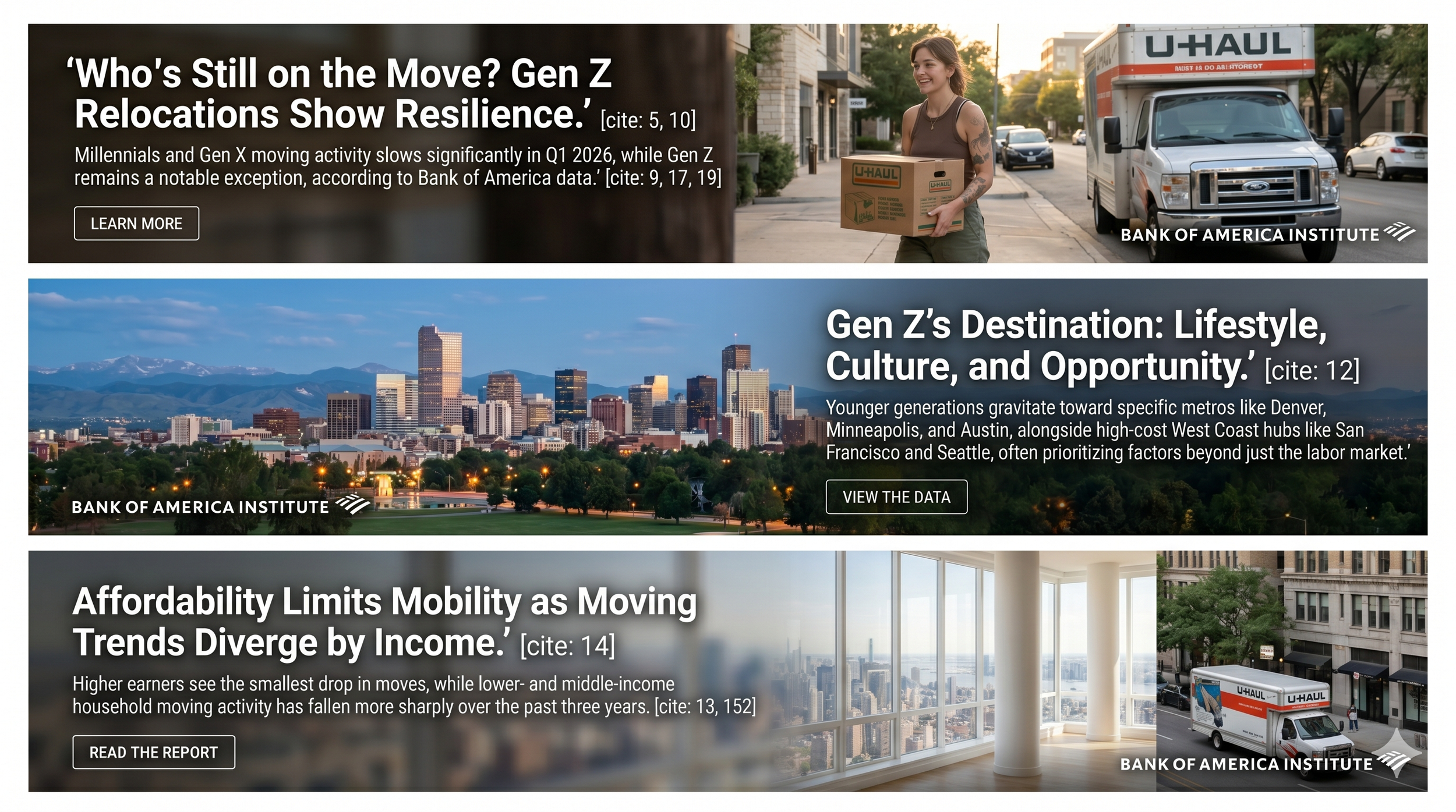
Overall moving activity has slowed over the past three years, especially among Millennials and Gen X. Yet Gen Z remains the major exception. According to Bank of America account data, Gen Z still shows more movers than in 2023, making them the most resilient relocation cohort in the current market.
For apartment communities, that means one thing:
The next leasing battle will not be won only on rent. It will be won on lifestyle, convenience, cleanliness, and operational trust.
The Migration Slowdown Is Real — But Renters Are Not Standing Still
Elevated home prices, higher interest rates, and slower hiring have reduced household mobility across many U.S. markets. Bank of America Institute found that Millennials saw the largest year-over-year decline in movers, down nearly 10%, followed by Gen X with an almost 5% decline.
That matters for multifamily because fewer moves can mean fewer easy lease-ups, more competitive concessions, and more pressure on retention strategy.
But Gen Z is breaking the pattern.
While other generations have pulled back, Gen Z remains more mobile than it was in 2023. This is the renter group that is still searching, still relocating, still choosing neighborhoods, and still forming long-term housing preferences.
For apartment operators, this is the window.
The communities that understand what younger renters value now can lock in demand before competitors catch up.
Gen Z Is Not Moving Like Older Renters
Bank of America Institute found that Gen X and Baby Boomers often move in similar patterns, choosing many of the same metro areas. Gen Z, however, is different. The report highlights Gen Z movement toward Denver, Minneapolis, Austin, and several higher-cost West Coast markets.
That is a major signal for multifamily.
Gen Z is not simply chasing the lowest rent. They are responding to a mix of career opportunity, culture, lifestyle, walkability, environmental identity, and convenience.
In other words, they are not just renting an apartment.
They are renting a daily operating system.
They want the building, the amenity package, the neighborhood, the services, and the resident experience to make life easier.
That is where operational amenities become leasing tools.
The New Apartment Amenity Is Operational Convenience
For years, multifamily amenities were dominated by visible features: pools, gyms, clubhouses, package lockers, coworking lounges, dog parks, and smart-home upgrades.
Those still matter.
But today’s renter also judges a community by how smoothly it runs.
Is the trash area clean?
Are hallways maintained?
Is recycling easy?
Are dumpsters overflowing?
Are move-ins and move-outs chaotic?
Does the property feel managed — or neglected?
For Gen Z renters, especially those moving into urban, tech, lifestyle, and career-driven markets, friction matters. A community that looks great online but feels disorganized on-site can lose resident trust fast.
That is why doorstep waste collection, valet recycling, contamination reduction, bulk item protocols, pet waste station service, and photo-documented pickup programs are becoming more than back-of-house services.
They are resident experience infrastructure.
Why Migration Trends Should Matter to Asset Managers
That is the asset management opportunity.
When younger renter demand concentrates in select metros, operators have a chance to convert demographic pressure into stronger leasing performance — but only if the community experience matches the renter profile.
A high-growth younger renter market can still underperform if the property suffers from:
overflowing dumpsters,
resident recycling confusion,
trash room complaints,
bulk item pileups,
pet waste issues,
contaminated recycling streams,
poor curb appeal,
maintenance team labor diversion,
and negative online reviews tied to cleanliness.
In tight NOI environments, these are not small issues. They are value leaks.
The Affordability Divide Makes Retention More Important
Bank of America Institute also found that lower- and middle-income households have reduced moving activity more sharply than higher-income households. The top 5% by income saw the smallest decline in movers, likely because they are less constrained by housing costs.
For multifamily operators, this creates a two-sided challenge.
On one side, higher-income renters may still move for lifestyle, location, and upgraded experience. On the other side, cost-sensitive renters may stay longer because moving is expensive.
That means resident retention becomes just as important as new leasing.
A resident who feels their community is clean, convenient, and well-run has fewer reasons to shop competitors. A resident who fights trash problems, dirty enclosures, overflowing dumpsters, and confusing recycling rules every week has more reasons to leave — even if rent is competitive.
Retention is not just about renewal offers.
Retention is about reducing daily resident friction.
Exhibit 8 Shows a Midwest Opportunity: High-Income Households Are Moving Into Value Markets
For apartment owners and operators, this matters because high-income migration into Midwest markets can change the leasing equation quickly.
These households may be drawn by a powerful combination of relative affordability, quality of life, employment access, larger living spaces, and lower cost pressure compared with coastal gateway markets. But they are not necessarily looking for a “discount” living experience.
Many are bringing Class A expectations into value-oriented markets.
That creates a major opening for multifamily communities in cities like Minneapolis, Columbus, Indianapolis, and Milwaukee.
This trend indicates a reversal of previous, long-term patterns of out-migration from the region, largely driven by the high cost of living in coastal and "Sun Belt" cities, making the Midwest a competitive destination for housing affordability
When higher-income renters move into Midwest metros, they often expect:
clean common areas,
professional service delivery,
convenient waste and recycling systems,
strong package and amenity operations,
sustainability-forward programs,
and a resident experience that feels polished from lease-up through renewal.
This is where National Doorstep GreenPlus™ becomes more than a waste solution. It becomes a positioning tool.
A community that can offer doorstep trash collection, valet recycling, cleaner waste areas, reduced dumpster overflow, and documented service performance can stand out in Midwest markets where incoming renters may have higher service expectations but still want better value than coastal alternatives.
Bottom line: Exhibit 8 suggests that the Midwest is not just a “budget migration” story. It is increasingly a value-plus-experience story. Multifamily operators that combine affordability with premium daily convenience will be better positioned to capture high-income renters moving into these markets.
The Cities Winning Younger Renters Need Stronger Waste Operations
The report highlights Gen Z growth in metros such as Denver, Minneapolis, Austin, Philadelphia, New York City, San Francisco, Seattle, and San Jose, with some of these markets seeing younger population growth even as older generations declined.
These are exactly the types of markets where multifamily operators face rising expectations.
Younger renters often expect:
clear recycling options,
easy waste disposal,
clean common areas,
tech-enabled service verification,
sustainability-forward operations,
and fast response when property conditions decline.
They do not want to decode a confusing dumpster system. They do not want to carry trash through long corridors, elevators, breezeways, or parking areas. They do not want recycling to feel like a guessing game.
They want convenience built into the living experience.
That is where National Doorstep GreenPlus™ can turn a routine property pain point into an operational advantage.
How National Doorstep GreenPlus™ Helps Multifamily Communities Capture the Migration Opportunity
National Doorstep GreenPlus™ is designed for the exact operational reality multifamily teams are facing now: higher resident expectations, tighter maintenance bandwidth, more compliance pressure, and greater scrutiny on NOI.
Instead of letting trash and recycling become a constant maintenance headache, properties can use doorstep collection and valet recycling as a structured resident service.
1. Convert Waste From a Complaint Driver Into a Resident Amenity
Doorstep trash and recycling collection gives residents a cleaner, easier, more convenient way to manage daily waste.
That matters for Gen Z and Millennial renters who value convenience and lifestyle alignment. It also matters for busy families, professionals, remote workers, and downsizing renters who want the property to feel easier to live in.
2. Reduce Maintenance Team Labor Diversion
Every hour maintenance spends chasing trash problems is an hour not spent on turns, work orders, inspections, preventative maintenance, curb appeal, and resident service.
A structured valet waste and recycling program can help reclaim operational bandwidth while improving property appearance.
3. Improve Recycling Participation and Reduce Contamination
Apartment recycling often fails because residents are confused, bins are inconvenient, or contamination goes unmanaged.
A door-to-door recycling program makes participation easier while giving property teams a better system for education, collection, documentation, and accountability.
4. Support Compliance Shielding
As recycling mandates, organics rules, and local waste ordinances expand, multifamily communities need more than good intentions.
They need documented systems.
National Doorstep GreenPlus™ can support compliance-focused operations with structured collection practices, resident-facing education, and photo documentation that helps property teams demonstrate proactive waste management.
5. Protect Curb Appeal and Online Reputation
Trash problems are highly visible. Prospects see them. Residents photograph them. Reviews mention them.
Clean waste operations protect the first impression of the property and help leasing teams sell the community with confidence.
The New Leasing Question: Does Your Property Match the Renter Moving Into Your Market?
Migration data is not just an economic headline. It is a leasing strategy signal.
When Gen Z moves into Denver, Austin, Minneapolis, Raleigh, Richmond, Philadelphia, Seattle, or San Francisco — and when higher-income households move into Midwest value markets like Indianapolis, Milwaukee, Minneapolis, and Columbus — they bring expectations with them.
They expect convenience.
They expect sustainability.
They expect clean shared spaces.
They expect services that work.
They expect the property to feel professionally managed.
Apartment communities that meet those expectations can turn operational execution into a competitive edge.
Communities that ignore them may lose renters before the tour even begins.
What Multifamily Operators Should Do Now
Property managers, regional managers, and asset managers should review migration trends through an operational lens.
Ask:
Are younger renters moving into our submarket?
Are higher-income households entering our Midwest or value-market portfolio?
Are we treating trash and recycling as an amenity or a liability?
Are maintenance teams losing hours to waste-related issues?
Are dumpster areas hurting curb appeal?
Are residents confused about recycling?
Are we prepared for expanding local compliance requirements?
Can we document our waste and recycling performance?
The communities that answer these questions now will be better positioned for the next renter cycle.
Final Takeaway: The Renter Migration Wave Is Becoming an Operations Test
Bank of America Institute’s migration report shows that mobility has slowed, but not disappeared. Gen Z remains unusually resilient, younger renter growth is showing up in specific apartment-relevant metros, and Exhibit 8 shows that the Midwest is attracting both lower- and higher-income households.
For multifamily, this is not just a demographic trend.
It is an operating mandate.
The next generation of renters — and the higher-income households moving into value-driven Midwest markets — will reward communities that make daily living easier, cleaner, and more sustainable.
National Doorstep GreenPlus™ helps apartment communities meet that moment by turning waste, recycling, and compliance into a resident experience advantage.
Ready to turn trash, recycling, and compliance into a leasing advantage? Request a Free Waste & Recycling Operations Audit for your apartment community today.