By Les Leith, CEO & COO at National Doorstep Pickup
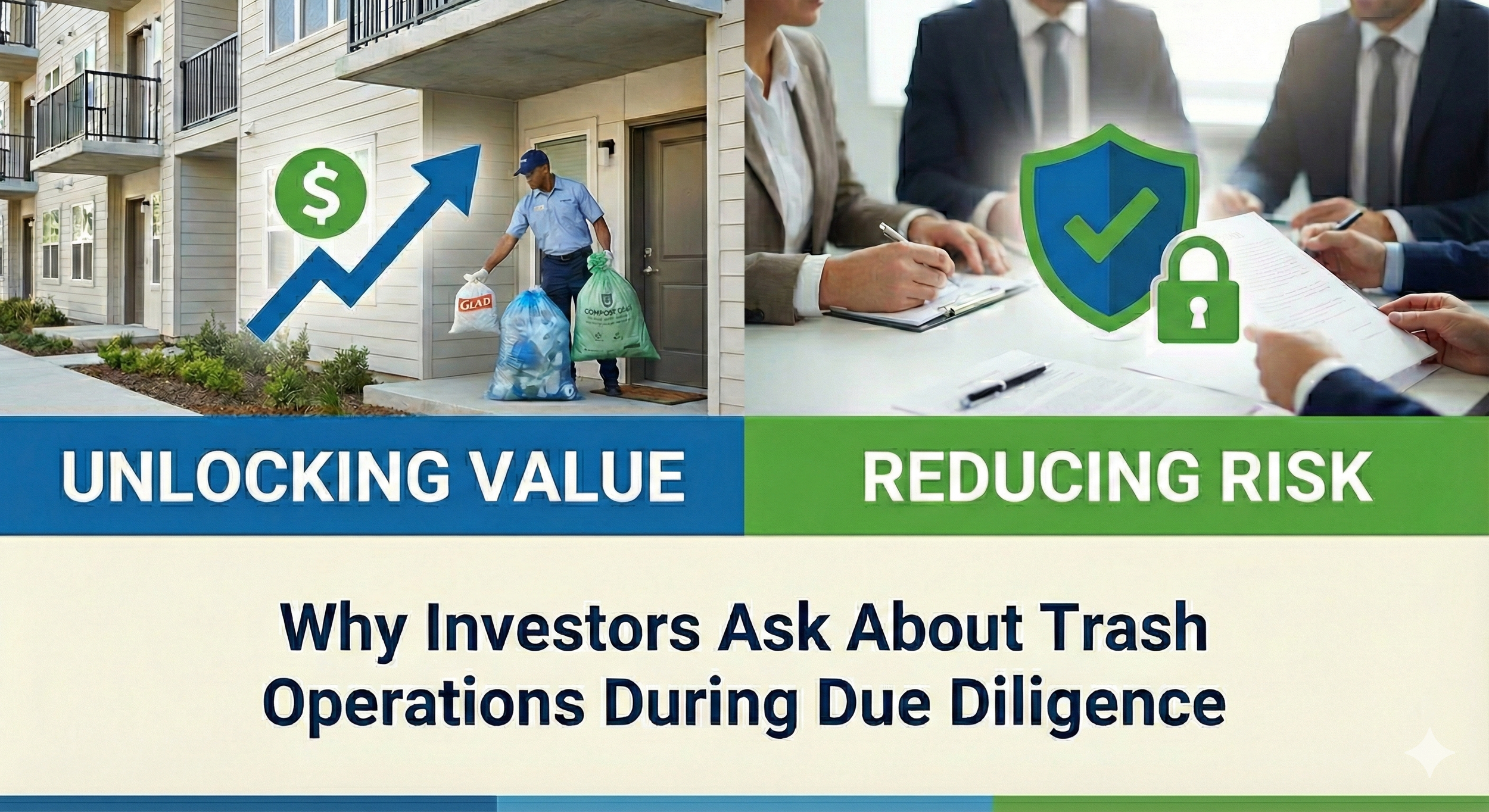
In today’s multifamily investment market, savvy investors no longer treat waste operations as an afterthought. From dispositions to acquisitions and refinancing events, institutional and private capital alike are zeroing in on trash management systems—especially doorstep valet trash service—as a key indicator of operational sophistication, compliance robustness, and asset value.
Here’s a thorough, investor-grade breakdown of the “why,” the implications, the expected retorts, and how ownership & property management teams can confidently engage in due diligence conversations that protect and amplify asset value.
🧠 Why Trash Operations Matter to Investors
🛡️ 1. Risk Mitigation: Operational & Compliance Risks Are Real Dollars
Investors want assurance that a property isn’t a hidden liability.
Regulatory compliance isn’t optional. Cities and states are expanding waste diversion and recycling mandates; non-compliance can trigger fines, corrective actions, even reputational harm.
Investors ask about documented procedures because they want to see an asset that won’t be penalized or delayed during future refinancing or sale processes. A structured valet trash program with compliance documentation signals discipline and foresight.
Systems like Proof of Pickup® verification and chain-of-custody reporting reduce audit risk and provide defensible data to underwriters.
Investor retort when questioned:
“I need to know this asset is shielded from municipal fines and that reported waste practices hold up under audit.”
Ownership & Property management response:
“We operate a structured valet trash service with standardized SOPs, compliance documentation, and diversion reporting that aligns with local waste ordinances.”
💰 2. Asset Value Enhancement: Amenities Drive NOI & Appeal
Investors pull every lever that can improve Net Operating Income (NOI) and marketability. Valet trash is more than convenience—it’s a driver of resident satisfaction and retention.
Valet trash service is now one of the most requested resident amenities in multifamily living. Recycling and removing a comingled compactor is where the margin now exists without increasing resident-facing costs.
Clean communities with doorstep service see fewer hallways and dumpster-area issues, contributing to fewer complaints and better online reviews.
Investor retort:
“How do trash operations influence retention, curb appeal, or rent premiums?”
Ownership & Property management response:
“Valet trash aligns with resident expectations, visibly elevates community cleanliness, and underpins a better leasing experience—supporting renewals and higher effective rents while driving NOI.”
🏗️ 3. Standardization Signals Operational Discipline
For investors evaluating a platform or portfolio, consistency matters:
A documented waste control plan—rather than ad-hoc dumpster management—shows maturity in operations.
Property managers can articulate throughput metrics (collections per night, recycling diversion rates, incident logs), demonstrating the asset’s operational health.
This kind of data is valuable for economic modeling and risk assessments.
Investor retort:
“Show me the measurements—not just anecdata.”
Ownership & Property management response:
“We provide monthly diversion and operational reporting along with incident tracking and resident engagement metrics.”
📊 4. Valet Trash as a Strategic Differentiator in Competitive Markets
Investors understand market positioning. Better waste service isn’t a “nice to have”—it’s a market differentiator.
In markets with abundant supply, amenities like valet trash tilt prospects toward a property.
Residents increasingly rank doorstep trash service higher than many traditional amenities.
Investor retort:
“If I need to justify cap rate compression or higher effective rents, how will this service help?”
Ownership and property management response:
“This service improves our amenity profile, supports retention, and creates measurable quality-of-life benefits that command competitive positioning.”
📌 Due Diligence Checklist: What Investors Will Expect
Here’s how property management should prepare before a visit or data submission:
📁 Documentation
SOPs for collection routes, schedules, and safety protocols
Proof of Pickup® reporting or equivalent verification
Recycling diversion reports, contamination logs, and manifest tracking
📊 Metrics & Results
Resident participation statistics
Cost allocations vs ancillary revenue streams
Maintenance time saved vs previous models
📍 Compliance & Risk Controls
Correspondence with waste haulers and compliance records
Audit-ready reporting organized by date and material stream
This level of detail goes far beyond what typical operations teams prepare—and that’s exactly why investors ask about it.
🏁 Final Takeaway: Trash Operations Are Strategic, Not Tactical
Investors ask about trash operations—especially valet trash service—because it’s an underutilized lever for risk management, regulatory compliance, NOI protection, resident satisfaction, and asset value. In a disciplined due diligence environment, property management teams that can articulate and document these systems are significantly more likely to secure favorable valuations, smooth financing paths, and buyer confidence.
If you’re aiming for top-tier investor interest—whether for refinancing, acquisition, or disposition—your trash operations strategy should be well-defined, data-backed, and aligned with modern portfolio expectations. That puts risk in check and value firmly on your side.