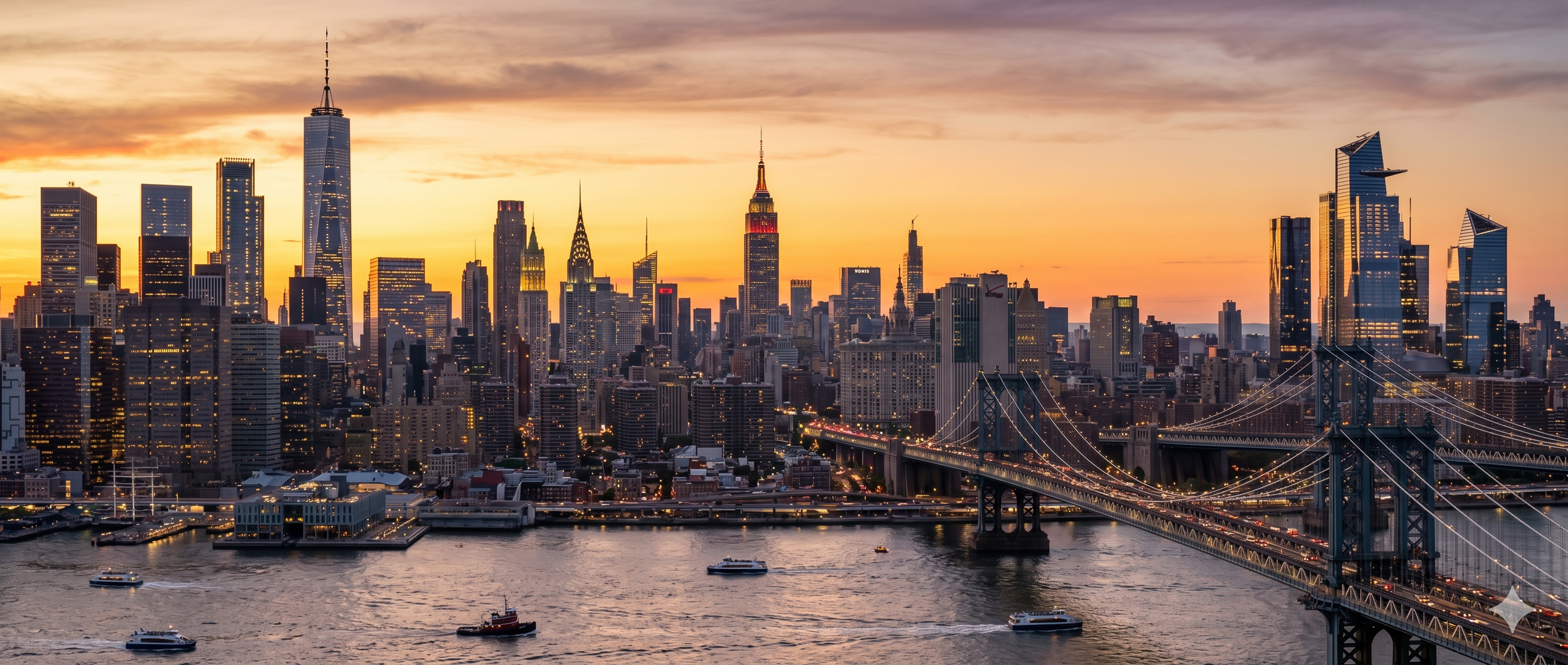
New York City, NY Valet Trash & Apartment Recycling Services
Technology-Verified Doorstep Collection for Mid-Rise, High-Rise & Garden-Style Communities
Every Door. Every Night.® | Technology-Verified Multifamily Waste Operations
New York City apartment residents value convenient collection, clean service corridors and organized waste rooms, especially in elevator buildings with limited storage space.
National Doorstep Pickup provides professionally managed, technology-verified doorstep trash collection and optional recycling support designed to improve resident convenience, reduce routine waste-handling demands, and strengthen multifamily asset performance.
From Manhattan luxury towers and Brooklyn waterfront developments to Queens, the Bronx and Staten Island, National Doorstep evaluates property-specific onsite collection arrangements that complement DSNY requirements and building safety rules.
Standard Sunday–Thursday doorstep collection supporting predictable resident routines.
Photo-supported collection verification, porter route visibility, and documented operational exceptions.
Optional recycling education, source-separation support, and contamination-management workflows.
Improve Resident Convenience, Recycling Participation & Property Performance
National Doorstep helps apartment owners and property managers establish a structured resident amenity that supports operational efficiency, recycling participation, community cleanliness, and potential ancillary revenue.
- Resident convenience: Reduce routine trips to remote dumpsters and centralized collection areas.
- Cleaner communities: Support orderly waste handling and reduce loose-bag accumulation.
- Recycling participation: Reinforce resident source-separation practices through education and property-specific procedures.
- Reduced maintenance workload: Shift routine doorstep collection to trained service personnel.
- Operational accountability: Document service activity, improper set-outs, and collection exceptions.
- Potential NOI growth: Establish a property-specific amenity program that may contribute incremental net operating income.
How Valet Trash May Support NOI & Asset Valuation
An appropriately structured resident amenity program may create incremental operating income after applicable service costs and expenses.
Additional annual NOI may influence asset valuation when capitalized at an applicable market capitalization rate. A 6%–8% cap-rate sensitivity may be used for illustrative underwriting purposes.
Actual financial performance depends on occupancy, collections, lease provisions, expenses, market conditions, and ownership underwriting assumptions. Financial performance and increases in property valuation are not guaranteed.
New York City Apartment Recycling, Composting & Solid-Waste Requirements
Residential recycling is mandatory throughout NYC. Separate mixed paper and cardboard, metal/glass/rigid plastic/cartons, and compostable materials from residual trash. Building ownership remains responsible for correct storage and DSNY setout.
Mandatory recycling
Separate designated materials; the four-unit building-management threshold does not exempt smaller homes.
Designated storage & signage
Owners and managers must provide designated recycling and compost storage, clearly labeled bins and recycling instructions.
Mandatory composting
Separate food scraps, food-soiled paper and yard waste. Citywide enforcement began April 1, 2025.
Official NYC Bins
Official NYC Bins are required for DSNY trash setout from June 1, 2026; full enforcement began September 8, 2026.
District containerization
In designated Empire Bin districts, 10–30-unit properties use assigned Empire Bins or official NYC Bins; 31+ units use assigned Empire Bins. Confirm parcel assignment and rollout.
Waste management planning
New residential buildings at this threshold and certain qualifying alterations/enlargements require a DSNY waste management plan demonstrating 150% of waste generated between collections can be stored.
New York City Apartment Recycling & Solid-Waste Compliance Guide — local mandates, implementation, special waste and regional disposal.
Residential recycling — separate the two recycling streams
Mixed paper and flattened cardboard belong in their own recycling stream. Metal, glass bottles and jars, rigid plastics and cartons belong together in a separate stream. Follow DSNY labeling and preparation guidance. Use clear bags or appropriate labeled receptacles for municipal recycling; do not mix the two streams.
Mandatory composting and building storage
Provide separate labeled compost receptacles with secure lids. Buildings with four or more units need designated storage. Use a DSNY brown bin or a labeled secure-lid bin of no more than 55 gallons for food scraps and food-soiled paper at municipal setout. Yard waste has additional permitted preparation options. Standard NDP valet trash excludes separate organics handling.
Official NYC Bins, Empire Bins and district rollout
Citywide DSNY trash rules require official NYC Bins for 1–9 units. Outside applicable containerization districts, 10+ unit buildings may generally use qualifying lidded bins up to 55 gallons or secure opaque trash bags. Manhattan Community District 9 and Brooklyn Community District 2 have district-specific containerization arrangements. Confirm the property assignment and implementation date with DSNY. Empire Bins are assigned public-street containers for authorized building staff; NDP standard service ends at designated private-property infrastructure.
Official NYC Bins · Manhattan CD9 · Brooklyn CD2 · Empire Bins FAQ
Municipal collection versus private carting
Residential buildings generally receive DSNY collection. Commercial tenants and other commercial waste generators ordinarily use licensed private carters and must comply with the applicable Commercial Waste Zone rollout. Mixed-use property managers should keep residential and commercial service arrangements distinct. National Doorstep is an onsite porter service, not a licensed offsite carting or municipal collection substitute.
Municipal setout and enforcement
Unless a district or approved alternative applies, DSNY residential setout in qualifying secure-lid bins begins after 6 PM; eligible bags may be placed curbside after 8 PM. Set out by midnight. Buildings with 9+ units and janitorial staff may apply for the 4–7 AM alternative. These curbside rules do not authorize private corridor storage or change NDP onsite collection windows.
DSNY lists separation fines of $25/$50/$100 for 1–8 units. For 9+ units, its collection-laws page lists $100/$200/$300, while its building signage guidance lists $100/$200/$400 for education/signage offenses. Confirm the cited offense and applicable penalty schedule. Setout violations have separate penalties.
DSNY collection laws · Building waste management guidance · NYC311 setout rules
How New York City Valet Trash Service Works
National Doorstep combines resident education, trained porters, structured collection routines, controlled waste transfer, and technology-supported service documentation.
- Resident Preparation Residents secure eligible bags inside their units until the approved collection window or use a designated lawful collection point. Do not stage combustible waste in corridors without specific legal authorization.
- Scheduled Evening Collection Standard service is Sunday–Thursday; setout by 5 PM and pickup from 7 PM only where permitted. NYC buildings may require attended handoff or other lawful arrangements with different timing. No public curbside setout is included.
- On-Property Waste Transfer Trained porters transport approved waste to the property's designated dumpster, compactor, recycling container, or authorized collection area.
- Proof of Pickup® Verification Technology-enabled porter workflows support photo documentation, route visibility, service accountability, and operational exception reporting.
- Container Return Return emptied containers inside promptly. The standard 9 AM deadline applies only where the property-specific placement and timing are lawful.
GPS-Enabled Porter Routes & Proof of Pickup®
National Doorstep utilizes technology-enabled porter operations to support service documentation, collection-route visibility, management oversight, and resident issue resolution.
- GPS-supported porter route visibility.
- Photo-supported Proof of Pickup® documentation.
- Resident set-out exception reporting.
- Real-Time Situational Awareness.
- Documentation of applicable contamination and overflow observations.
- Management communication and operational accountability.
Valet Trash Containers & NYC Fire-Code Requirements
NYC uses its own 2022 Fire Code (Local Law 47 of 2022, effective April 15, 2022). FC 1027.3.6 restricts corridor storage of combustible materials and waste except when specifically authorized under the code or commissioner rule. FC 1027.4 addresses permitted residential hallway furnishings and storage; do not interpret this as blanket authorization for doorstep trash.
National Doorstep’s standard individual receptacle is a 13-US-gallon, 24-inch-tall liquid-tight plastic container with a fully closing lid. Size, a lid or a fire-resistant mat alone does not authorize placement. No material-performance certification is asserted.
Review approved Group R-2 multifamily or Group R-3 residential occupancy, existing building conditions, fire doors, corridors, stairs, elevators and required egress with FDNY/DOB. Where unattended corridor setout is not authorized, assess attended handoff or collection from lawful designated private-property locations, subject to operational feasibility. Do not obstruct exits or fire equipment.
Resident Collection Rules & Operating Procedures
- Property-approved collection windows and lawful setout or attended handoff locations.
- Properly secured and bagged household waste.
- Separate recycling preparation where recycling service is included.
- Instructions for cardboard, bulky materials, and prohibited items.
- Management reporting of documented improper set-outs.
- Resident education and ongoing collection-rule reminders.
Support NYC Recycling & Mandatory Composting Implementation
National Doorstep's GreenPlus™ with Compliance Shield provides optional multifamily recycling support designed to reinforce resident participation, source separation, contamination prevention, and management documentation.
Resident Education
Leasing-packet addendums, move-in instructions, approved signage, and property-specific recycling reminders.
Source Separation
Help residents distinguish accepted recyclable materials from household trash and other designated waste streams.
Contamination Management
Document applicable improper recycling set-outs and support corrective education and management communication.
Downstream Coordination
Align onsite collection procedures with the property's municipal or authorized private recycling provider.
Leasing-Packet Recycling Instructions
Recycling procedures should be communicated consistently during resident move-in, lease onboarding, and ongoing community operations.
GreenPlus™ can support instructions covering accepted materials, collection schedules, prohibited items, container preparation, and property-specific waste-area procedures.
Source Separation vs. Single-Stream Recycling
Source separation keeps materials apart at their origin. NYC residential collection requires paper/cardboard separately from metal, glass, rigid plastic and cartons. Compostable materials are another distinct stream. Single-stream collection cannot be assumed to satisfy NYC residential rules.
Compliance Shield & Management Documentation
Compliance Shield supports the documentation of applicable operational practices, resident education, collection observations, and corrective communication.
The program is intended to assist property management with its recycling operations. It is not a governmental certification, insurance product, legal compliance audit, or guarantee of regulatory compliance.
Designed for New York City Apartment Communities
Evaluate professionally managed apartments, condos, co-ops, student housing, senior living and mixed-use residential communities. All locations are inquiry markets; availability depends on staffing, access, building permissions and legally permissible collection procedures.
New York County
Financial District, Battery Park City, Tribeca, Chelsea, Midtown, Upper East Side, Upper West Side, Harlem and Washington Heights.
Kings County
Downtown Brooklyn, DUMBO, Brooklyn Heights, Williamsburg, Greenpoint, Park Slope, Bushwick and Flatbush.
Queens County
Long Island City, Astoria, Sunnyside, Jackson Heights, Flushing, Forest Hills and Jamaica.
Bronx County
Mott Haven, Port Morris, Concourse, Riverdale, Kingsbridge, Fordham and Pelham Bay.
Richmond County
St. George, Stapleton, Clifton, New Dorp, Great Kills and other eligible communities.
High-rise, mid-rise and garden-style
Evaluate elevators, service rooms, staff coordination, compactors, approved collection locations and fire-safe routes.
NYC apartment compliance and regional disposal resources · Availability confirmed by property address.
Additional Multifamily Waste-Area Support
Bulk-Item Handling & Coordination
Optional onsite staging and coordination for approved furniture and mattresses, without blocking required egress. DSNY requires mattresses and box springs set out for collection to be sealed inside clear plastic bags. Management handles lawful curbside staging and downstream collection.
Pet Waste Station Servicing
Optional servicing of designated pet waste stations may include approved waste collection, supply replacement, and routine station-area support according to the service agreement.
Common-Area Trash Collection
Supplemental onsite collection from approved shared-property locations, amenity areas, courtyards, and other designated common areas may be incorporated into the property service agreement.
Dumpster, Trash Room & Compactor Area Support
Optional waste-area cleanup and organization services support orderly trash rooms, dumpster enclosures, compactors, and designated recycling collection areas.
Approved cleaning procedures, equipment, access conditions, and service frequency are established in the property agreement.
Move-Out Trash & Leasing-Turn Support
Supplemental onsite waste-handling support may be available during seasonal leasing turns, move-out periods, and other approved increases in multifamily waste volumes.
Service arrangements should account for container capacity, authorized materials, designated staging areas, and downstream collection schedules.
Cardboard & Recycling Collection Support
Approved cardboard handling, source separation, resident recycling education, and contamination reporting may be incorporated where supported by the property's recycling infrastructure and authorized collection program.
Exclude lithium-ion batteries, electronics, chemicals and sharps from standard service. Use authorized specialty arrangements; resident-only programs do not automatically accept business or consolidated property waste. Electronics · Batteries · Special waste
Plan Better Apartment Trash Rooms & Recycling Infrastructure
NYC developers, architects and owners should integrate refuse storage, recycling and compost capacity, approved chute rooms and safe service routes into building design.
NYC refuse rooms, chutes, compactors and waste management plans
DSNY guidance references NYC Building Code §1213 for waste storage. It identifies compactors for Group R-2 buildings with at least four stories and twelve units, and Group R-1 buildings; refuse chutes are required in most buildings with at least five stories and nine units. Confirm exceptions and applicable code edition with DOB. Designated floor-level recycling holding areas must follow applicable chute-room requirements.
New residential buildings with 150+ units and certain qualifying alterations or enlargements must submit a DSNY waste management plan showing capacity for 150% of waste generated between collections (16 RCNY §1-02.2). DSNY can deny collection if required plans are not approved.
Trash Room & Compactor Area Design
DSNY guidance specifies sloped concrete floors, a drain and hose connection for rooms containing required waste compacting systems. Confirm applicable Building Code §1213.2, plumbing, ventilation and wastewater requirements. For other waste rooms, evaluate wash-down facilities, drainage and equipment space with qualified professionals. Keep trash, paper/cardboard, mixed containers and organics separate.
Porter Routes, Equipment & Property Access
- Adequate maneuvering space for carts and tilt trucks.
- Appropriate elevator and service corridor access.
- Safe door clearances and access controls.
- Adequate lighting for nighttime collection.
- Designated access to trash and recycling collection areas.
- Unobstructed required exits and emergency access.
- Seasonal snow and ice management along exterior collection routes.
Dumpster Enclosures, Drainage & Stormwater Protection
Plan pest-resistant storage, drainage and approved cleaning practices. Do not discharge waste or wash water into storm drains or obstruct public access. Coordinate any DSNY containerization assignments with building management; public-street collection remains outside standard NDP service.
Design notice: These are operational planning considerations, not engineered specifications. Applicable NYC Building Code, Fire Code, plumbing, sanitation, accessibility and wastewater provisions must be evaluated by qualified professionals and the responsible authorities.
New York City Valet Trash & Recycling FAQs
Answers for New York City apartment owners, asset managers, regional managers, developers, onsite teams, and residents. Select a question to expand its answer.
1. What is apartment valet trash service in New York City?
Scheduled onsite collection of eligible household waste from lawful authorized locations to designated private-property infrastructure. Where corridor storage is prohibited, assess lawful attended handoff or approved collection points. Offsite hauling is excluded.
2. How many nights per week does National Doorstep collect trash?
National Doorstep’s standard schedule is Sunday through Thursday, five nights per week, subject to confirmed availability and lawful property-specific collection locations, timing and procedures.
3. What time should NYC residents prepare their trash?
Standard setout by 5 PM and pickup beginning at 7 PM apply only where lawful and approved for the property. NYC curbside setout rules are separate. Do not stage combustible waste in unauthorized corridors.
4. When should residents bring their trash containers inside?
Return emptied containers promptly. The standard 9 AM retrieval deadline applies only where property-specific placement and timing are lawful. Never leave containers in unauthorized corridors or required exits.
5. How does Proof of Pickup® verify valet trash collection?
Proof of Pickup® utilizes technology-enabled porter workflows to support collection documentation, photo-supported verification, route visibility, and exception reporting. These records help property management evaluate service activity and address reported resident collection issues.
6. Is recycling mandatory for NYC apartment communities?
Yes. All NYC residential properties must separate designated recyclables. Buildings with four or more units must provide designated recycling and compost storage, labeling and recycling instructions.
7. What recycling streams must NYC apartments separate?
Separate paper/cardboard from metal, glass, rigid plastics and cartons. Keep both apart from ordinary trash and separately collected compostable materials. DSNY recycling guidance.
8. Is composting mandatory for NYC apartments?
Yes. Citywide enforcement began April 1, 2025. Separate food scraps, food-soiled paper and yard waste. Four or more units require designated compost storage with labeled bins. Standard National Doorstep valet trash excludes separate organics collection.
9. Do NYC apartment buildings need official NYC Bins or Empire Bins?
For DSNY trash setout, buildings with 1–9 units must use official NYC Bins from June 1, 2026; full enforcement began September 8. Designated Empire Bin districts have additional 10–30 and 31+ unit requirements. Confirm the address with DSNY. Doorstep receptacles are not municipal bins.
10. What materials can NYC apartment residents recycle?
Accepted paper and flattened cardboard form a separate stream from metal, glass bottles/jars, rigid plastics and cartons. Follow current DSNY preparation and labeling rules.
11. Can residents place plastic bags in recycling containers?
Plastic film and shopping bags are not accepted as ordinary NYC residential recyclables. DSNY permits clear plastic bags for recycling setout; this does not mean the bag itself is an accepted recyclable item.
12. Does National Doorstep offer recycling support for New York City apartments?
Yes. Optional recycling support may be incorporated through GreenPlus™ with Compliance Shield. Available configurations may include resident education, source separation, approved recycling collection workflows, contamination reporting, and coordination with the property's recycling provider.
13. What is GreenPlus™ with Compliance Shield?
GreenPlus™ with Compliance Shield is National Doorstep's optional recycling and operational-support program. It helps property management communicate recycling instructions, document collection exceptions, support source separation, and reinforce contamination-management practices. It does not constitute government certification or guarantee regulatory compliance.
14. How does source separation help reduce recycling contamination?
Source separation helps residents distinguish approved recyclable materials from ordinary household trash and other waste requiring separate handling. Resident education, container labeling, and documented exceptions can help reinforce appropriate recycling practices before materials reach downstream facilities.
15. Can valet trash serve NYC high-rise, mid-rise and garden-style apartments?
Evaluate service elevators, approved collection points, actual occupancy, waste rooms and route access. FC 1027.3.6 restricts combustible waste storage in corridors except as specifically authorized. A 13-gallon receptacle does not establish permission. Service requires lawful collection procedures and property-specific feasibility.
16. Can National Doorstep support bulk-item handling and waste-area cleanup?
Optional services may include onsite bulk-item handling and staging, pet waste station servicing, common-area collection, move-out waste support, and approved dumpster or compactor area cleanup. Available services depend on property configuration and contractual scope. Off-site transportation and disposal remain with authorized downstream providers.
17. Does National Doorstep replace DSNY or a private carter?
No. NDP provides contracted onsite collection on private property. Management, DSNY or the appropriate authorized carter handles curbside staging, public-street Empire Bins, offsite transportation and processing. Commercial tenants may have separate Commercial Waste Zone obligations.
18. How can valet trash support apartment NOI and resident retention?
A properly structured valet trash amenity may contribute incremental net operating income while supporting resident convenience and reducing routine maintenance demands. Actual financial and retention outcomes depend on occupancy, collections, expenses, resident satisfaction, lease provisions, and management practices. Financial performance is not guaranteed.
19. Which NYC boroughs can request service?
Manhattan (New York County), Brooklyn (Kings County), Queens (Queens County), the Bronx (Bronx County) and Staten Island (Richmond County) are property-specific inquiry markets. Availability and lawful service design must be confirmed.
20. How can New York City property managers request a valet trash proposal?
Apartment owners and authorized property managers can request a complimentary, property-specific valet trash proposal from National Doorstep Pickup.
Each proposal considers apartment unit count, building configuration, collection routes, recycling arrangements, operational requirements, optional services, and potential ancillary revenue opportunities.
Property managers may also schedule a consultation to discuss implementation and operational requirements.
Additional questions? Regional Property Management FAQs | National Doorstep FAQ Center
NYC Apartment Recycling & Regional Disposal Resources
Review citywide residential recycling, composting, building storage, DSNY containerization and specialty disposal requirements through the dedicated compliance hub.
New York City, NY Apartment & Multifamily Recycling Ordinance Guide
Official NYC regulatory resources
Geographic and recycling references
- New York City
- Manhattan / New York County
- Brooklyn / Kings County
- Queens
- The Bronx
- Staten Island / Richmond County
- New York State
- New York metropolitan area
- Source separation
- Waste sorting
Wikipedia provides geographic and conceptual context, not legal authority.
Upgrade Your New York City Apartment Trash & Recycling Program
Improve resident convenience, support NYC recycling and composting requirements, maintain organized waste areas, gain operational visibility and evaluate potential amenity revenue through lawful onsite collection.
Request a property-specific proposal or schedule a consultation to discuss collection routes, building configuration, recycling implementation, resident education, and optional waste-area services.
National Doorstep Pickup, LLC
Every Door. Every Night.®
Interested in talking about how we can work together? Here's our contact info.
