By Les Leith, CEO & COO at National Doorstep Pickup
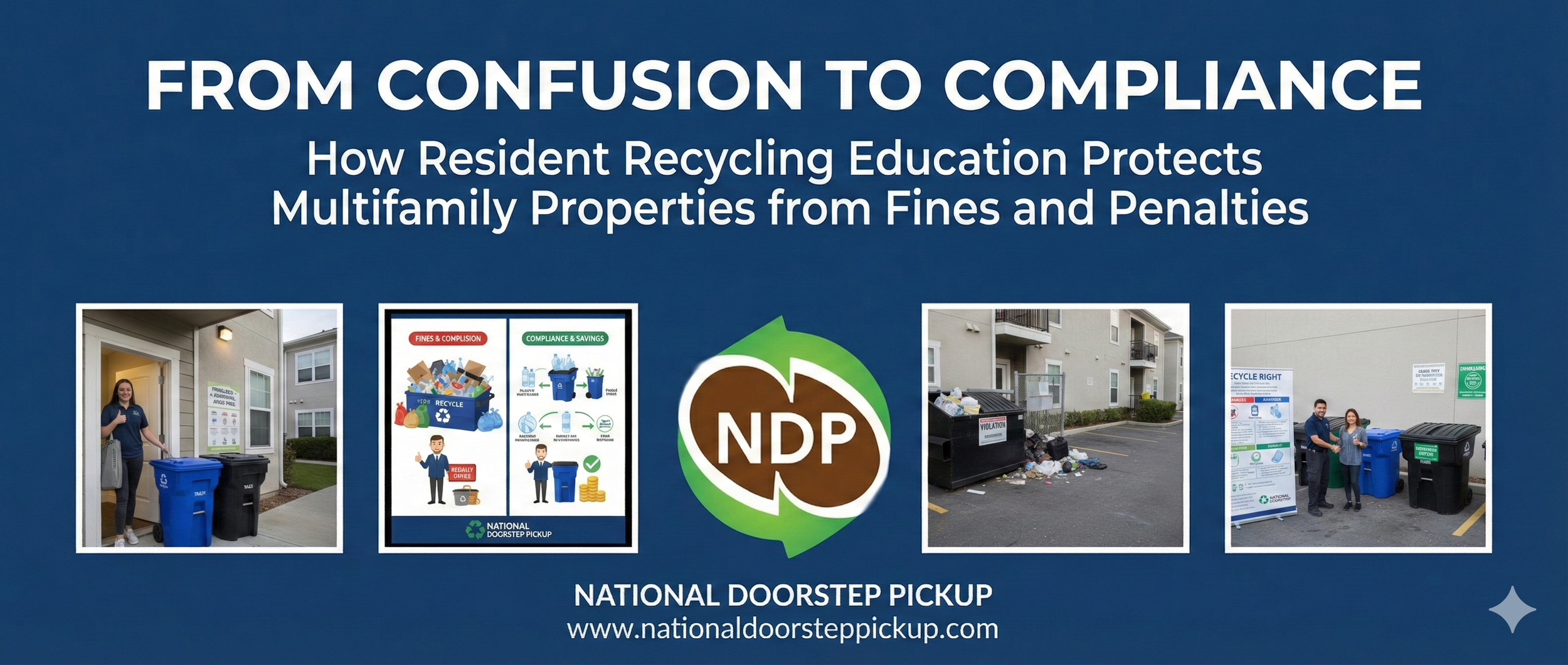
From Confusion to Compliance: How Resident Recycling Education Protects Multifamily Properties from Fines and Penalties
Overflowing recycling bins filled with plastic bags, greasy pizza boxes, and non-recyclables are more than an eyesore—they are a direct liability for multifamily properties. Across the U.S., municipalities are tightening recycling mandates and enforcing contamination thresholds that can result in rejected loads, surcharge fees, and escalating fines.
The reality is clear: most residents want to recycle, but without clear education and consistent systems, even well-meaning efforts can put a property out of compliance. Effective resident education—paired with structured valet recycling services—turns recycling from a risk into a compliance advantage.
Why Resident Recycling Education Is Now a Compliance Requirement—Not a “Nice to Have”
Reduced Contamination and Lower Regulatory Exposure
Cost Control and Operational Efficiency
Contaminated recycling often triggers:
Rejection fees
Dump-and-return (pull) charges
Increased landfill tipping costs
Enhanced Community Image and Resident Satisfaction
A visible, well-run recycling program signals professionalism, environmental stewardship, and operational competence. Residents increasingly expect sustainability to be embedded into community operations—not treated as an afterthought.
How Valet Recycling Services Reinforce Education and Compliance
Valet recycling services remove the two biggest barriers to compliance: inconvenience and inconsistency. Doorstep collection standardizes participation while creating natural touchpoints for education and reinforcement.
National Doorstep® provides customized valet recycling programs designed specifically for multifamily environments, aligning collection schedules, volume needs, and educational materials with local requirements.
Education in Action: Turning Policy into Daily Habits
Valet teams reinforce compliance through:
Clear resident-facing guidelines
Door tagging for contamination issues
Visual cues and standardized containers
Consistent collection schedules that reinforce behavior
This approach transforms recycling rules from abstract policies into daily, repeatable habits.
The Real Cost of Recycling Mistakes—and How Education Solves Them
The most common contamination issues include:
Non-recyclables like plastic bags and Styrofoam
Food residue on containers
Bagged recyclables
Improper handling of shredded paper
Ignoring local material restrictions
Each of these errors can invalidate an entire load.
Best Practices for Educating Residents at Scale
Property management teams that succeed with recycling compliance use layered, ongoing education:
Clear Guidelines
Simple, visual instructions outlining accepted materials and preparation requirements.
Multi-Channel Communication
Email, resident portals, signage, and common-area postings ensure consistent exposure.
Onboarding and Refreshers
Workshops, move-in materials, and periodic reminders reinforce expectations.
Ongoing Monitoring and Audits
Regular audits identify trends, allowing education efforts to adapt before violations occur.
Data-Driven Improvement
Tracking contamination patterns enables targeted education and measurable improvement over time.
Compliance, Sustainability, and NOI—Aligned
When resident education and valet recycling work together:
Contamination drops
Fines and penalties are avoided
Disposal costs decline
Community appearance improves
Sustainability goals are met without operational strain
This alignment is no longer optional. It is a core component of modern multifamily risk management.
Understand CoC Return & NOI Impact Before You Decide
To make the business case clear, we built the GreenPlus™ Profit Calculator, which allows you to estimate how a compliance-aligned doorstep program can reduce waste costs, lower risk exposure, and support NOI at your community.
View the GreenPlus™ Profit Calculator here:
https://www.nationaldoorsteppickup.com/greenplus-with-compliance-shield-calculator
Final Takeaway for Property Management
Effective recycling programs are built on education, convenience, and accountability. Bins alone do not create compliance—systems do.
By pairing resident education with professional valet recycling services, property management teams can protect against fines, control costs, and position their communities as responsible, future-ready assets.
National Doorstep® helps multifamily properties move from recycling confusion to documented compliance—every door, every night.
Request a Quote to see how a structured valet recycling and resident education program can reduce your community’s exposure and improve performance.