By Les Leith, CEO & COO at National Doorstep Pickup
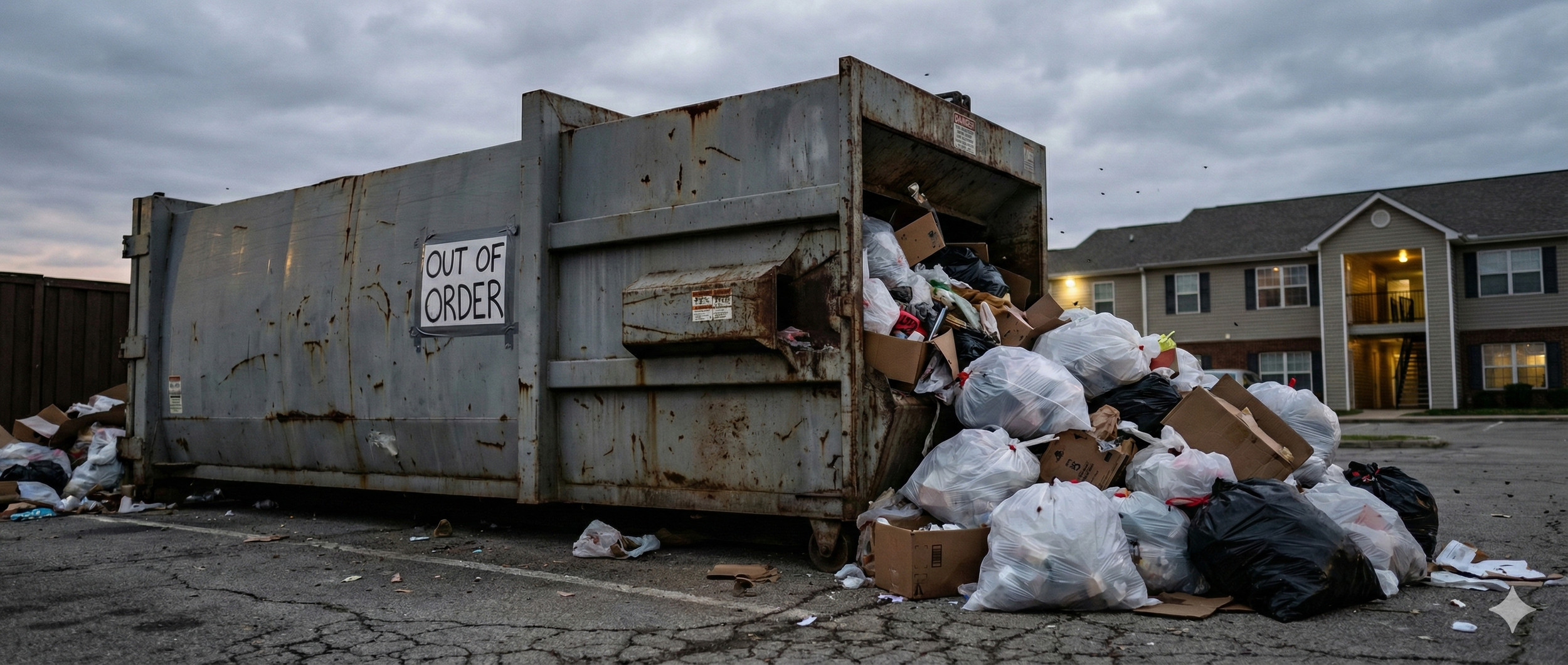
For multifamily property managers, trash compactors are mission-critical infrastructure. When they fail, the fallout is immediate: overflowing waste, resident complaints, pest activity, and emergency repair bills that erode NOI. The question is not whether to clean a trash compactor — it is how to do it safely, effectively, and cost-consciously.
The safest default for most apartment communities is routine pressure washing of the compactor exterior, chute, and enclosure — not entering the unit. Interior compactor cleaning introduces serious safety risks and should only be performed by trained professionals following lockout/tagout and confined-space protocols.
This preventative approach protects equipment, staff, and residents while extending asset life and reducing avoidable capital expenditures.
Key Takeaways for Multifamily Property Managers
Preventative maintenance reduces capital risk: Routine cleaning minimizes mechanical failure, hydraulic contamination, and corrosion — extending compactor lifespan.
Hygiene directly impacts resident satisfaction: Clean waste areas reduce odors, pests, slip hazards, and health complaints.
Exterior pressure washing is the safest baseline: Entering a compactor without proper procedures can be fatal; exterior, chute, and enclosure cleaning mitigates most sanitation risks without exposing staff to danger.
Professional services outperform DIY: Certified providers deliver deep sanitation while maintaining OSHA compliance and protecting expensive equipment.
What a Trash Compactor Does — and Why Maintenance Matters
Trash compactors compress waste to reduce volume, lowering haul frequency and disposal costs for multifamily communities. According to the U.S. Environmental Protection Agency (EPA), compacted waste systems improve site cleanliness and operational efficiency when properly maintained.
However, without regular cleaning, compactors accumulate organic waste, grease, and liquids that accelerate wear, contaminate hydraulic systems, and create pest harborage — increasing both operational risk and long-term costs.
Why Dirt and Debris Cause Compactor Failures
Mechanical Obstruction and Wear
Food waste, plastic film, and debris interfere with rams, tracks, and guide rails, increasing friction and motor strain. Manufacturers note that debris buildup is a leading cause of premature compactor failure.
Hydraulic System Contamination
Liquids and organic waste can infiltrate hydraulic components, degrading seals and fluid performance. Hydraulic contamination is a known driver of system inefficiency and breakdowns in waste equipment.
Electrical and Fire Hazards
Moisture, grease, and debris increase the risk of electrical shorts and fires. The National Fire Protection Association (NFPA) identifies accumulated waste residue as a contributor to refuse-area fire risk.
Interior Cleaning vs. Exterior Pressure Washing: A Safety Reality Check
The Risk of Interior Compactor Cleaning
Entering a trash compactor requires:
Full lockout/tagout procedures
Hydraulic disengagement
Confined-space safety protocols
OSHA explicitly classifies compactors as high-risk machinery, with fatal incidents occurring from unexpected cycling or hydraulic release . For most apartment communities, interior cleaning by in-house staff is not an acceptable risk.
Why Exterior, Chute, and Enclosure Cleaning Is the Safer Default
Routine pressure washing of:
Compactor exteriors
Trash chutes
Enclosures and pads
delivers the majority of hygiene benefits — odor control, pest deterrence, slip-hazard reduction — without exposing staff to confined-space or mechanical hazards. Public health agencies consistently recommend exterior sanitation to control vectors and odors in multifamily waste areas.
Signs Your Compactor Area Needs Immediate Cleaning
Persistent odors around waste rooms or breezeways
Increased rodent or insect activity
Leaking liquids or grease on pads
Resident complaints about cleanliness
Slower or noisier compaction cycles
The CDC’s Integrated Pest Management Systems and the EPA’s Pest Control: Resources for Housing Managers identify unmanaged waste residue as a primary attractant for pests in residential settings.
Professional vs. DIY Cleaning: What Protects NOI?
DIY / In-House Cleaning Limitations
Limited sanitation effectiveness
Staff exposure to bacteria and mechanical hazards
Increased liability risk
Inconsistent results
Professional Cleaning Advantages
OSHA-compliant procedures
Industrial equipment and eco-safe detergents
Reduced equipment wear
Improved resident perception and satisfaction
Implementing a Preventative Compactor Maintenance Plan
Property managers should:
Schedule routine exterior pressure washing (quarterly or semi-annually)
Coordinate professional interior servicing annually or as needed
Inspect for leaks, corrosion, and residue monthly
Train residents on proper compactor usage, aka no bulk items that jam (furniture, bed rails, etc)
Document maintenance to mitigate liability
This proactive approach aligns with best-practice asset management and reduces emergency repair exposure.
Final Thoughts for Multifamily Operators
Trash compactor hygiene is not a janitorial task — it is a risk-management and asset-protection strategy. For most apartment communities, pressure washing compactor exteriors, chutes, and enclosures is the safest and most cost-effective baseline. Interior cleaning should be reserved for trained professionals with proper safety controls.
National Doorstep® helps property managers protect residents, staff, and capital investments through professional, compliant waste-area cleaning solutions that support hygiene, safety, and long-term NOI.
Request a Quote to see how National Doorstep® can support your community’s preventative maintenance strategy.
Frequently Asked Questions
How often should trash compactor areas be cleaned?
Most multifamily communities benefit from quarterly exterior pressure washing, with professional interior servicing annually or as needed based on usage.
Can improper cleaning damage a compactor?
Yes. Incorrect chemicals, pressure, or procedures can damage seals, hydraulics, and electrical systems, increasing repair costs.
Does regular cleaning reduce fire risk?
Yes. Removing grease and debris reduces ignition sources, consistent with NFPA fire-prevention guidance.
Is exterior cleaning enough?
In most cases, yes. Exterior, chute, and enclosure sanitation address the majority of hygiene and pest issues without introducing safety hazards.
Need help with cleaning arrangements?
Call us at 844-278-8727 or email your service manager