By Les Leith, CEO & COO at National Doorstep Pickup
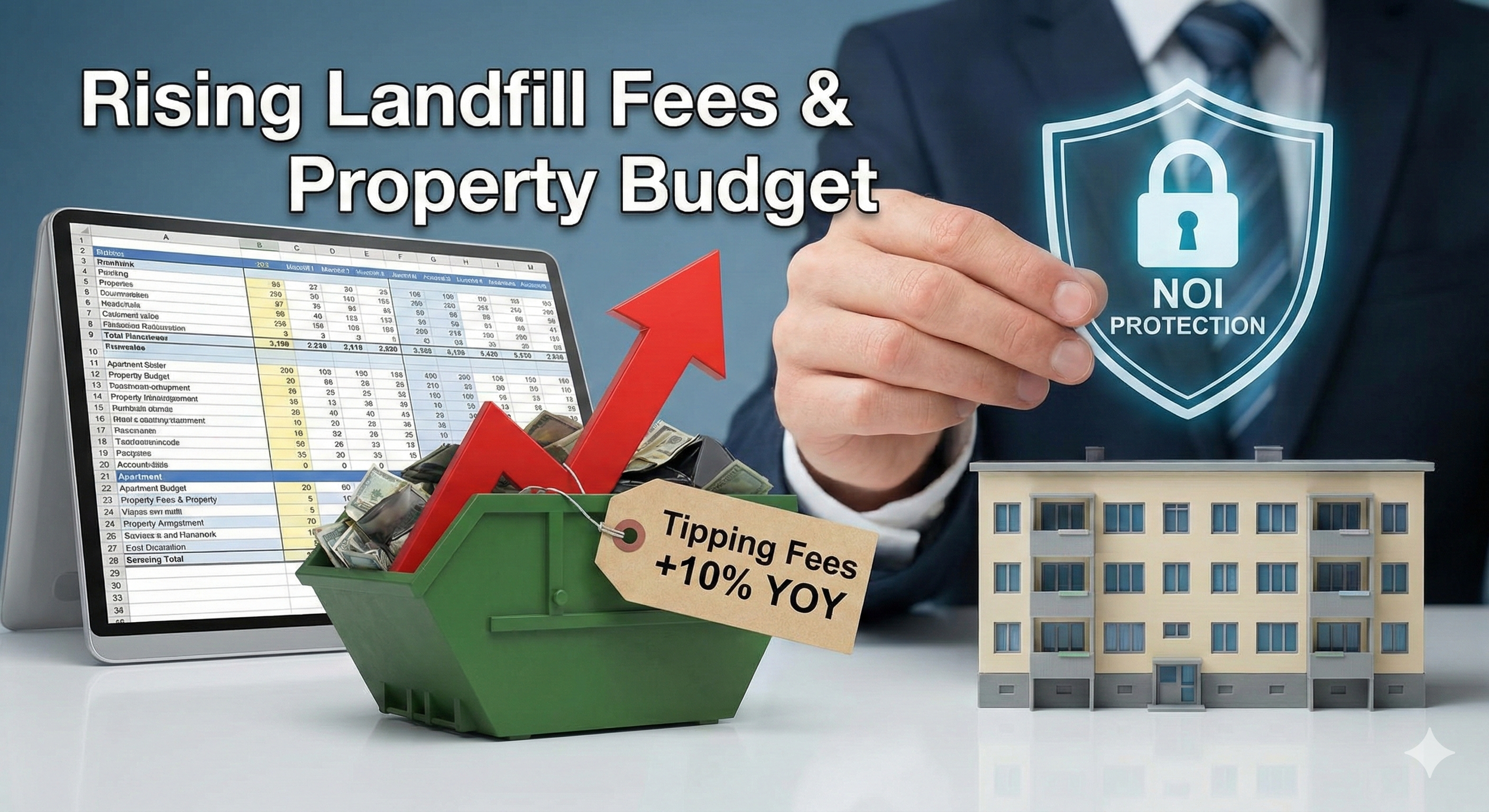
Landfill tipping fees are increasing again—and for multifamily operators, that often shows up as “mystery” cost creep inside hauling invoices, compactor service, and overflow cleanups.
A recent Environmental Research & Education Foundation (EREF) analysis (summarized widely in industry coverage) reported a 10% year-over-year increase in average U.S. landfill tipping fees, with a new national average around $62.28/ton, and large landfills charging $70+/ton in many markets. The Pacific and Midwest saw the steepest fee increases
If your community runs heavy trash volume, has recurring contamination, or is paying for frequent compactor pulls, tipping fee inflation can erode NOI fast—especially across a portfolio.
What a “tipping fee” actually is (and why it matters)
A tipping fee is the per-ton charge a landfill assesses to accept waste. Even if your invoice is structured as “per pull” or “per haul,” your hauler’s costs are ultimately anchored to the disposal price of each ton.
As tipping fees rise, haulers typically respond with:
Higher per-pull charges at renewal
Fuel/environmental surcharges that stick around
Tighter contamination thresholds (and more rejection fees)
Less flexibility on pickup frequency without rate increases
Why tipping fees are rising now
EREF’s analysis highlights that tipping fees move with operational and market pressures—especially labor and maintenance costs—and they can vary significantly by region and facility characteristics.
Other key factors called out in the coverage:
Ownership and scale matter: private landfill pricing is materially higher than public, and large sites often price higher as well.
Waste-to-energy (WTE) markets can be more expensive: reported as ~28% higher in WTE states versus non-WTE states.
Construction & Demolition (C&D) is also climbing and in some areas is “neck-and-neck” with MSW, which can indirectly pressure local disposal economics overall.
The multifamily impact: why this becomes a NOI problem (not a sustainability talking point)
For apartment communities, the disposal cost problem rarely stays isolated. When tipping fees rise, these operational issues become more expensive:
High trash volume (more tons = more exposure)
Overfilled compactors (extra pulls and emergency service)
Overflow cleanups (labor + vendor costs)
Recycling contamination (rejected loads, “oops” fees, or recycling billed as trash)
Resident friction (dirty waste areas hurt retention and reviews)
The takeaway: your hauling contract may be fixed for now, but your waste system is either reducing tonnage—or amplifying cost exposure.
The Practical How-To: How Property Management Can Reduce Cost Exposure When Tipping Fees Rise
Step 1: Measure your “cost per door” waste profile
Start with three numbers for each community:
Monthly hauling cost (all-in)
Pull frequency (compactor/dumpster + recycling if applicable)
Observable issues (overflow, contamination, bulk waste, illegal dumping)
Even without exact tonnage, you can identify the communities where small operational fixes will produce outsized savings.
Step 2: Eliminate contamination (because “recycling billed as trash” is the hidden multiplier)
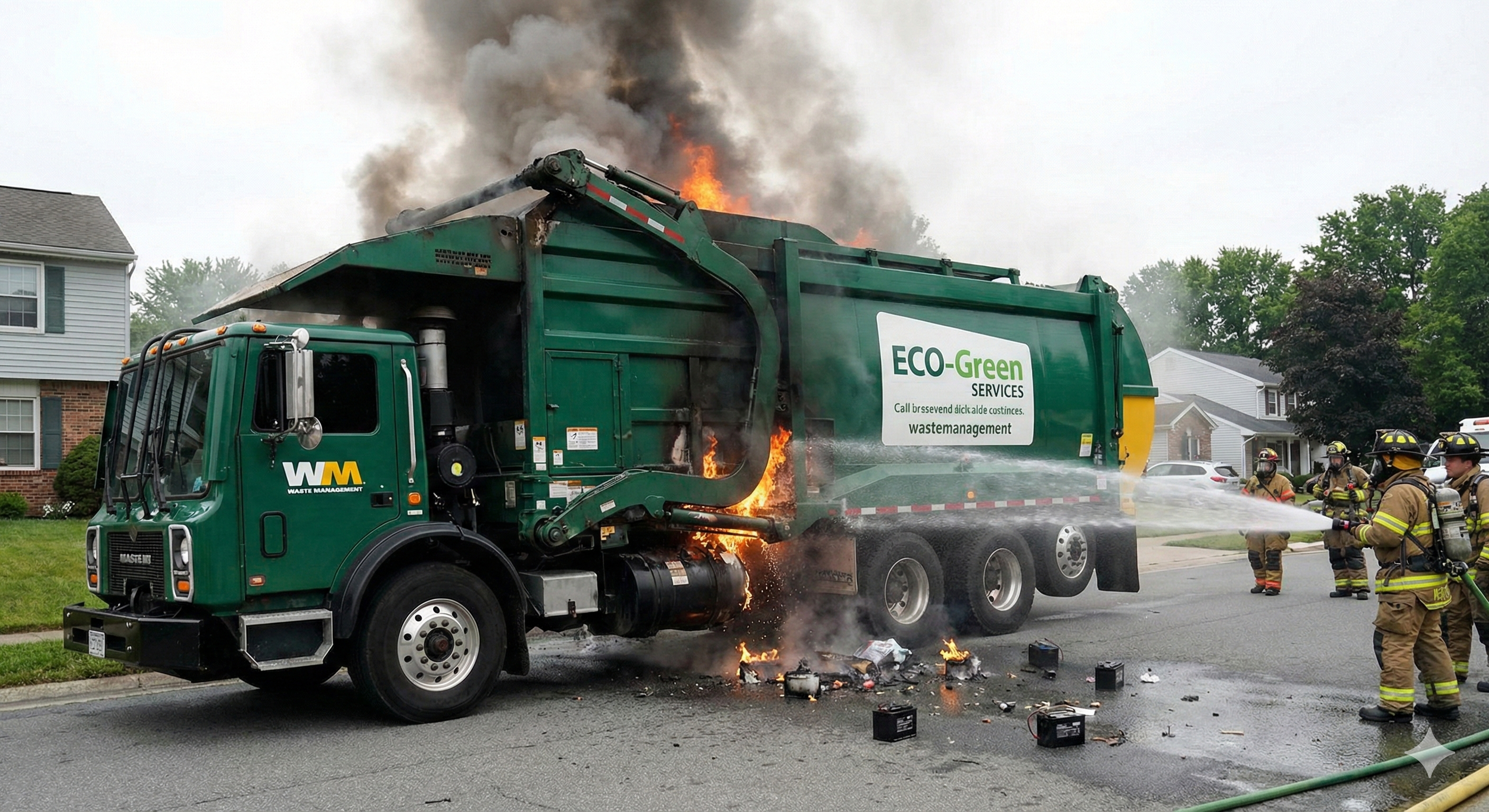
Contamination increases cost in these three ways:
Operators were forced into unplanned mid-cycle capital investments because of fires. Automatic Side Loader (ASL) never sees fire until it's too late. E-bikes and forced unplanned mid-cycle improvements because of insurance covering Eight-Figure "nuclear jury verdicts!"
For multifamily communities, the takeaway is clear: better resident education, cleaner recycling systems, and verified doorstep collection are no longer optional — they’re part of a smarter risk-reduction strategy.
National Doorstep helps apartment communities turn waste compliance into a cleaner, safer, more accountable operating system — backed by Proof of Pickup® documentation and resident-facing service design.
It triggers direct penalties and rejected loads
It pushes more material into disposal pricing (the most inflation-exposed line item)
A controlled sorting system (education + enforcement + service design) can reduce contamination dramatically versus “hope-based recycling.”
Step 3: Reduce trash volume by capturing recycling correctly (and consistently)
“The cheapest ton is the one you never pay to dispose of” — Les Leith
Diversion works when it’s:
Convenient for residents
Collected consistently (not “when staff has time”)
Supported by simple rules and clear signage
Audited and corrected when contamination appears
Step 4: Right-size your hauling plan after diversion improves
Once recycling capture stabilizes, many properties can:
Reduce pull frequency
Reduce container size
Avoid emergency pulls and overflow service
Cut compactor strain and cleanup hours
Step 5: Add organics where feasible to push diversion further
In select mandate markets, organics/compost can unlock meaningful diversion—especially when paired with a resident-friendly process and proper bags/containers.
Where National Doorstep GreenPlus™ Creates Savings (While Making Diversion Predictable)
GreenPlus™ is designed to do what most communities struggle to operationalize: make diversion consistent, measurable, and audit-ready—without adding workload to onsite teams.
Based on National Doorstep’s program description, GreenPlus™ combines:
Nighttime doorstep collection for trash and recyclables to increase participation
Compliance-first procedures and documentation (collection logs, diversion reporting, incident reporting, chain-of-custody practices)
Resident education materials and onsite signage to reduce contamination
How the savings typically show up (in real operating terms)
GreenPlus™ savings are usually created through a combination of:
Fewer compactor pulls / fewer trash pickups (trash volume drops when recycling is captured correctly)
Right-sizing the hauling plan (container size, service frequency, or both)
Lower contamination = fewer rejected recycling loads and fewer “recycling billed as trash” charges
Reduced compactor overflow and cleanup labor
In some markets, improved recycling economics when material stays clean and accepted
A practical target: 40% diversion per community
How to Roll This Out Without Disrupting Operations
A sensible rollout sequence looks like this:
Baseline review: pulls, overflow, contamination hotspots
Resident-facing rules: simple “what goes where” instructions
Doorstep collection launch: consistent schedule and containment standards
QA and course correction: contamination tagging + resident reminders
Hauling optimization: right-size pulls and containers after stabilization
Ongoing reporting: monthly diversion metrics + documentation for files
Call-to-Action: Get Your Proposal and Build Your NOI Case
If tipping fees are rising in your market, you do not need to “wait for renewal” to take action—you can reduce tonnage and stabilize diversion now.
Request a Free Compliance Audit and Proposal for your property here: https://www.nationaldoorsteppickup.com/valet-trash-contract
And if you want a quick NOI estimate first, use the GreenPlus™ Profit Calculator here: https://www.nationaldoorsteppickup.com/greenplus-with-compliance-shield-calculator