By Les Leith, CEO & COO at National Doorstep Pickup
A resident may not cite “trash” as the only reason they choose not to renew.
But they remember it.
They remember walking past overflowing dumpsters on Monday morning. They remember leaking bags in breezeways. They remember bulk items sitting beside the enclosure for days. They remember odors near the compactor, trash rooms that feel neglected, and common areas that look worse than the rent price suggests.
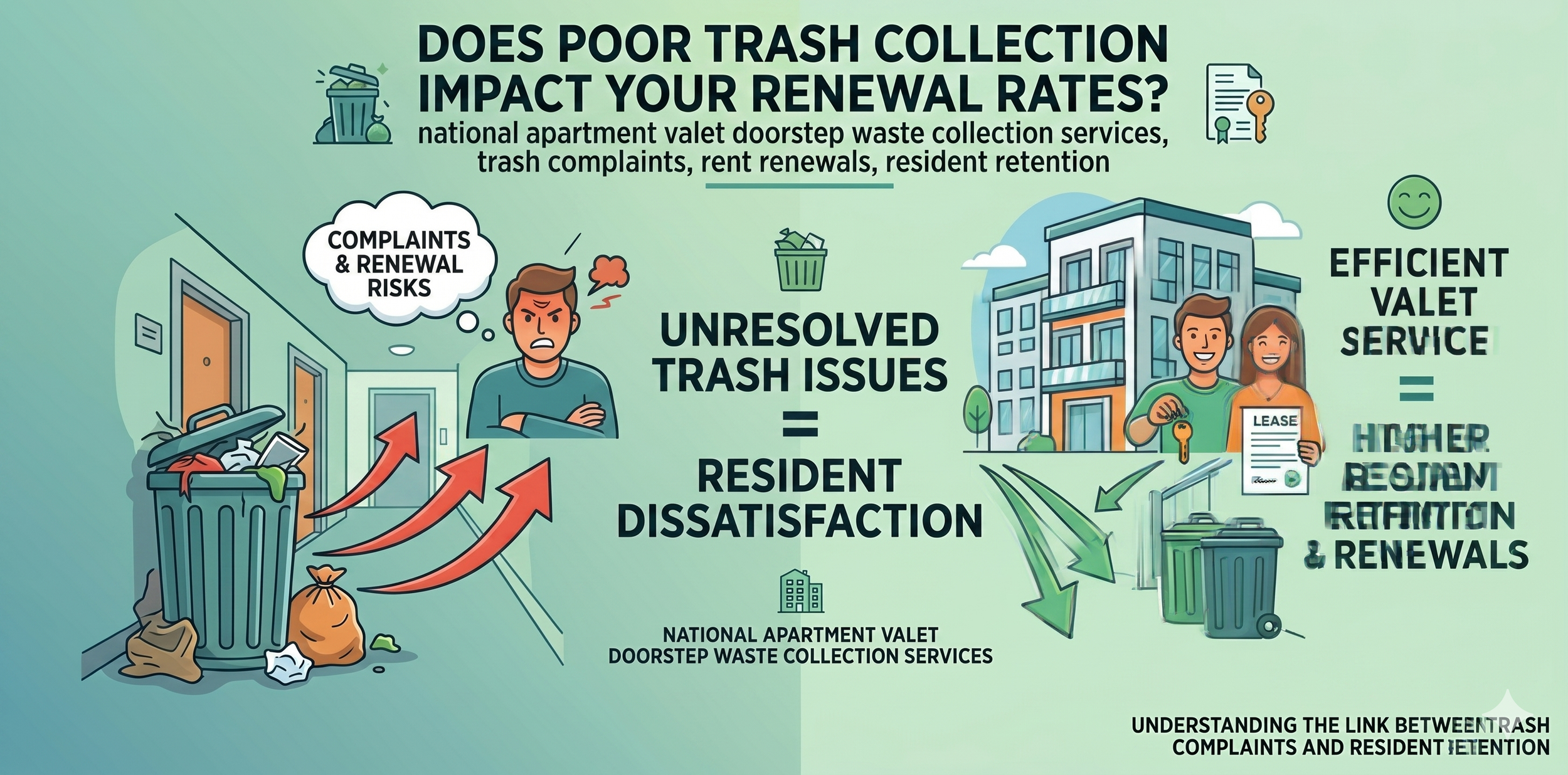
In multifamily, trash complaints are rarely just about trash.
They are signals of friction in the resident experience.
And when friction becomes routine, renewal intent starts to weaken.
Resident retention is closely tied to the overall living experience. NAA has reported that disconnects between what property managers think residents value and what residents actually prioritize can directly affect retention and profitability. Zego has also cited a 2024 average resident retention rate of 60%, reinforcing how much financial pressure communities face when residents do not renew. For apartment operators, the overlooked question is not simply:
“How many trash complaints did we get this month?”
The better question is:
“Are trash complaints becoming a measurable resident-retention risk?”
Why Trash Complaints Matter More Than They Appear
Trash is one of the few operational issues residents interact with almost every day.
They may not use the pool daily. They may not visit the fitness center daily. They may not attend resident events.
But they see the breezeways, stairwells, parking lots, dumpsters, compactors, trash rooms, and common areas constantly.
That makes waste management highly visible.
When trash service is clean and consistent, it fades into the background. When it fails, it becomes one of the most obvious signs that the property is not being managed well.
Common resident complaints include:
Overflowing dumpsters or compactors
Trash bags left in hallways or breezeways
Leaking bags and stains near apartment doors
Odors near common areas
Bulk items sitting too long
Cardboard pileups after move-ins
Pest concerns near trash rooms or enclosures
Inconsistent resident compliance with set-out rules
The Resident Experience Connection
Resident experience is not only about amenities.
It is about whether the community feels clean, safe, responsive, and professionally operated.
A dirty common area sends a message before the leasing office ever responds. A resident who walks past trash every morning may start to question whether their monthly rent is aligned with the property’s service standard.
This is where trash management becomes a retention issue.
Clean common areas help reinforce:
Pride of place
Confidence in management
Perceived value of rent
Safety and comfort
Trust that issues are handled proactively
Dirty common areas do the opposite.
They make residents feel like they are paying more while receiving less.
NAA has emphasized that happy residents are more likely to renew, recommend the community, and contribute to a positive atmosphere. That means the operational details residents see every day—including trash—can influence whether they feel satisfied enough to stay.
The Renewal Risk: Small Complaints Become Big Decisions
Residents rarely make renewal decisions based on one moment.
They make them based on accumulated experience.
A missed pickup may be forgiven. A single overflowing dumpster may be ignored. One bulk item near the enclosure may not trigger a move-out.
But when the same problems repeat, residents begin building a case in their minds:
“This property is not as clean as it used to be.”
“Management does not enforce the rules.”
“Maintenance is overwhelmed.”
“I can probably find a better experience somewhere else.”
That is the hidden correlation.
Clean Common Areas Protect Perceived Value
Rent increases are harder to justify when residents see operational decline.
A resident may accept a rent increase if the property feels clean, organized, and well-managed. But if common areas are visibly neglected, even a modest increase can feel unreasonable.
This matters for regional managers, asset managers, and owners because retention protects NOI in multiple ways:
Fewer costly turns
Lower vacancy exposure
Reduced leasing pressure
Better online reputation
Stronger renewal conversations
Fewer resident escalations
Less maintenance time spent chasing trash issues
Resident surveys and feedback loops are valuable, but they only work when operators act on the issues residents identify. Multifamily Dive recently noted that surveys help identify pain points, but operators must make visible changes for residents to feel heard.
Why Property Teams Miss the Correlation
Trash issues often get classified as maintenance tasks, not retention risks.
That creates a blind spot.
A property team may track:
Number of trash complaints
Number of missed pickups
Number of bulk items removed
Number of compactor overflows
Number of resident violations
But those metrics are often separated from:
Renewal rates
Online reviews
Resident satisfaction scores
Maintenance workload
Reputation trends
Move-out feedback
The result is an incomplete picture.
Trash may be creating resident dissatisfaction long before it appears in a renewal report.
The Operational Fix: Make Trash Predictable
The goal is not just to collect trash.
The goal is to create a predictable, clean, resident-friendly system.
A strong doorstep trash and recycling program helps reduce friction by giving residents a simple routine and giving management better control over property cleanliness.
A clean program should include:
Clear set-out windows
Consistent nightly service
Tied-bag requirements
Leak prevention standards
Cardboard breakdown rules
Bulk item escalation procedures
Resident education
Photo documentation
Manager reporting
Common-area monitoring
This is where National Doorstep’s valet trash service becomes more than an amenity.
It becomes an operational retention tool.
How National Doorstep Helps Protect Retention
National Doorstep helps apartment communities reduce visible trash friction by bringing waste collection closer to the resident while helping property teams keep common areas cleaner and more controlled.
With community-wide valet trash service, residents place tied trash bags outside their doors during the approved evening window. National Doorstep’s trained service team collects the waste and transports it to the onsite dumpster or compactor area.
For property managers, the benefit is not just convenience.
It is control.
National Doorstep helps communities:
Reduce hallway and breezeway trash buildup
Improve common-area cleanliness
Lower resident complaints tied to waste
Support a cleaner move-in and move-out experience
Reduce maintenance team time spent chasing trash issues
Improve resident perception of service quality
Create a more consistent amenity experience
Support cleaner online reputation signals
With Proof of Pickup® and Amazon®-level service verification, property teams also gain documentation that helps confirm service completion, identify problem areas, and respond faster when issues arise.
The Bottom Line
Trash complaints are not minor.
They are early warning signs.
When trash problems repeat, residents start to question the quality of the community. When common areas stay clean, residents are more likely to feel that management is responsive, organized, and protecting the value of where they live.
For multifamily operators, that makes trash management directly connected to resident experience, retention, and NOI.
The communities that treat trash as a retention strategy—not just a maintenance task—will be better positioned to protect renewals, reduce complaints, and keep residents satisfied.
Tired of trash complaints showing up before renewal season?
National Doorstep helps apartment communities create cleaner common areas, reduce resident friction, and support stronger renewal conversations with professional valet trash and doorstep recycling service.
Request a Free Valet Trash & Retention Audit for Your Property:
https://www.nationaldoorsteppickup.com/valet-trash-contract
FAQ
What do trash complaints have to do with rent renewals?
Trash complaints can affect how residents perceive the overall quality of the community. Repeated issues like overflowing dumpsters, odors, leaking bags, and dirty common areas can reduce resident satisfaction and make renewal conversations harder.
Why are clean common areas important for resident retention?
Clean common areas help residents feel that the property is well-managed, safe, and worth the rent they pay. Dirty breezeways, stairwells, trash rooms, and dumpster areas can create daily frustration that weakens resident loyalty.
Can valet trash improve resident experience?
Yes. A consistent valet trash program gives residents a more convenient way to dispose of waste while helping property teams reduce common-area trash buildup, complaints, and maintenance strain.
How does National Doorstep support apartment retention?
National Doorstep supports retention by helping communities maintain cleaner common areas, reduce resident trash complaints, document service completion with Proof of Pickup®, and create a more reliable resident experience.