By Les Leith, CEO & COO at National Doorstep Pickup
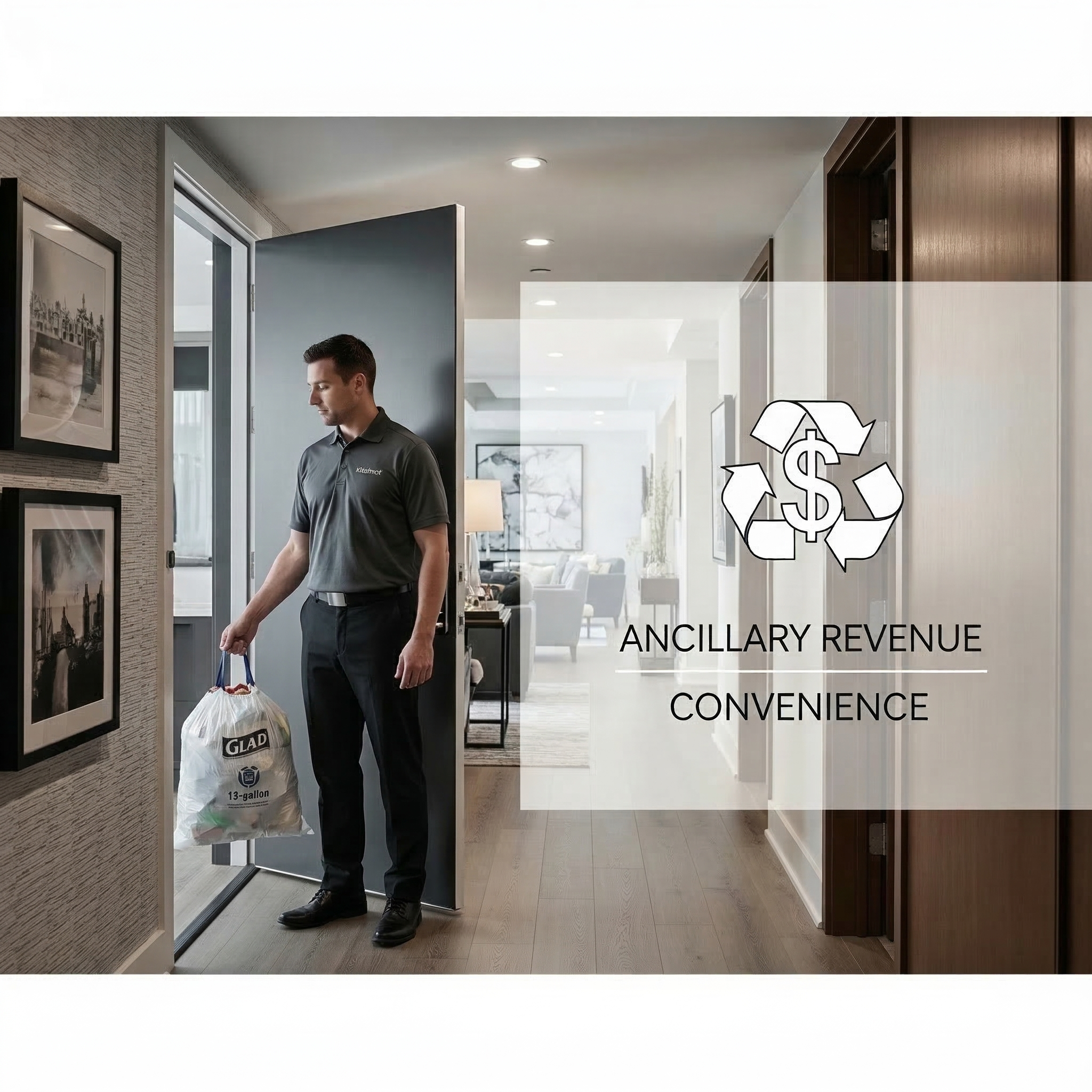
What if your trash service could quietly increase NOI—without a single rent increase or resident complaint?
In today’s multifamily environment, where rent growth is compressing and expense ratios are under scrutiny, property management teams are being forced to find non-rent revenue streams that actually stick.
Valet trash is one of the few ancillary income levers that—when structured correctly—drives revenue, improves operations, and enhances resident satisfaction simultaneously.
But there’s a catch:
Poorly positioned fees trigger resistance. Well-structured programs feel like an upgrade.
Let’s break down how to engineer valet trash into a revenue-generating amenity residents willingly pay for.
The Real Opportunity: Monetizing Convenience (Without Friction)
Valet trash is no longer just an operational service—it’s a behavior-driven revenue channel.
The difference between success and pushback comes down to one thing:
Do residents perceive it as a forced fee—or a lifestyle upgrade?
When positioned correctly, valet trash becomes:
A premium convenience
A time-saving service
A cleanliness and safety upgrade
A community standard
When positioned poorly, it becomes:
“Another fee”
Resident Psychology: Why People Pay (and When They Push Back)
Understanding resident decision-making is critical.
What Residents Actually Value:
Convenience over cost (especially in busy households)
Consistency and predictability
Clean, odor-free common areas
Status alignment (does this feel like a premium community?)
What Triggers Pushback:
Surprise fees after move-in
Poor service execution
Lack of perceived value
Misalignment with property class
The Psychological Framework:
Residents don’t resist fees—they resist unclear value.
Key Insight:
If a resident believes:
“This makes my life easier every single week”
They will accept—and often prefer—the fee.
Pricing Tiers: Aligning Fees with Asset Class
Not all communities should price valet trash the same way. Misalignment here is one of the biggest causes of resident friction.
Class A Properties (Luxury / Lifestyle-Driven)
Recommended Monthly Fee: $30–$50+
Positioning Strategy:
Bundle into a premium living package
Emphasize concierge-level convenience
Pair with other services (package lockers, smart tech, etc.)
Messaging Example:
“Enjoy doorstep trash collection as part of your elevated living experience.”
Key Driver:
Residents expect amenities—they’re not price-sensitive if value is clear.
Class B Properties (Workforce / Value-Conscious)
Recommended Monthly Fee: $20–$35
Positioning Strategy:
Focus on time savings + cleanliness
Highlight cost vs. convenience tradeoff
Messaging Example:
“Save time and avoid dumpster trips—weekly doorstep collection keeps your routine simple.”
Key Driver:
Residents will pay—but need practical justification.
Class C Properties (Budget / Cost-Sensitive)
Recommended Monthly Fee: $10–$25
Positioning Strategy:
Emphasize necessity and property improvement
Tie to cleanliness, pest control, and safety
Messaging Example:
“Improving community cleanliness and reducing pests—without added effort from residents.”
Key Driver:
Fee must feel reasonable and justified, not optional luxury.
How to Position Valet Trash as an Amenity (Not a Fee)
This is where most communities get it wrong.
❌ Wrong Approach:
“$25/month valet trash fee”
Buried in lease add-ons
No explanation of value
✅ Correct Approach:
Position valet trash as:
A standard community feature
A quality-of-life upgrade
A property-wide operational enhancement
Proven Positioning Angles:
1. Convenience Framing
“No more late-night dumpster trips.”
2. Cleanliness & Health
“Cleaner hallways. Fewer odors. Better living environment.”
3. Safety
“Eliminate dark, isolated dumpster walks.”
4. Community Standardization
“A consistent, well-maintained community for all residents.”
Fee Transparency Best Practices (Critical for Zero Pushback)
Transparency isn’t optional—it’s the difference between acceptance and resentment.
1. Introduce Early (Before Lease Signing)
Include valet trash in initial pricing discussions
Never “surprise” residents post-commitment
2. Bundle When Possible
Combine with:
Pest control
Amenity fees
Technology packages
Result: Reduces line-item resistance
3. Show the “Why”
Clearly communicate:
Service frequency
Operational benefits
Property improvements
Example:
“This service reduces overflow, improves cleanliness, and enhances your living experience.”
4. Deliver Consistently
Nothing destroys acceptance faster than:
Missed pickups
Overflow issues
Poor communication
Execution = Retention of the fee
Advanced Strategy: Turning Valet Trash into a True Revenue Engine
The highest-performing properties go beyond cost recovery.
They:
Mark up service strategically
Reduce compactor pulls and hauling costs
Minimize labor diversion
Decrease pest control expenses
The Formula:
(Resident Fees – Service Cost) + Operational Savings = NOI Growth
This is where valet trash becomes:
A margin generator—not just a service
The Bottom Line: It’s Not About Charging—It’s About Framing
Valet trash succeeds when it is:
Positioned as an amenity
Priced according to asset class
Communicated with clarity
Delivered with consistency
Fail any one of these—and you’ll feel resident pushback.
Execute all four—and you create:
Higher NOI
Better resident experience
Stronger asset positioning
Final Thought: The Shift Happening in Multifamily
With rent growth tightening across markets, the next wave of NOI expansion is coming from:
Operational intelligence + ancillary revenue optimization
Valet trash—when structured correctly—is one of the most underutilized tools in that strategy.
Call to Action
Want to see how much revenue your property is leaving on the table?
National Doorstep can help you:
Structure pricing by asset class
Eliminate compactor inefficiencies
Increase ancillary income without resident friction
👉 Request a Free Valet Trash Revenue & Compliance Analysis
https://www.nationaldoorsteppickup.com/valet-trash-contract