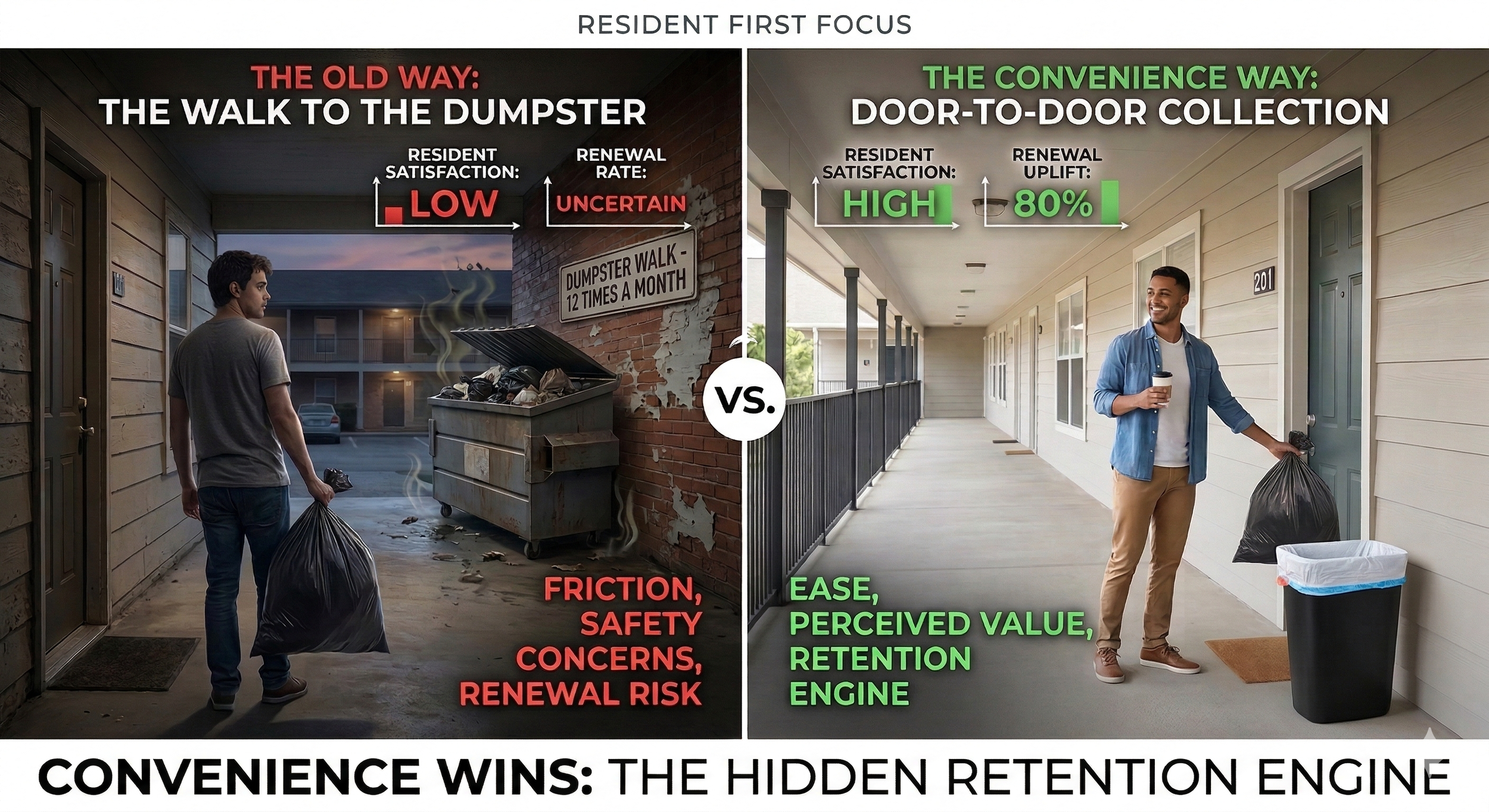
By Les Leith, CEO & COO at National Doorstep Pickup
In multifamily operations, waste management is often underestimated.
Waste management may seem routine, but its impact is significant.
When residents choose where to live, they consider location, price, amenities, and overall experience. Often, the deciding factor is the elimination of daily inconveniences rather than high-profile amenities.
Requiring residents to walk to dumpsters is an outdated inconvenience in modern apartment living.
Door-to-door collection removes this inconvenience, significantly improving the resident experience.
The Real Resident Experience
From a property management perspective, dumpsters seem efficient. Centralized. Predictable. Contained.
From a resident perspective, they represent:
• A nighttime walk
• Exposure to pests and odors
• Overflowing containers
• Safety concerns in poorly lit areas
• Repeated weekly inconvenience
It’s not one walk.
It’s 18-20 walks per month.
Over a 12-month lease, that’s more than 200+ trips with bagged and tied trash, plus flattened cardboard.
Convenience is cumulative.
Why Door-to-Door Collection Changes Perception
Valet trash service repositions waste removal from a chore to an amenity.
Residents simply:
• Bag waste properly
• Set it outside their door during designated hours
• Wake up to a clean breezeway
This creates:
• Cleaner common areas
• Reduced compactor dependency
• Less illegal bulk dumping
• Improved curb appeal
• Fewer maintenance interruptions
And most importantly — improved daily experience.
The Financial Angle Property Management Can’t Ignore
In a market where rent growth is constrained, raising rates is harder.
The new margin comes from:
• Operational efficiency
• Reduced compactor wear
• Lower pest incidents
• Improved online reviews
• Stronger renewals
Convenience drives perceived value.
Perceived value supports retention.
Retention protects NOI.
Class A vs. Workforce Housing: The Same Outcome, Different Leverage
Class A Communities
Door-to-door service reinforces brand positioning. It aligns with concierge-level living expectations and supports premium positioning.
Class B/C Workforce Housing
Convenience becomes differentiation. Residents may not expect luxury — but they deeply value effort reduction and safety improvements.
In both cases, friction removal increases satisfaction.
The Behavioral Economics of Convenience
Research across service industries shows:
When a service reduces repetitive effort, satisfaction increases disproportionately to cost.
Door-to-door collection works because:
• It removes effort multiple times per week
• It reduces visible disorder
• It signals proactive property management
Residents equate convenience with professionalism.
Professionalism builds trust.
Trust increases lease renewals.
Operational Advantages Beyond Resident Satisfaction
From a property management lens, door-to-door collection:
• Reduces dumpster or compactor overfill
• Lowers contamination in recycling programs
• Limits illegal bulk dumping
• Keeps maintenance focused on asset preservation
• Improves inspection readiness
It transforms trash from a liability into a managed system.
The Strategic Question
The question is no longer:
“Is valet trash a luxury?”
The better question is:
“Can your community afford to operate without friction reduction?”
Dumpster walks represent yesterday’s model.
Door-to-door collection represents modern apartment expectations.
Convenience wins — because residents vote with renewals.