By Les Leith, CEO & COO at National Doorstep Pickup
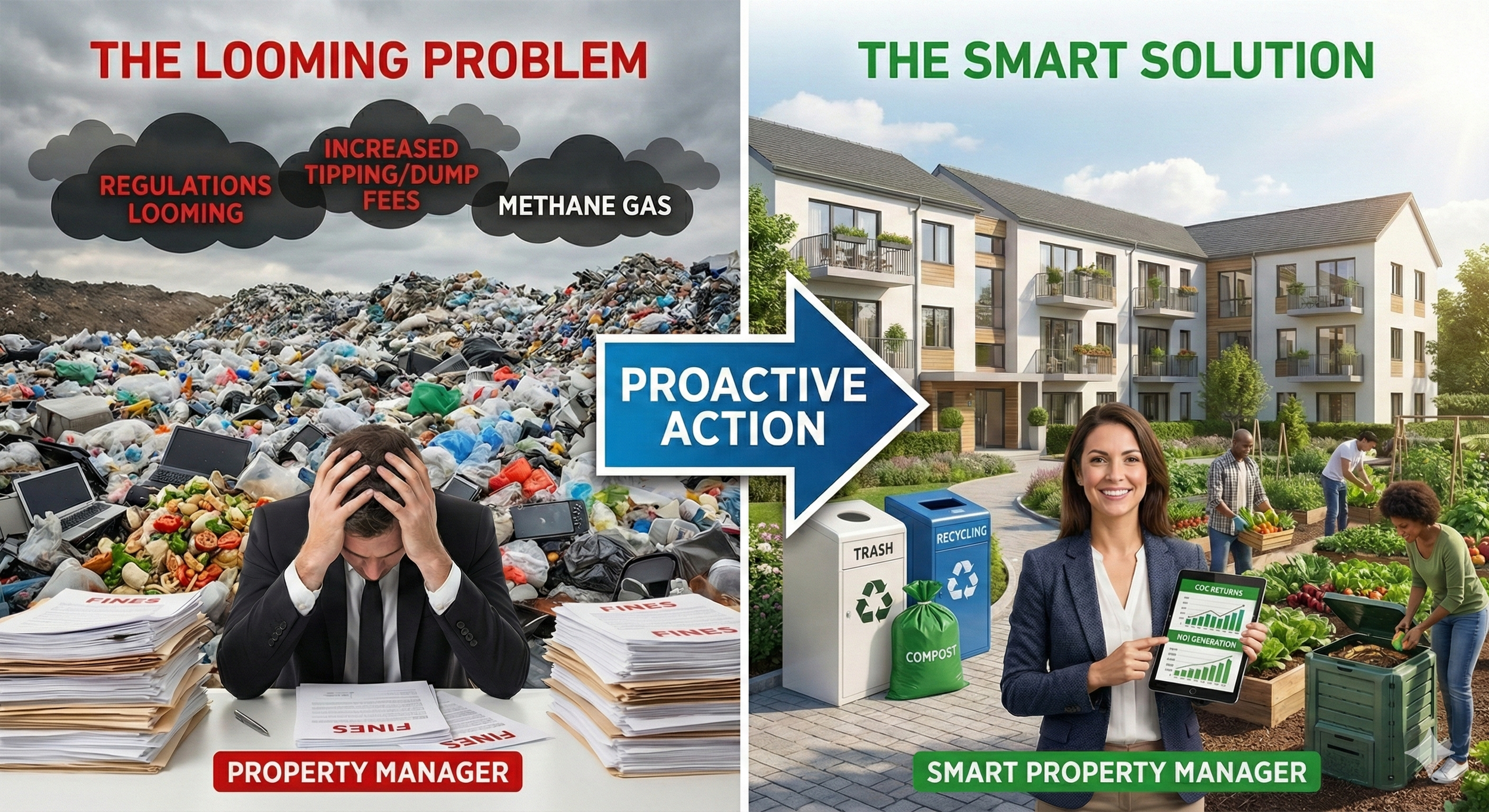
Sustainability is no longer a “nice-to-have” amenity in multifamily housing—it is rapidly becoming an operational requirement. Across the U.S., municipalities are tightening waste diversion rules, landfill fees are climbing, and residents are actively choosing communities that demonstrate real environmental leadership. For forward-thinking property management teams, the question is no longer if composting belongs on-site, but how to launch it efficiently and profitably.
Launching or partnering with a composting company allows multifamily properties to stay ahead of regulation, reduce operating costs, and strengthen their competitive position—all without disrupting daily operations.
Composting: The Missing Link in Multifamily Waste Strategy
Organic Waste Is the Largest Untapped Opportunity
Food scraps and other organic materials account for 20% of multifamily waste streams.
When sent to landfills, these materials generate methane—a greenhouse gas far more potent than carbon dioxide. Composting diverts this material entirely, transforming a liability into an asset.
Regulatory Pressure Is Accelerating
Cities and states are increasingly mandating food waste diversion, composting access, or organics separation for residential properties. Property management teams that act early reduce exposure to fines, avoid last-minute compliance costs, and position their communities as regulation-ready rather than reactionary.
The Business Case: Why Composting Improves NOI
Lower Disposal Costs
As landfill tipping fees continue to rise, diverting organic waste through composting reduces overall trash volume and hauling frequency. Over time, this directly lowers waste management expenses.
Increased Asset Value
Eco-conscious residents actively seek communities with visible sustainability programs. Composting enhances property reputation, supports retention, and strengthens leasing narratives—particularly in competitive markets.
Risk Mitigation
Compliance failures related to waste ordinances increasingly result in fines and enforcement actions at Market Rent and Affordables. Composting programs act as insurance against regulatory exposure while demonstrating good-faith compliance.
Launching a Composting Program: What Property Management Must Get Right
1. Assess Organic Waste Volume
A waste audit identifies how much food and organic waste is generated and determines the appropriate composting model—on-site, off-site, or hybrid.
2. Choose the Right System
Off-site composting services for properties without space or staff capacity
Centralized community bins placed near existing trash and recycling
Integrated pickup schedules that mirror current waste operations
3. Educate Residents to Prevent Contamination
Clear signage, digital reminders, and ongoing education are critical. Contamination is the primary reason composting programs fail—and the easiest problem to solve with the right partner.
4. Monitor and Optimize
Successful composting programs evolve. Bin placement, pickup frequency, and resident engagement should be adjusted using participation data and feedback.
Composting vs. Traditional Waste Disposal: A Clear Advantage
Traditional disposal methods rely on landfilling and incineration—both costly and environmentally damaging. Composting, by contrast:
Reduces methane emissions
Lowers long-term disposal costs
Produces reusable, nutrient-rich compost
Aligns with municipal sustainability mandates
From both an environmental and financial standpoint, composting is the superior waste strategy for multifamily communities.
Overcoming Common Composting Challenges in Apartments
Property management often hesitates due to concerns about odors, pests, or resident misuse. These challenges are operational—not structural—and are solved through:
Proper container placement and sealed bins
Consistent resident education
Professional service oversight and contamination reduction protocols
With the right systems in place, composting integrates seamlessly into daily operations.
Choosing the Right Composting Partner Matters
To maximize ROI, property management should look for a provider that offers:
Multifamily-specific expertise
Customized service models
Resident education and engagement
Technology-enabled reporting and communication
A proven national track record
National Doorstep® supports composting initiatives with scalable infrastructure, resident education, and operational consistency—helping properties implement organics diversion without adding workload to on-site teams.
Final Takeaway: Composting Is a Strategic Advantage, Not a Cost Center
Launching a composting program is no longer about checking a sustainability box. It is about protecting NOI, meeting regulatory requirements, and attracting the next generation of residents. Property management teams that act now gain control over costs, compliance, and community perception—while those who delay risk being forced into reactive, more expensive solutions.
Request a Quote to see how National Doorstep® can help your community launch a compliant, resident-friendly composting program built for long-term success.