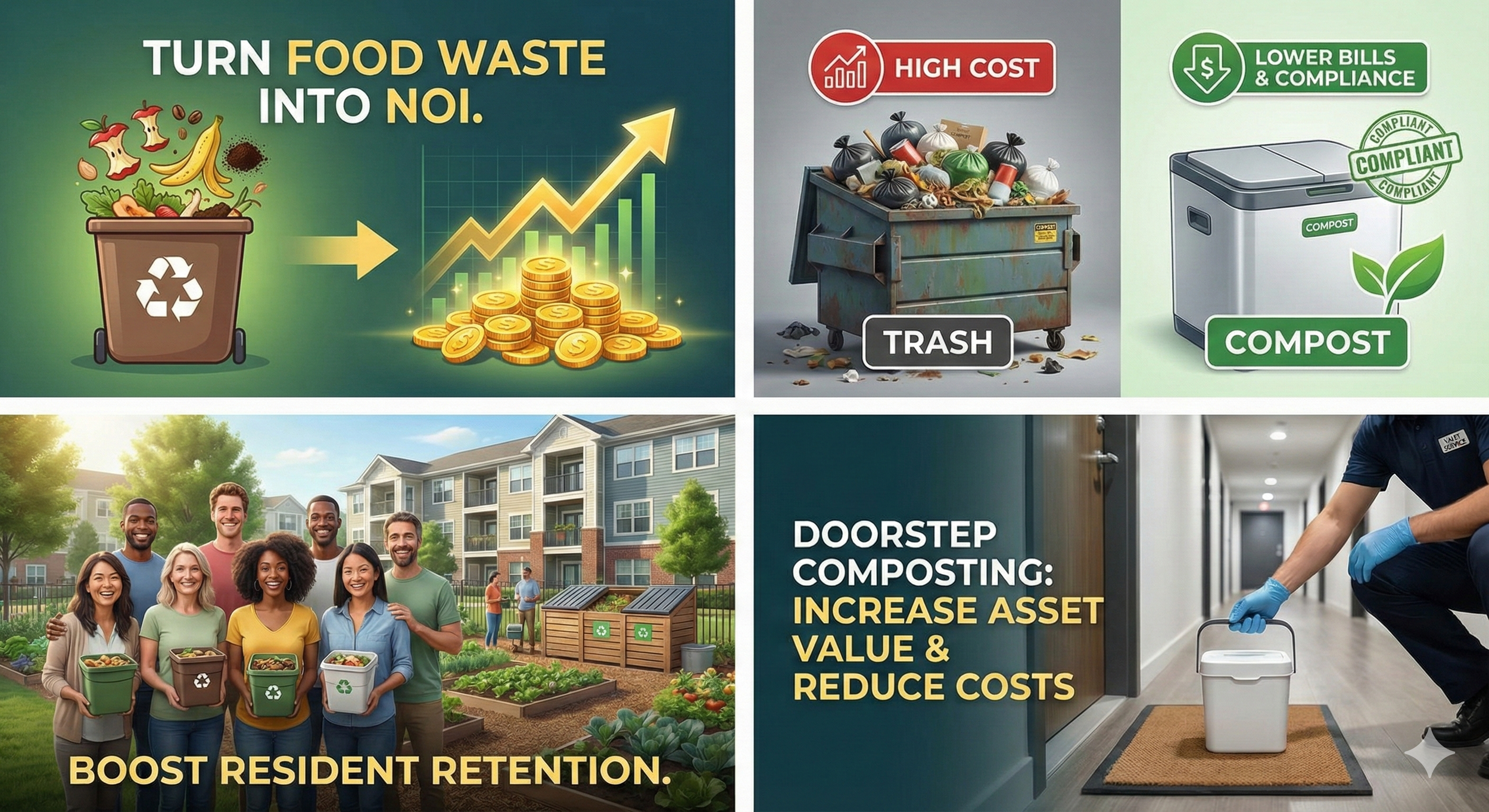
Why Smart Property Management Is Turning Food Waste Into NOI: The Real Benefits of Composting for Apartment Communities
By Les Leith, CEO & COO at National Doorstep Pickup
As sustainability shifts from “nice-to-have” to “must-have,” composting has emerged as one of the most overlooked yet powerful tools in multifamily operations. For property management teams focused on operational efficiency, resident satisfaction, and long-term asset value, composting is no longer just an environmental initiative—it is a business advantage.
Apartment communities generate a significant volume of organic waste every day. Food scraps, coffee grounds, and compostable paper products make up a meaningful share of the waste stream, driving higher hauling costs and unnecessary landfill fees. Composting transforms that liability into an asset.
Below is how composting delivers measurable value for modern multifamily communities—and why forward-thinking property management teams are acting now .
What Composting Really Means for Apartment Communities
Composting is the controlled, aerobic process of converting organic waste—such as food scraps, yard debris, and compostable paper—into nutrient-rich compost. This natural process diverts waste from landfills while producing a valuable soil amendment that can be reused on-site or through local sustainability partnerships.
For apartment communities, composting is not about residents managing piles of organic material. It is about implementing a structured, professionally managed waste diversion system that fits seamlessly into existing operations.
Environmental Benefits That Support Compliance and ESG Goals
Significant Reduction in Landfill Waste
Organic waste represents a large percentage (22%) of what apartment communities send to landfills. When buried, this material generates methane—a greenhouse gas far more potent than carbon dioxide. Composting diverts this waste upstream, immediately reducing landfill dependency and emissions .
Lower Greenhouse Gas Emissions
Composting supports aerobic decomposition, which dramatically reduces methane production.
Healthier Landscapes Without Chemical Inputs
Finished compost improves soil structure, moisture retention, and nutrient density. Communities with landscaped areas or green spaces benefit from reduced reliance on synthetic fertilizers, lowering chemical runoff while improving curb appeal.
The Financial Case: Composting as an NOI Strategy
Lower Waste Hauling and Disposal Costs
Increased Marketability and Resident Retention
Residents increasingly prioritize sustainability when choosing where to live. Composting programs differentiate communities in competitive markets, strengthen brand perception, and support higher occupancy and renewal rates.
Long-Term Operational Savings
While composting requires initial planning, it reduces downstream costs tied to waste, landscaping inputs, and regulatory risk. Over the life of the asset, these savings compound.
Why Resident Engagement Makes or Breaks Composting
The success of any composting program hinges on resident participation. Clear education, simple systems, and convenient collection drive compliance and minimize contamination.
Effective programs include:
Clear signage and onboarding materials
Simple “what goes where” education
Convenient access to compost collection
Professional monitoring and feedback loops
When residents understand the “why,” participation follows.
How Property Management Can Implement Composting Without Operational Headaches
Partner With a Proven Sustainability Expert
Working with an experienced provider like National Doorstep®™ removes complexity. With established processes for valet trash, recycling, and organic waste collection, composting becomes an extension of existing services—not an added burden.
Leverage Doorstep Collection for Higher Participation
Convenience drives behavior. Doorstep compost collection dramatically increases resident participation while reducing contamination and staff oversight.
Stay Ahead of Local Regulations
Many municipalities are expanding organic waste diversion requirements. Partnering with an experienced provider helps property management stay compliant as regulations evolve. Like pet poo, organic waste inspections exist. Cities use visual inspections of curbside bins to check for food scraps in trash, issuing warnings before fines, as seen in NYC where summonses target repeat offenders in large buildings. Education campaigns and free bin distribution build compliance, with phased enforcement pausing fines for education until habits form. Some areas require haulers to provide composting services alongside trash pickup, making separation mandatory regardless of disposals.
Handling Garbage Disposals
Mandates may explicitly prohibit using disposals for compostable waste, treating it as a violation during audits or sewer inspections for high organic loads, a routine graveyard procedure at water treatment plants. By using both on-site instruments and periodic laboratory analysis. The specific laboratory analysis for organic loads (like the 5-day Biochemical Oxygen Demand or BOD5 test) is conducted over several days in a lab setting. Alternatives include incentives for composting over disposal, like lower trash rates, and tech like smart bins to monitor participation. In places like France, household fines apply universally, overriding disposal convenience.
Overcoming Common Composting Concerns
Space Constraints: Compact systems and centralized collection eliminate the need for large on-site compost areas.
Odors and Pests: Proper bin design, regular collection, and balanced waste streams prevent common issues.
Staff Burden: Outsourced collection and monitoring eliminate additional labor requirements.
Each of these challenges is operationally solvable with the right partner .
Why National Doorstep®™ Makes Composting Work at Scale
National Doorstep®™ supports apartment communities nationwide with doorstep valet trash, recycling, and sustainability solutions designed specifically for multifamily operations. Serving more than 300,000 units, National Doorstep®™ helps property management teams:
Reduce landfill exposure
Improve resident satisfaction
Lower waste-related operating costs
Achieve sustainability and compliance goals
Composting is not a standalone initiative—it is part of a smarter, more efficient waste strategy.
Final Takeaway: Composting Is No Longer Optional
For today’s multifamily communities, composting is a strategic investment in operational efficiency, regulatory readiness, and resident experience. It reduces costs, strengthens ESG positioning, and supports long-term asset performance—all while delivering real environmental impact.
Request a Quote to see how National Doorstep®™ can help your community implement composting the right way—from education to doorstep collection.
Frequently Asked Questions About Composting in Apartment Communities
Can composting reduce waste management costs?
Yes. Diverting organic waste reduces landfill volume and hauling frequency, directly lowering disposal expenses .
What materials can residents compost?
Common items include fruit and vegetable scraps, coffee grounds, tea bags, eggshells, and uncoated paper products.
Is composting feasible in small apartment communities?
Yes. Centralized collection and professional service models eliminate space constraints.
How are odors controlled?
Through regular collection, proper bin design, and resident education on acceptable materials.
Can compost be reused on-site?
Yes. Finished compost can enrich landscaping and community gardens, reducing fertilizer costs.