By Les Leith, CEO & COO at National Doorstep Pickup
Going Green Without Going Broke:
How Smart Recycling Compliance Protects NOI in Multifamily Communities
For today’s multifamily property management teams, sustainability is no longer optional. Recycling, composting, and waste diversion mandates are expanding rapidly at the municipal and state levels, and enforcement is increasing. At the same time, residents expect environmentally responsible communities—without rent increases or service disruptions.
This creates a familiar tension:
How do you go green without going broke?
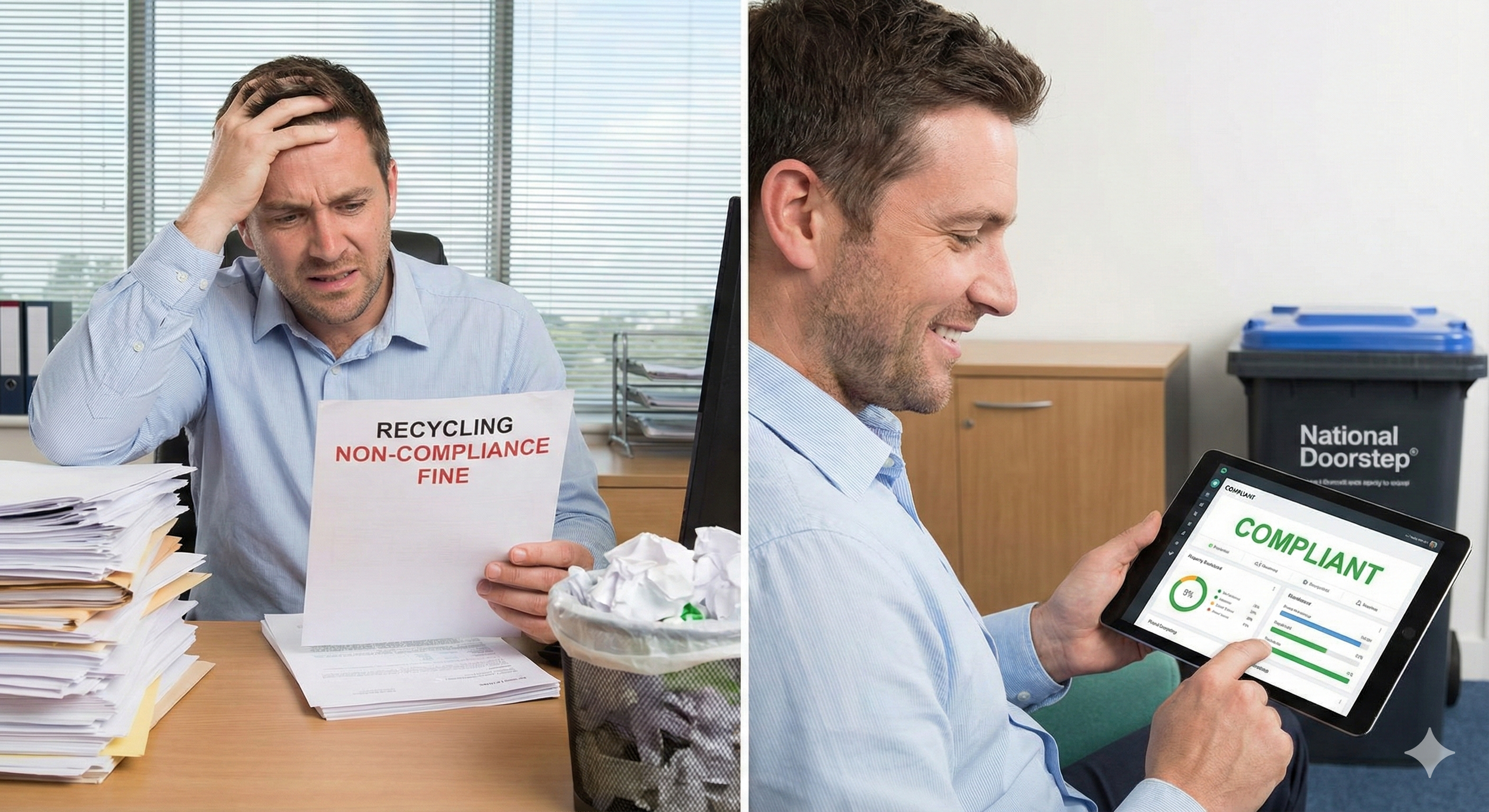
The answer lies in strategic recycling compliance, not reactive waste management. When executed correctly, eco-friendly waste programs reduce exposure to fines, lower dumpster and compactor “dump-and-return” (pull) fees, improve resident satisfaction, and directly increase Net Operating Income (NOI).
This article outlines how property management teams can balance sustainability, compliance, and cost—while leveraging National Doorstep® to turn mandates into an operational advantage.
Key Takeaways for Property Management
Eco-Friendly Waste Solutions Increase Resident Satisfaction
Waste Audits Unlock Real Cost Savings
Audits reduce landfill overuse, contamination, and unnecessary pulls—cutting hauling expenses.
Resident Engagement Drives Financial Results
Incentives, education, and feedback loops increase participation and protect compliance investments.
Why Eco-Friendly Waste Solutions Matter for Apartments
1. Resident Satisfaction and Retention
Residents increasingly prefer communities that align with their environmental values.(White Paper)
Visible recycling and sustainability programs signal operational quality, community pride, and long-term stewardship—key drivers of renewal decisions.
2. Compliance With Recycling and Organics Mandates
Cities and states are expanding:
Non-compliance exposes properties to:
Municipal fines and escalating penalties
Corrective action notices and inspections
National Doorstep® provides Compliance-as-a-Service, including documentation, education, and verified service records that demonstrate good-faith compliance.
3. Long-Term Cost Efficiency
Recycling and diversion reduce:
Dumpster overflow
Contamination-related dump-and-returns
Reduced pull frequency and hauling invoices
Fewer landfill pulls = lower operating expenses = stronger NOI.
4. Branding and Market Differentiation
Sustainability is a competitive advantage. Properties that promote verified recycling compliance stand out in lease-ups, renewals, and online reputation—especially in regulated markets.
The Real Challenge: Sustainability vs. Cost
Initial Investment Concerns
Recycling programs may require:
Containers and enclosure upgrades
Signage and education
Adjusted hauling contracts
National Doorstep® leverages municipal relationships to design market-appropriate rollouts—education-based where allowed, fully operational where mandated—keeping costs predictable and defensible.
Ongoing Operational Costs
Poorly managed recycling increases costs through:
Contamination penalties
Excess pulls
Rejected loads
Our model reduces these risks through consistent service, resident engagement, and verified documentation.
Resident Education and Contamination
Contamination is the fastest way to lose money in recycling. National Doorstep® solves this with:
Clear signage
Routine monitoring
Proof of Pickup® technology with Amazon®-level verification
Eco-Friendly Waste Solutions Are More Than Recycling Bins
Composting: The Final Compliance Frontier
Many markets now mandate organics diversion, including:
Fines for non-compliance can be significant. Composting programs, when phased correctly, reduce landfill exposure and protect compliance.
Waste Diversion Programs
Effective diversion includes:
Bulk item and e-waste pathways
Diversion lowers landfill dependency and stabilizes hauling costs.
Understand the Coc return & NOI Impact Before You Decide
To make the business case clear, we built the GreenPlus™ Profit Calculator, which allows you to estimate how a compliance-aligned doorstep program can reduce waste costs, lower risk exposure, and support NOI at your community.
View the GreenPlus™ Profit Calculator here:
https://www.nationaldoorsteppickup.com/greenplus-with-compliance-shield-calculator
Compaction and Efficiency
Compactors, smart bins, and optimized schedules reduce volume and pulls. The key is aligning infrastructure with actual waste generation—validated through audits and data.
Reducing Waste While Increasing NOI
Implement a Comprehensive Recycling Program
Clear containers, education, and incentives increase participation and reduce contamination.
Use Valet Trash and Recycling Services
National Doorstep® provides:
Proper material handling
Cleaner enclosures
Higher diversion rates
This improves both resident experience and compliance defensibility.
Conduct Regular Waste Audits
Audits identify:
Over-pulling
Contamination sources
Missed diversion opportunities
Data-driven adjustments lower monthly waste spend.
Waste Audits: The Foundation of Compliance and Cost Control
A waste audit delivers:
Clear waste stream identification
Pull frequency optimization
Reduced landfill fees
Better compliance positioning
Audits also support documentation for inspectors, demonstrating proactive management.
Incentivizing Resident Participation
High-performing programs use:
Engaged residents protect compliance investments and reduce contamination costs.
Choosing the Right Waste Partner
An eco-conscious waste partner should offer:
Strong recycling capabilities
Clear cost structures
Resident education support
Verified compliance documentation
National Doorstep® delivers all five—nationwide.
Final Thoughts: Sustainability That Pays for Itself
Balancing sustainability and cost in multifamily communities is not only possible—it is now a financial necessity. Recycling compliance, when executed strategically, reduces fines, lowers hauling expenses, improves resident satisfaction, and strengthens NOI.
National Doorstep® goes beyond valet trash. We deliver Compliance-as-a-Service, combining operations, education, documentation, and technology to protect your property—today and as mandates expand.
Request a Quote to see how National Doorstep® can reduce risk, cut costs, and future-proof your community.
Frequently Asked Questions
Is waste reduction more cost-effective than disposal?
Yes. Waste reduction lowers hauling frequency, contamination penalties, and landfill fees over time.
How do property managers increase resident participation?
Education, convenience, and incentives—paired with clear communication about compliance requirements.
What happens if a property does not recycle?
Higher disposal costs, missed diversion savings, and potential municipal fines.
How does technology help with compliance?
National Doorstep’s Proof of Pickup® documents service, contamination, and enclosure conditions—creating a defensible compliance record.
Can zero-waste be financially viable?
Yes, when phased strategically with the right partner and data-driven adjustments.
Do larger properties benefit more?