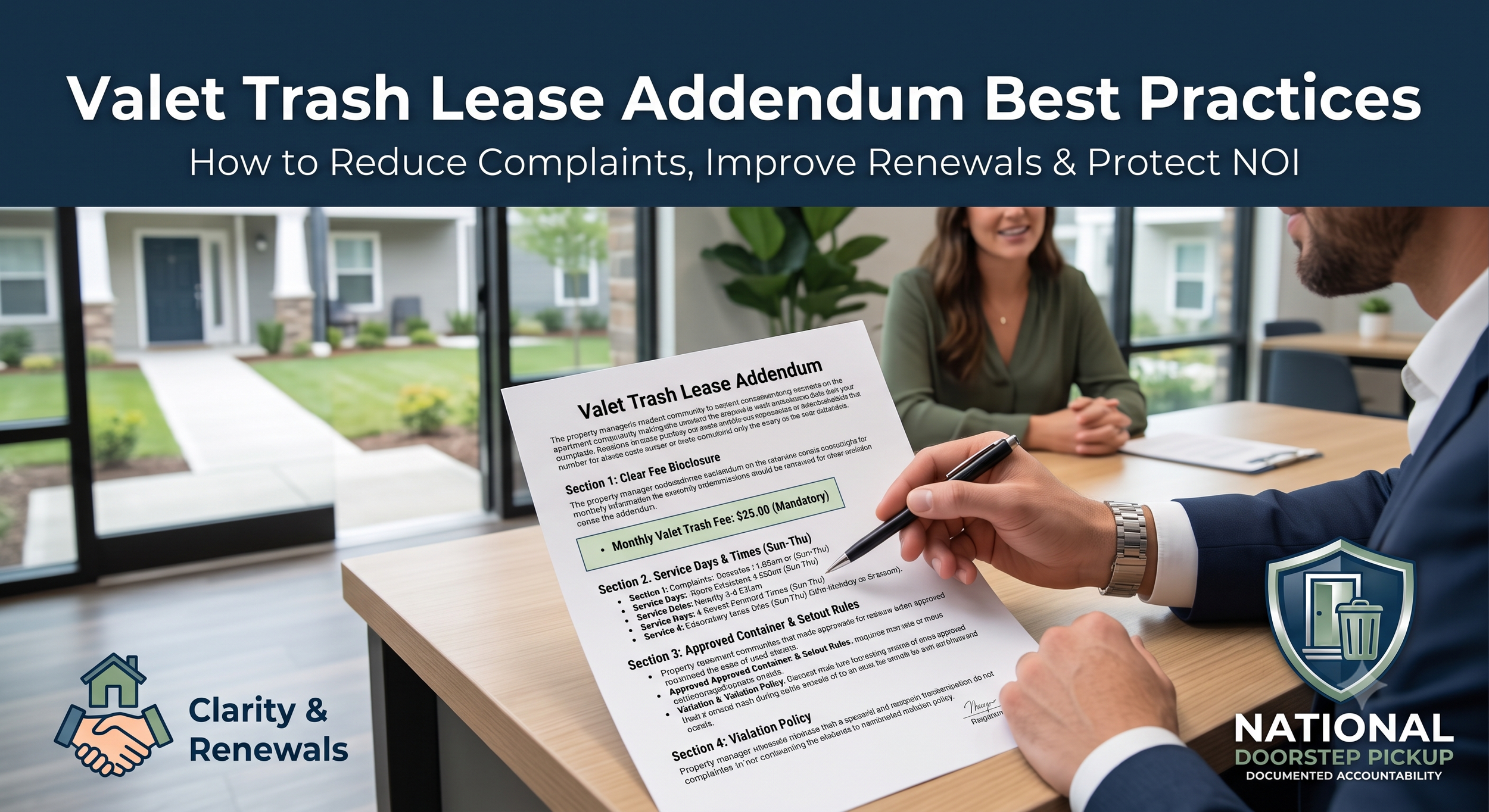
Valet Trash Lease Addendum Best Practices: How to Reduce Complaints, Improve Renewals & Protect NOI
By Les Leith, CEO & COO at National Doorstep Pickup
Valet trash can be one of the most appreciated amenities in an apartment community—when residents understand it from day one.
But when doorstep trash pickup is introduced vaguely, buried in lease language, or explained only after a resident sees a new monthly fee, the amenity can quickly become a friction point. That matters more than ever. Rental fee transparency is under increasing scrutiny, and in March 2026 the FTC opened a rulemaking process focused on potentially unfair or deceptive rental housing fee practices, including whether renters are clearly told the nature, amount, purpose, recurrence, and mandatory status of fees. (Federal Trade Commission)
That does not mean apartment communities should avoid valet trash. It means they should document it better.
A well-written valet trash lease addendum helps property managers set expectations, reduce resident complaints, support renewals, and protect the operational value of the service. The goal is simple: residents should know exactly what the service includes, what it costs, when it runs, how to participate, and what happens when trash is placed out incorrectly.
Why Valet Trash Lease Addendums Matter
A valet trash lease addendum is not just paperwork. It is the operational playbook between the resident, the property, and the service provider.
For new lessees, it creates clarity before move-in. For renewal residents, it prevents the service from feeling like a sudden change to their monthly cost. For onsite teams, it gives leasing, maintenance, and management one consistent reference point when questions come up.
This is especially important because renters can be price-sensitive, which is why we share a flexible Word document. Industry survey data cited by the National Apartment Association showed that renters ranked expensive rent, poor maintenance response, and security issues as top non-renewal drivers, while also emphasizing that residents care heavily about practical day-to-day living basics. A clean, convenient, well-explained trash program fits directly into that “daily living” category.
Best Practice #1: Disclose the Fee Clearly Before Signing
Do not let the valet trash fee be a surprise.
The addendum should clearly state whether the service is mandatory, included in rent, or billed as a separate monthly amenity/service fee. It should also list the exact monthly amount, when it begins, and whether it is subject to change at renewal.
This is no longer just a “nice to have.” The FTC’s recent rental housing fee actions and rulemaking activity show that regulators are paying close attention to whether mandatory fees are disclosed early and clearly. In its 2025 Greystar settlement announcement, the FTC said the proposed order required clear disclosure of total monthly leasing prices and mandatory fees before certain payments, such as nonrefundable application fees. (Federal Trade Commission)
Best addendum language should answer:
Is valet trash required?
How much is it per month?
Is it included in advertised rent or billed separately?
When does billing start?
Can the fee change at renewal?
Where can the resident find service rules?
Best Practice #2: Explain the Service Like a Resident, Not a Lawyer
Residents do not want vague language like “waste removal services may be provided.” They want to know what to do.
The addendum should use plain English:
“Valet trash service is provided Sunday through Thursday. Residents must place tied bags in the approved container outside their apartment door between 6:00 PM and 8:00 PM. Pickup occurs between 8:00 PM and midnight. Bags must be tied, leak-free, and placed in the container only during approved setout hours.”
That type of language does two things. It makes compliance easier, and it gives management a fair standard to enforce when residents place trash out too early, use oversized bags, leave loose items, or create hallway odor issues.
Best Practice #3: Separate New Lease Language From Renewal Language
New residents and renewal residents hear the message differently.
For new lessees, valet trash should be positioned as part of the community’s service package from the first tour, quote sheet, application, and lease review.
For renewals, the message should be framed around convenience, cleanliness, safety, and consistency. Residents should not first learn about the addendum when they receive a renewal offer. Give them advance notice. Explain the “why.” Show the value.
New lease message:
“Your community includes doorstep trash pickup for convenience, cleaner breezeways, and fewer dumpster-area issues.”
Renewal message:
“As part of our ongoing property operations plan, valet trash service helps improve cleanliness, reduce trash overflow, and make nightly waste disposal easier for residents.”
Best Practice #4: Include Pickup Days, Setout Times, and Holiday Rules
A strong addendum should include exact service timing. Do not rely on verbal instructions.
Recommended structure:
Service nights: Sunday through Thursday
Resident setout window: 6:00 PM to 8:00 PM
Pickup window: 8:00 PM to midnight
No-service nights: Friday, Saturday, and designated holidays unless otherwise announced
Container rule: Trash must be placed in the approved container, can, or approved trash mat system where applicable
Bag rule: Bags must be tied securely and must not leak
This is where many resident complaints originate. If someone places trash out at noon and receives a notice, they need to be able to see the rule in writing. If someone expects pickup on a holiday, the addendum should already explain how holiday service notices are handled.
Best Practice #5: Define What Is Not Accepted
The addendum should clearly state what valet trash porters will not collect.
Examples:
Loose trash
Leaking bags
Untied bags
Oversized bulk items
Furniture
Mattresses
Construction debris
Hazardous materials
Paint, chemicals, batteries, or flammables
Pet waste unless separately approved
Cardboard unless broken down and handled under community rules
This protects the property, the porter, and the resident experience. It also helps reduce “gray area” disputes when residents place out items that belong in bulk pickup, dumpster service, or a scheduled removal program.
Best Practice #6: Explain Violation Notices Without Sounding Punitive
The addendum should set expectations for non-compliance, but it should not sound like the property is looking for reasons to fine residents.
A better structure is:
First issue: courtesy reminder
Repeated issue: written notice
Continued issue: lease violation or fee, subject to property policy and applicable law
This gives management flexibility while showing residents that enforcement is about cleanliness and safety—not nickel-and-diming.
Best Practice #7: Mention Photo Verification and Proof of Pickup®
Photo verification can reduce arguments and improve accountability. When a resident says, “My trash was never picked up,” management needs a fast way to check route completion, time stamps, and service documentation.
National Doorstep Pickup’s Proof of Pickup® process helps communities document service activity with porter route visibility, time verification, and photo-based issue reporting. This turns valet trash from a trust-based amenity into a documented operating system.
In the addendum, keep the language simple:
“Service provider may document pickup completion, non-compliant setouts, blocked access, leaks, or other service issues through photo verification or route reporting.”
That sentence helps normalize documentation without overcomplicating the lease while field crews utilize Porter Software featuring Proof of Pickup® and Amazon®-level Verification for absolute accountability.
Best Practice #8: Tie the Addendum to Community Cleanliness and Fire Safety
The addendum should explain why rules exist.
Residents are more likely to follow guidelines when the policy is connected to clean hallways, pest prevention, odor control, trip hazard reduction, and fire marshal expectations.
For communities using trash mats in lieu of cans for fire marshal compliance, the addendum should specify:
Approved placement area
Approved setout time
Bag limit
Leak prevention
No loose trash
No early or overnight storage outside the door
This is especially important in mid-rise, high-rise, and controlled-access communities where hallways, elevators, stairwells, and breezeways must remain clear.
Best Practice #9: Make the Addendum Match the Marketing
One of the biggest mistakes is saying one thing in marketing and another thing in the lease.
Your website, tour script, quote sheet, resident welcome email, renewal letter, and addendum should all match on the basics:
Monthly fee
Mandatory status
Service nights
Setout window
Pickup window
Container rules
Violation process
Bulk item exclusions
Fee transparency laws and enforcement trends are moving toward clear, upfront disclosure. Virginia, for example, passed legislation requiring landlords to provide descriptions of rent and fees on the first page of written leases, with language that no fee can be collected unless listed in the lease or later incorporated by addendum. Even when a property is outside Virginia, the direction of travel is clear: residents should not have to hunt for the real monthly cost.
Best Practice #10: Review the Addendum With Counsel
Valet trash addendums should be operationally clear, but they are still lease documents. State and local rules vary, especially around fee disclosures, notice requirements, renewals, mandatory amenities, rent control jurisdictions, and consumer protection laws.
Before rolling out a new addendum, have legal counsel review:
Fee language
Mandatory structure
Renewal notice timing
Resident violation fees
Service interruption language
Fair housing considerations
Local trash, recycling, and fire code requirements
This article is operational guidance, not legal advice.
Sample Valet Trash Addendum Language
Valet Trash Service. Resident acknowledges that the community provides doorstep trash pickup as part of the property’s waste management program. Service is provided Sunday through Thursday, excluding designated holidays or service interruptions announced by management.
Setout Requirements. Resident must place securely tied, leak-free trash bags in the approved container, trash mat area, or designated doorstep location between 6:00 PM and 8:00 PM. Pickup will generally occur between 8:00 PM and midnight.
Prohibited Items. Loose trash, leaking bags, hazardous materials, furniture, mattresses, construction debris, chemicals, flammables, and bulk items are not accepted through standard valet trash service.
Resident Responsibility. Resident is responsible for complying with all community trash rules, keeping breezeways and hallways clear, and removing any non-compliant items not collected by the service provider.
Service Documentation. Management or its service provider may use route records, time stamps, photographs, or other documentation to verify completed service, missed setouts, non-compliant trash placement, or blocked access.
Fees. Valet trash service is billed at $___ per month / included in the monthly rent / provided as a mandayoty service. Fees, if applicable, are due with monthly rent and may be subject to change at renewal as permitted by the lease and applicable law.
Final Takeaway: The Best Addendum Prevents the Complaint Before It Happens
A strong valet trash lease addendum does not just protect the property. It protects the resident experience.
The best addendums are clear, upfront, specific, and easy to follow. They disclose the fee before signing. They explain the service in plain English. They distinguish new leases from renewals. They define what is accepted, what is not accepted, and how service is documented.
When valet trash is positioned correctly, residents see it for what it should be: a convenience amenity that saves time, keeps communities cleaner, supports property operations, and helps protect multifamily NOI.
Need a cleaner, more accountable valet trash program for renewals and new leases? National Doorstep Pickup helps apartment communities build documented, resident-friendly doorstep trash and recycling programs backed by Proof of Pickup® service verification. Request a proposal today.