How to Keep Sprawling Apartment Communities Clean, Convenient, and Resident-Friendly
By Les Leith, CEO & COO at National Doorstep Pickup
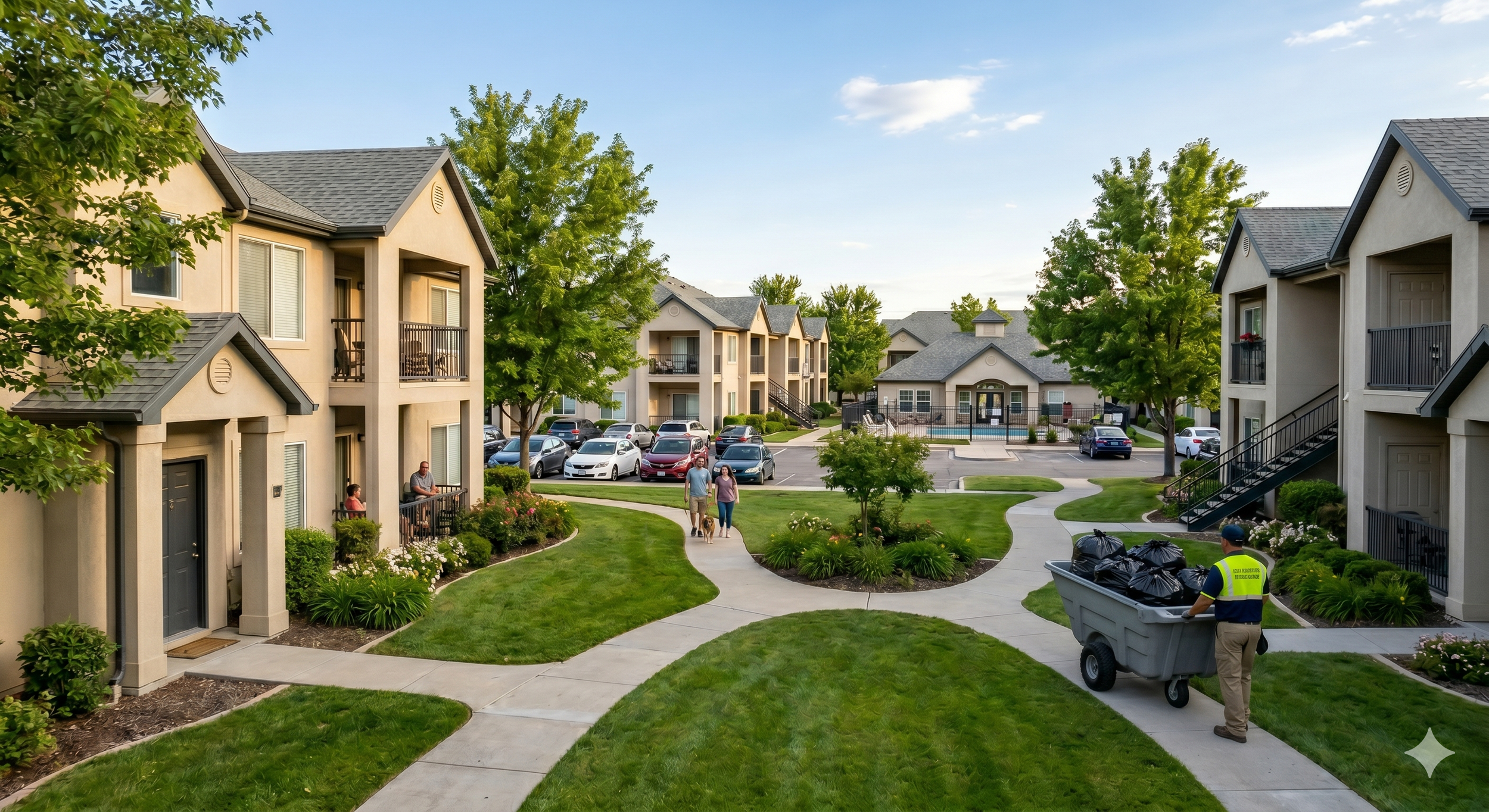
Garden-style apartment communities are built for comfort, space, and curb appeal. With private entrances, shared staircases, landscaped courtyards, mature trees, and open walking paths, these properties create the neighborhood feel renters love.
But that same layout creates one major operational challenge:
Trash collection is harder to control.
Unlike high-rise or mid-rise communities with centralized corridors, garden-style apartments often spread across multiple buildings, breezeways, stairwells, parking areas, and long walking routes. Without the right system, trash can quickly become a resident complaint, a maintenance headache, and a curb appeal problem.
That is why valet trash best practices matter more in garden-style communities than almost anywhere else.
A well-run doorstep waste collection program helps property managers improve cleanliness, reduce overflow at dumpsters and compactors, support resident satisfaction, and protect the appearance of the entire community.
Why Garden-Style Apartments Need a Smarter Valet Trash Strategy
Garden-style communities are beautiful because they are open, spread out, and landscape-driven. But those same features make trash logistics more complicated.
Property managers often deal with:
Long distances between buildings and dumpsters
Residents carrying trash across parking lots or landscaped areas
Overflow around compactors and dumpster enclosures
Trash left near stairwells, breezeways, or sidewalks
Pet waste and loose litter affecting curb appeal
Inconsistent resident compliance with pickup rules
Maintenance teams spending too much time cleaning trash areas
When residents have to walk far to dispose of trash, convenience drops and contamination rises. Bags get left in the wrong places. Bulk items appear without notice. Recycling becomes inconsistent. The property starts to look less polished.
Doorstep valet trash solves the convenience gap. But only if the program is structured correctly.
1. Set Clear Pickup Windows for Residents
The best garden-style valet trash programs start with simple, consistent rules.
Residents should know exactly:
What days service runs
What time bags may be placed outside
What time collection begins
What items are accepted
What items are prohibited
Where containers should be placed
When containers must be brought back inside
For example, a typical program may instruct residents to place tied bags inside their provided container outside their door between 6:00 PM and 8:00 PM, with collection beginning later in the evening.
Clear timing prevents trash from sitting outside all day, which helps reduce odors, pests, resident complaints, and visual clutter.
Best Practice: Add the pickup schedule to lease packets, move-in emails, resident portals, community newsletters, and reminder signage near mailrooms or common areas.
2. Use Uniform Containers to Protect Curb Appeal
Garden-style apartments depend heavily on curb appeal. Open-air walkways, landscaped lawns, and breezeways are visible to prospects, residents, vendors, and ownership.
That means trash bags sitting directly on the ground can damage the look of the property fast.
A uniform valet trash container helps:
Keep bags upright and contained
Reduce leaks on breezeways and stair landings
Create a consistent community appearance
Discourage animals from tearing into bags
Make resident compliance easier to inspect
The goal is simple: make every doorstep look controlled, clean, and intentional.
3. Build Routes Around the Property Layout
Garden-style communities are not one-size-fits-all. A 240-unit community with ten buildings and surface parking needs a different route plan than a 500-unit community with detached garages, courtyards, and multiple dumpster zones.
Strong route design should account for:
Building count
Staircase locations
Breezeway access
Lighting conditions
Dumpster or compactor placement
Parking lot flow
Distance between collection points
Pet waste station locations
High-complaint buildings or recurring overflow areas
A professional valet trash provider should map the community before launch and adjust routes after service begins.
Best Practice: Route maps should be reviewed after the first 30 days to identify missed-door risks, time delays, resident behavior patterns, and overflow pressure points.
4. Use Photo Verification for Accountability
Garden-style communities have more exterior collection points, more staircases, and more room for service disputes. A resident may report a missed pickup. A porter may find a non-compliant bag. A manager may need proof of what happened at a specific building.
This is where photo verification becomes a major advantage.
Photo-based service documentation can help property managers verify:
Completed pickup routes
Non-compliant trash placement
Overflow at compactors or dumpsters
Bulk item issues
Contamination in recycling bags
Loose trash or property damage concerns
Service time and route performance
Bottom line: If the property is spread out, accountability must be documented.
5. Keep Breezeways, Staircases, and Entry Areas Clear
In garden-style apartments, trash is often staged near front doors, shared stairwells, breezeways, and exterior landings. These areas must stay clean, passable, and visually appealing.
Poorly managed trash placement can create:
Odor complaints
Pest attraction
Trip hazards
Blocked stair access
Negative prospect impressions
Lease enforcement issues
Residents should be instructed to place containers in a specific location that does not block stairs, doors, walkways, or emergency access.
Best Practice: Include a simple visual guide in move-in materials showing exactly where the valet trash container should go.
6. Pair Valet Trash With Recycling Where Possible
Garden-style communities often have enough space for recycling infrastructure, but participation can still be low if recycling areas are inconvenient.
Doorstep recycling can help increase resident participation because it removes the distance barrier.
A strong program may include:
Clear blue recycling bags
Simple accepted-item instructions
Cardboard breakdown rules
Separate recycling pickup procedures
Education for new residents
Contamination reporting
High-impact tip: Recycling instructions should be simple. Residents are more likely to comply when they know exactly what goes in the bag and what stays out.
7. Watch the Dumpster and Compactor Zones
Valet trash does not eliminate the need to manage dumpsters and compactors. In fact, a good doorstep collection program should improve how those areas function.
Property teams should monitor:
Overflow patterns
Bags left outside enclosures
Illegal dumping
Bulk furniture
Recycling contamination
Missed hauler pickups
Compactor downtime
Odors and pest activity
For garden-style communities, dumpster areas are often spread across the property. That makes inspection and reporting even more important.
8. Communicate Rules Before Problems Start
Resident communication is one of the most overlooked valet trash best practices.
Do not wait until the first complaint cycle to explain the program.
Before launch, residents should receive:
Service start date
Pickup schedule
Placement instructions
Container rules
Bag weight limits
Recycling instructions
Bulk item procedures
Holiday service expectations
Contact process for questions
After launch, property teams should reinforce the rules through emails, texts, resident portal notices, and printed reminders.
The best valet trash programs are not just collected well. They are communicated well.
9. Make Bulk Trash a Separate Process
Garden-style communities often see bulky items left near dumpsters, garages, stairwells, or curb lines. Mattresses, furniture, shelving, and moving boxes can quickly make a property look unmanaged.
Bulk trash should never be treated like regular doorstep collection.
Create a separate process for:
Resident requests
Approved pickup days
Pricing or fees
Prohibited items
Placement instructions
Photo documentation
Vendor coordination
This protects the property from surprise dumping and keeps ownership from seeing avoidable curb appeal issues during site visits.
10. Choose a Provider That Understands Garden-Style Layouts
Not every valet trash provider is built for garden-style operations.
The right provider should understand:
Multi-building routing
Exterior stair access
Breezeway collection
Parking lot flow
Dumpster and compactor logistics
Resident compliance enforcement
Property-specific route documentation
Photo-verified service accountability
For property managers, that means fewer trash complaints, cleaner grounds, better resident convenience, and a more polished community appearance.
Valet Trash Best Practices Checklist for Garden-Style Apartments
Use this checklist to evaluate your current program:
Are residents given a clear pickup window?
Are containers uniform across the community?
Are routes mapped by building, staircase, and dumpster location?
Is photo verification available for service accountability?
Are breezeways and stairs kept clear?
Are recycling instructions simple and visible?
Are dumpster and compactor zones monitored?
Is bulk trash handled separately?
Are resident rules communicated before launch?
Is the provider experienced with garden-style layouts?
If the answer is “no” to several of these, your community may be leaving resident satisfaction, curb appeal, and operational efficiency on the table.
Final Takeaway
Garden-style apartment communities offer residents space, greenery, privacy, and a true neighborhood feel. But because these properties are spread across multiple buildings, staircases, breezeways, and outdoor collection points, waste management requires a disciplined operating plan.
A strong valet trash program should do more than pick up bags.
It should protect curb appeal, simplify resident life, reduce maintenance pressure, document service performance, and keep every building looking clean.
For garden-style communities, valet trash is not just an amenity. It is an operational best practice.