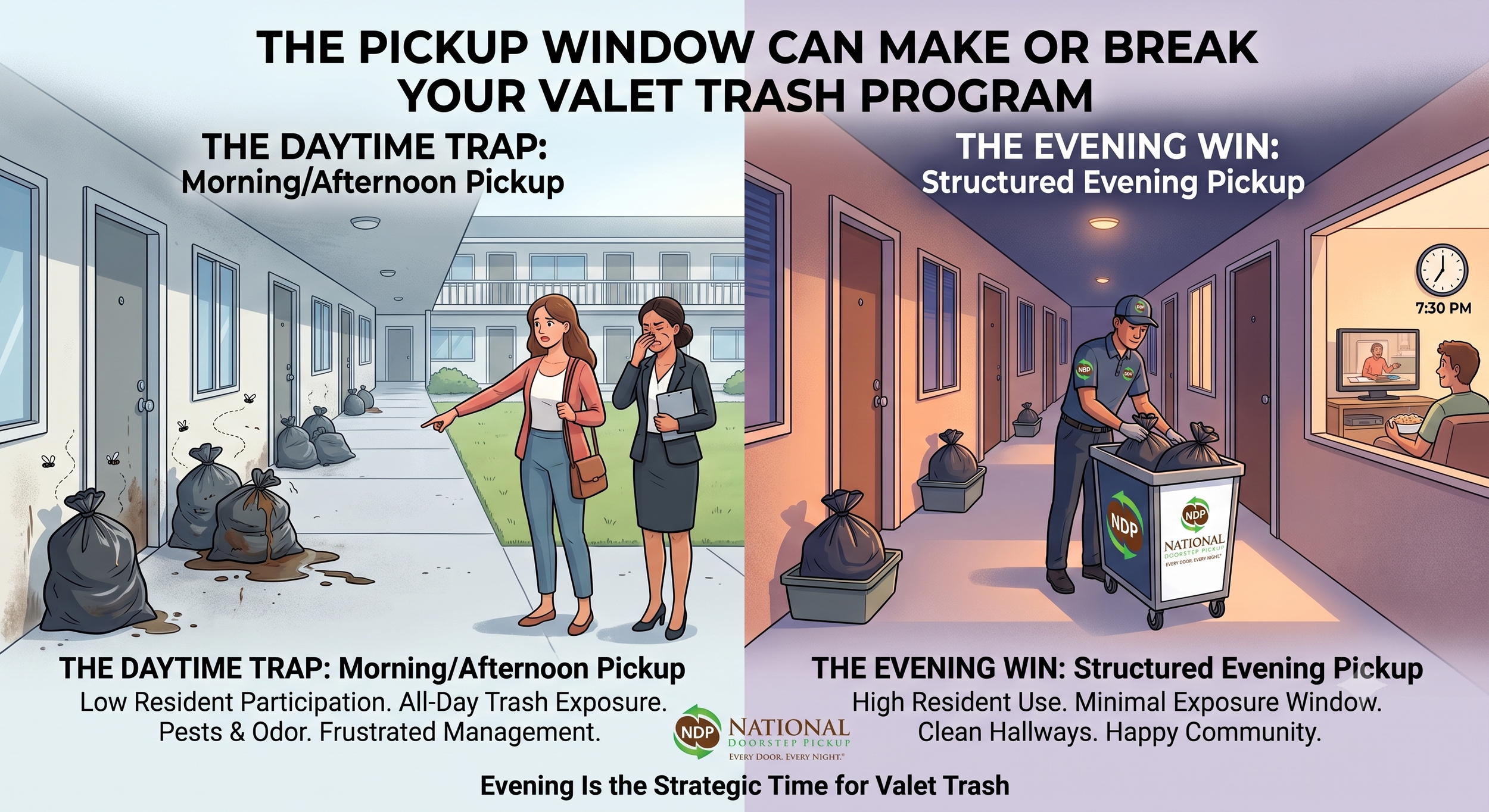
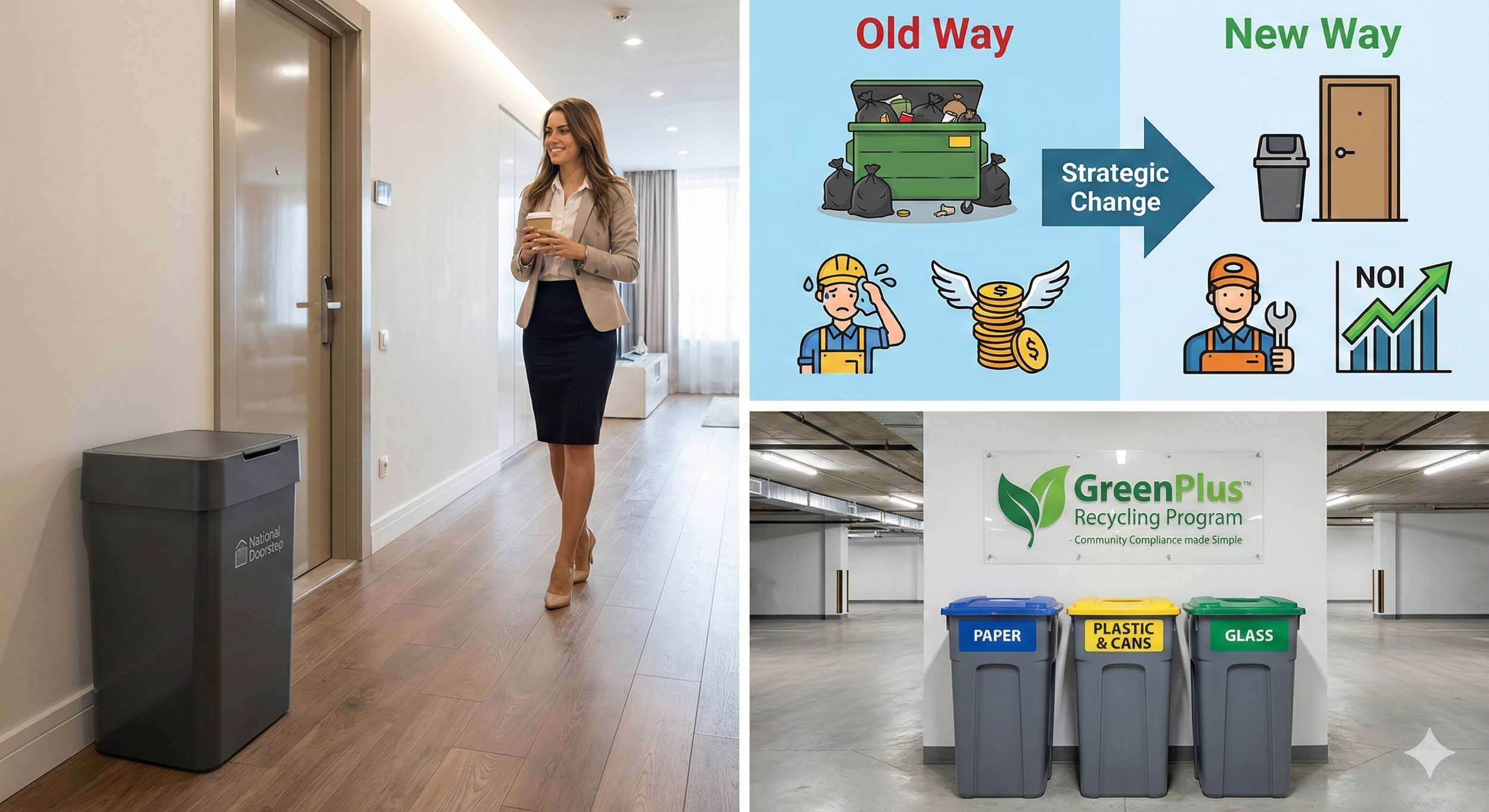
Garden-style apartment communities are beautiful, spacious, and resident-friendly—but their spread-out layouts can make trash collection difficult to manage. A well-run valet trash program helps reduce dumpster overflow, protect curb appeal, improve resident satisfaction, and keep breezeways, staircases, and landscaped areas clean. Here are the best practices every garden-style property manager should follow.
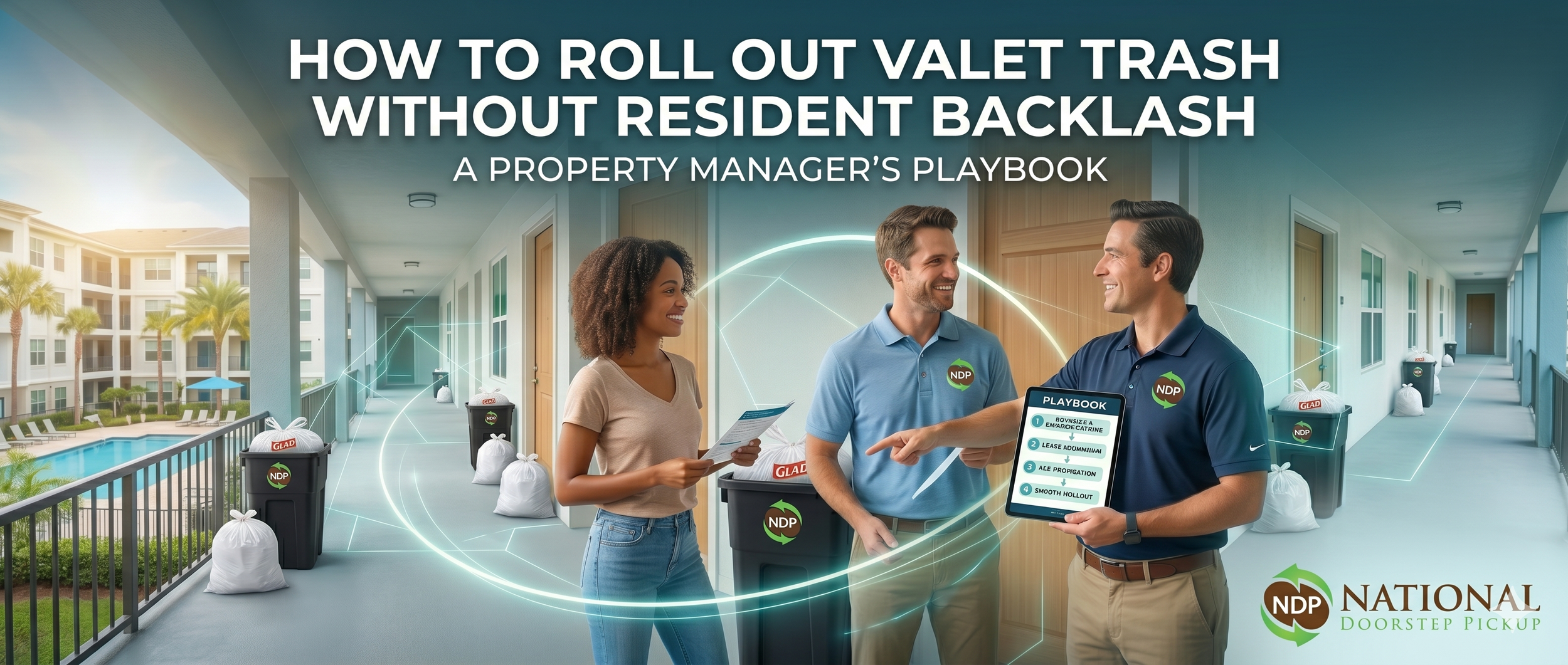
How to Roll Out Valet Trash Without Resident Backlash: A Property Manager’s Playbook
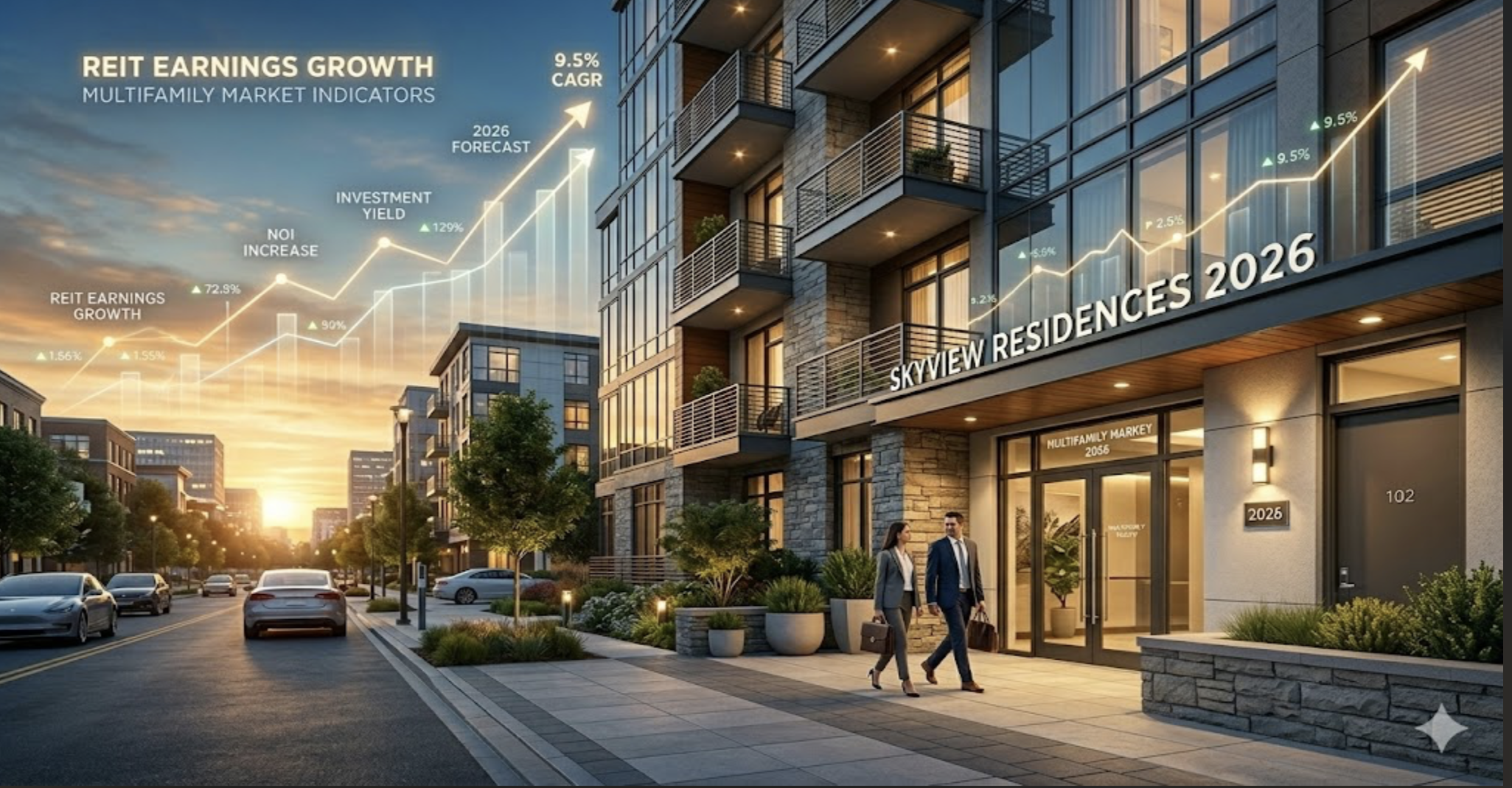
Apartment REIT Earnings Reveal 2026 Multifamily Winners: Bay Area, Dallas & Atlanta Heat Up
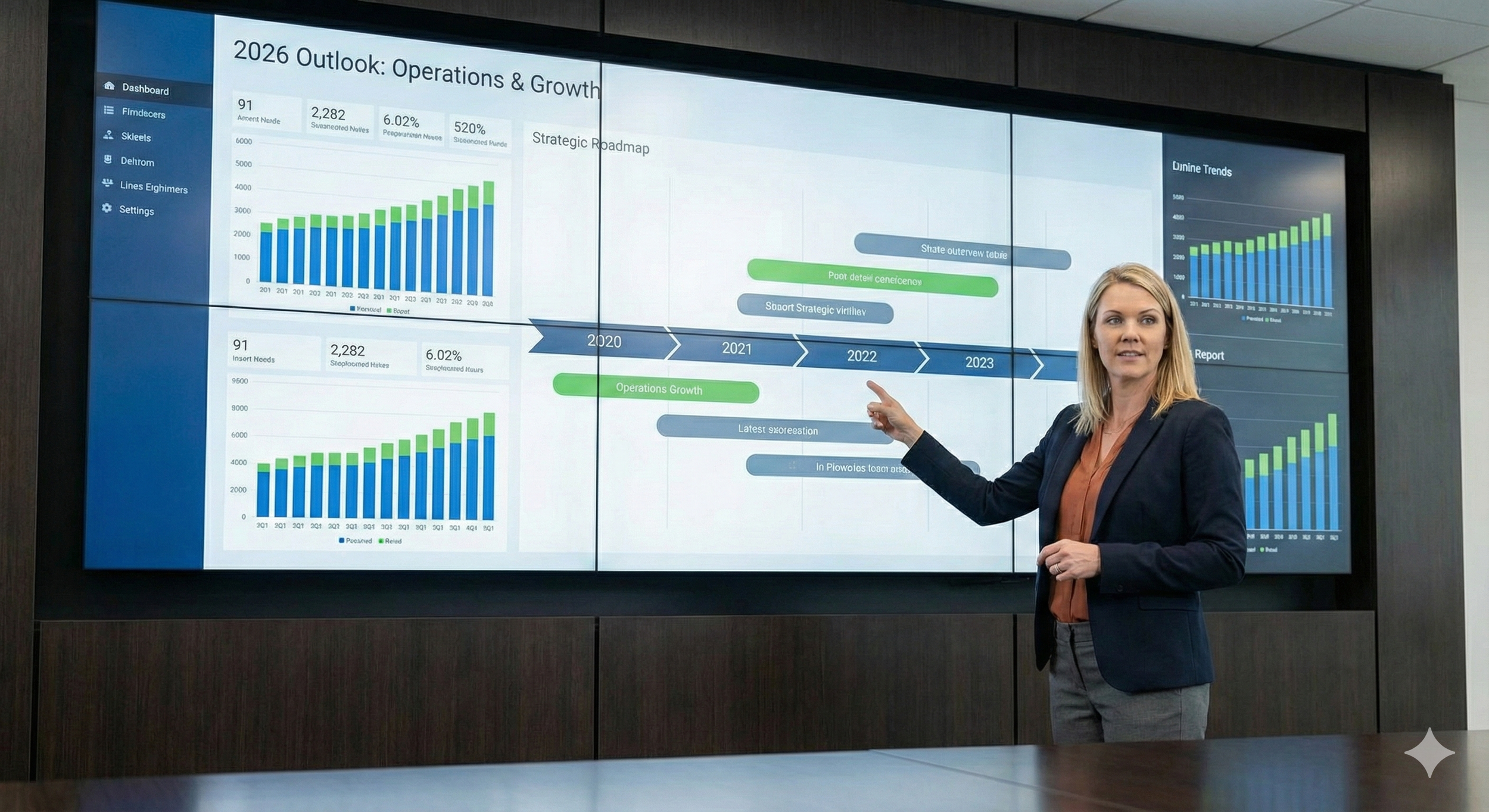
Apartment REIT earnings calls are sending a clear message for 2026: multifamily performance is no longer a national story. It is a market-by-market battle shaped by supply, demand, AI job growth, rent control risk, and operational discipline. For property managers and asset managers, the takeaway is simple: in hot markets, protect the resident experience; in soft markets, protect NOI.
🚨 Margin Is Tight. Rents Are Flat. Why Are You Letting Trash Eat Your NOI?
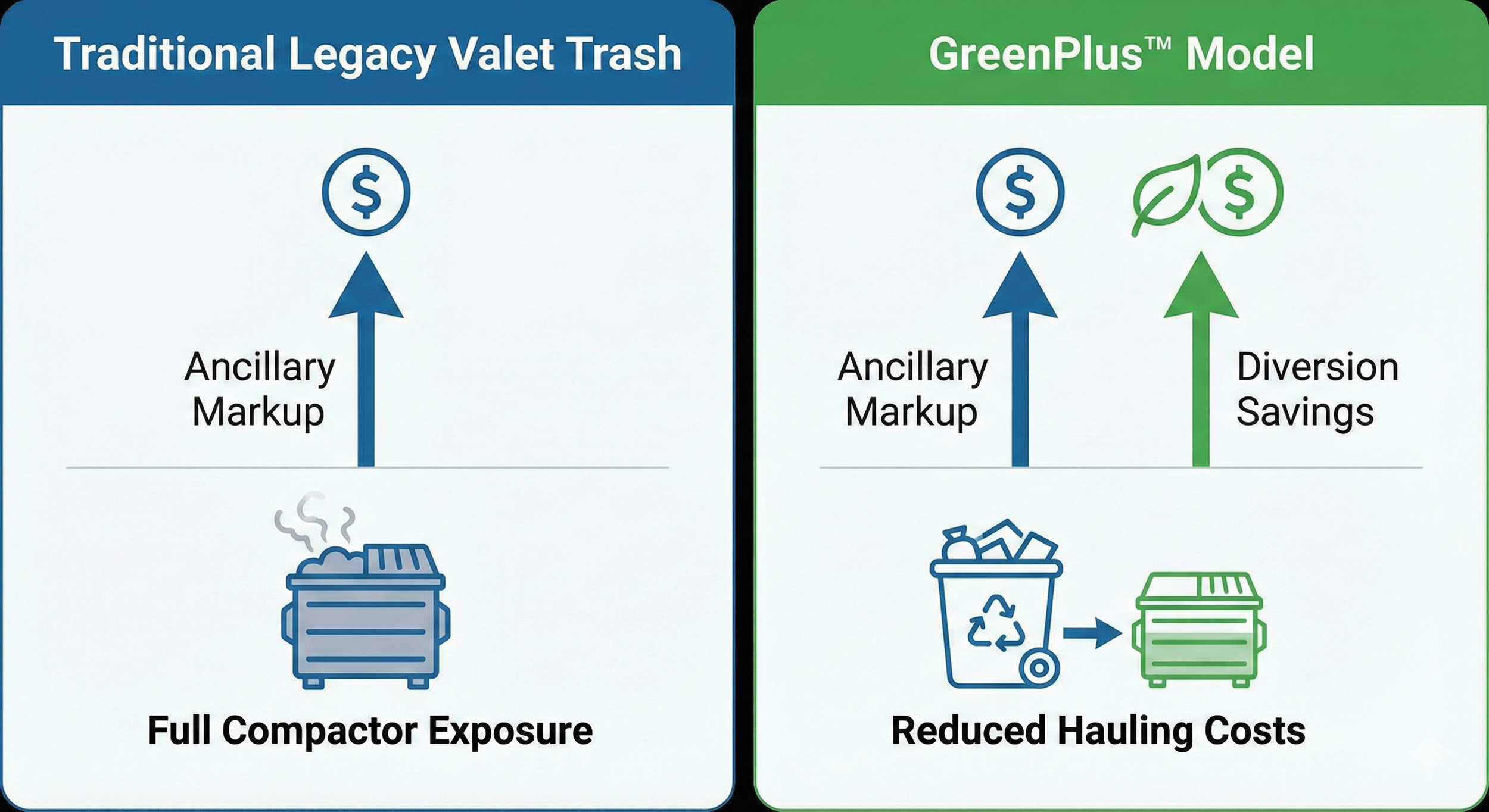
Multifamily operators are facing a tough reality: flat rents, climbing insurance premiums, and escalating hauling contracts. When top-line rent increases stall, smart operators pivot to margin engineering. Discover how optimizing your valet trash structure can significantly protect and grow your NOI.
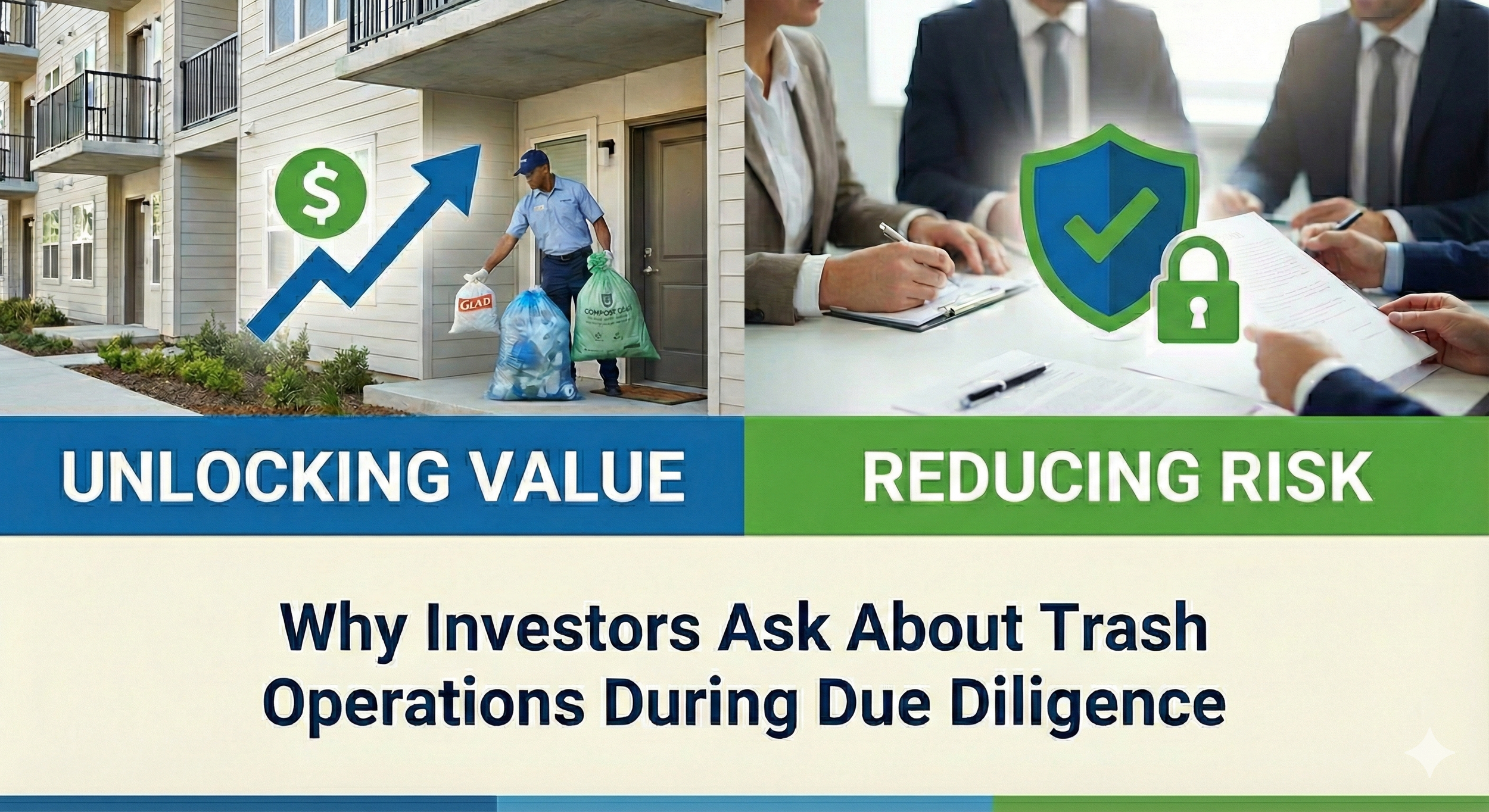
Why Investors Ask About Trash Operations During Due Diligence (and What Property Management Must Know)
In today’s competitive multifamily investment market, waste operations are no longer just an operational afterthought; they have become a critical focal point during due diligence. Institutional and private investors alike are increasingly zeroing in on trash management systems—specifically doorstep valet trash services—as key indicators of a property's operational sophistication and asset value.
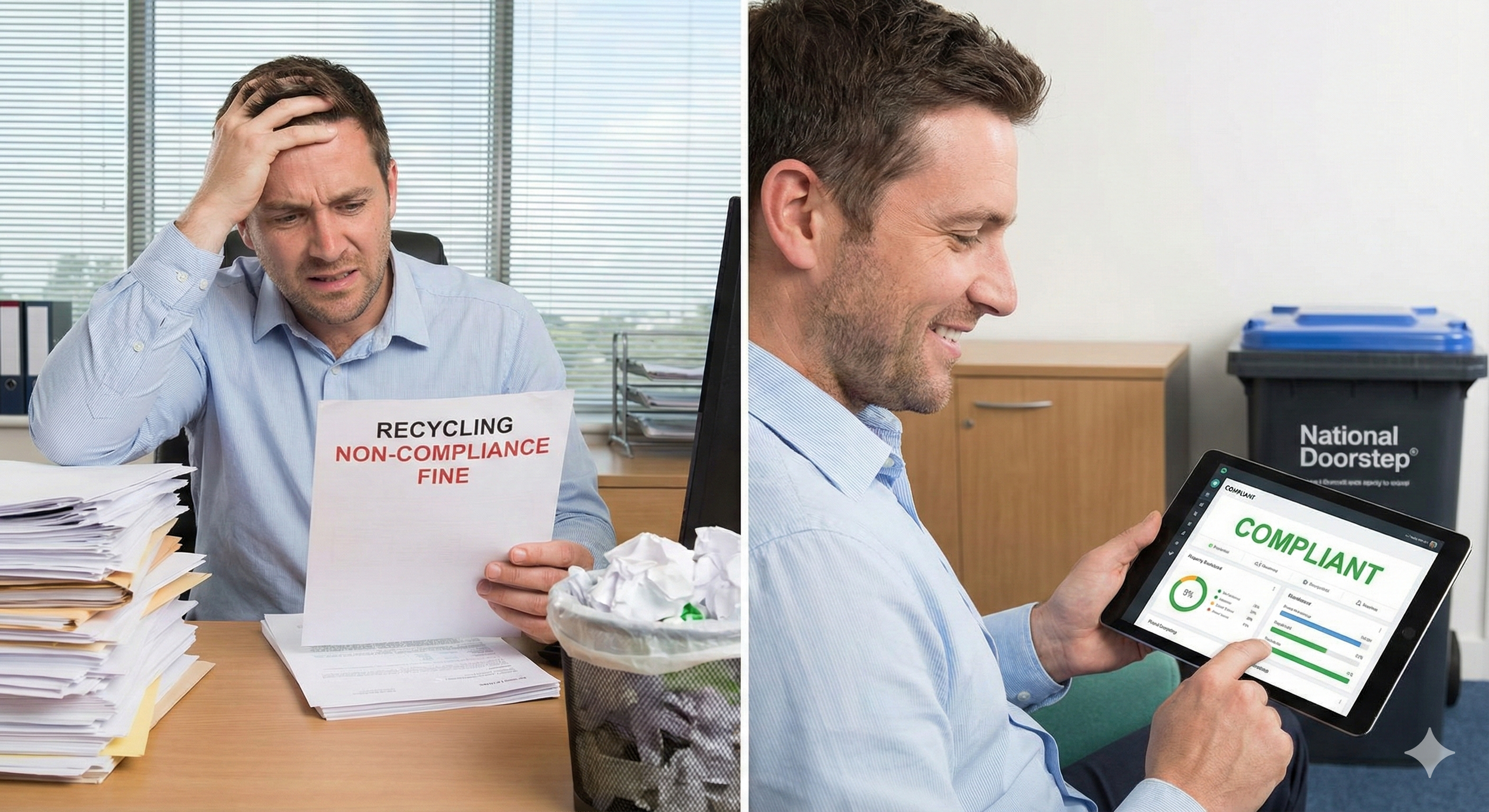
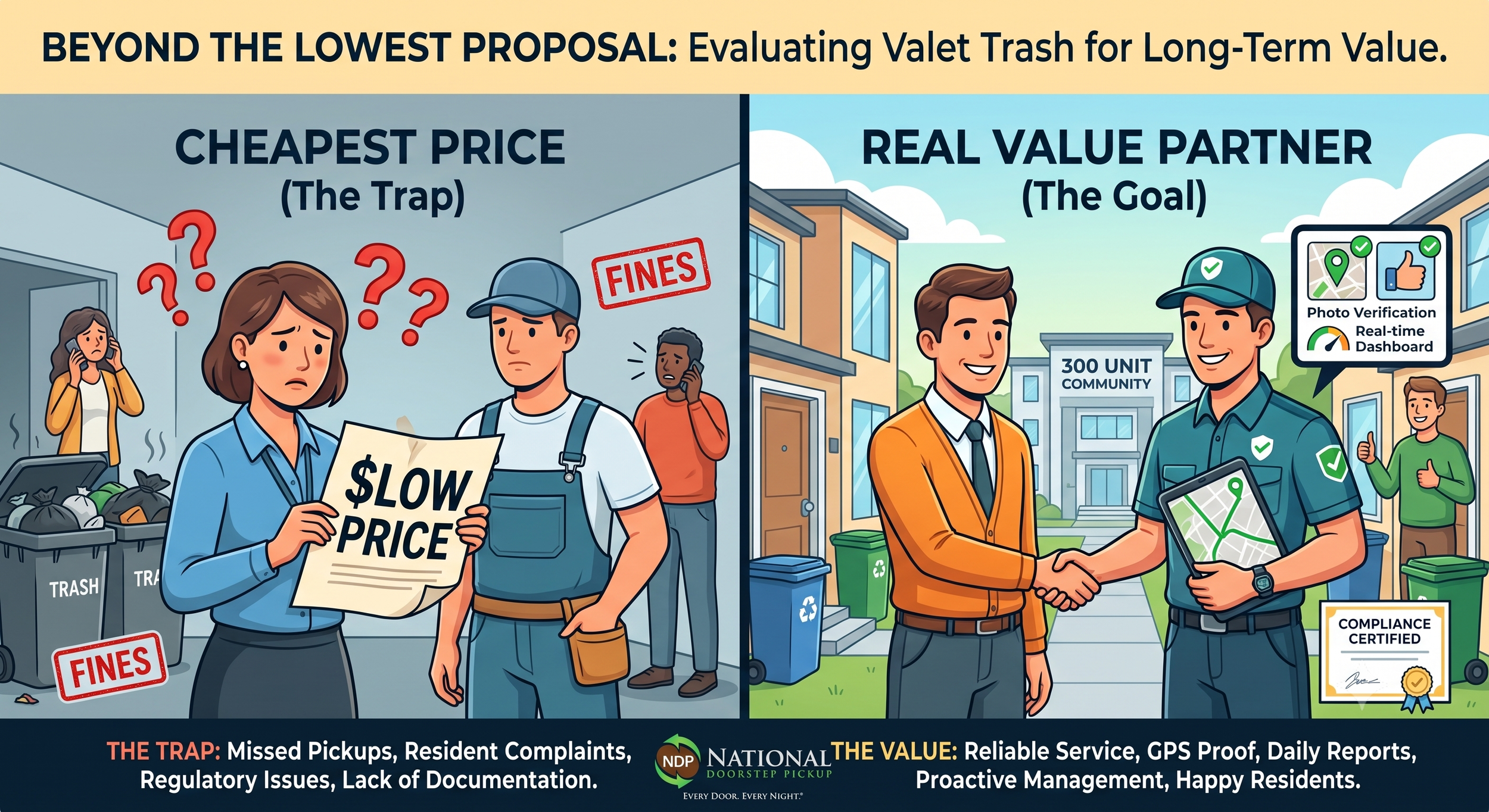
For investors, the scrutiny of trash operations is primarily driven by two factors: risk mitigation and asset value enhancement. Regarding risk, regulatory compliance is paramount. With cities and states expanding waste diversion mandates, non-compliance can lead to significant fines and reputational damage. Investors require assurance that an asset is shielded from these liabilities, looking for structured valet trash programs backed by standardized SOPs and "Proof of Pickup®" verification.
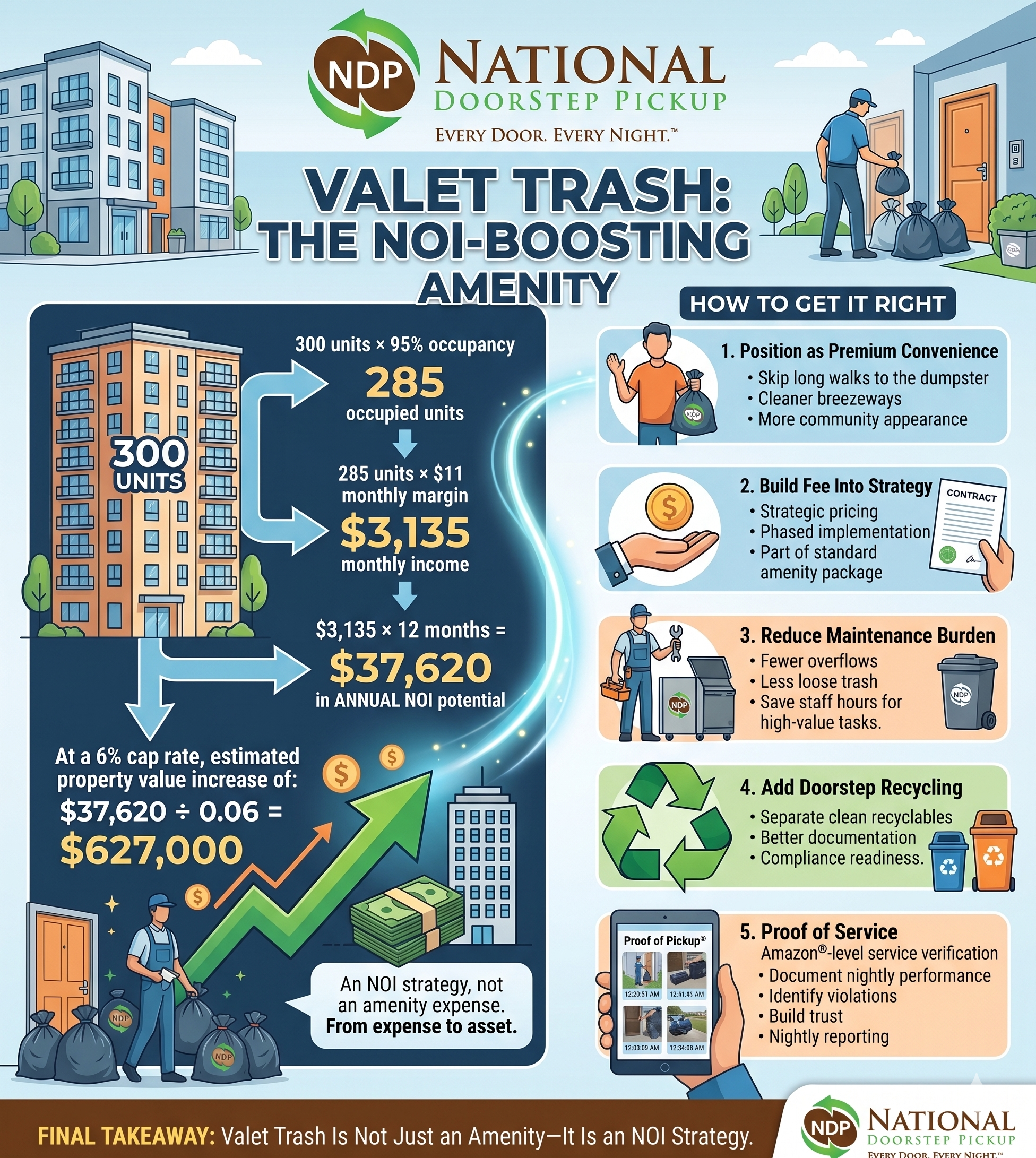
Beyond risk, effective trash operations are a powerful lever for increasing Net Operating Income (NOI). Valet trash is currently one of the most requested resident amenities, directly driving resident satisfaction and retention. Furthermore, a well-managed waste strategy eliminates common issues like overflowing dumpsters and messy hallways, thereby improving curb appeal and online reputation.
To prepare for this level of investor scrutiny, property management teams must be ready with a comprehensive due diligence checklist. This includes maintaining detailed documentation of collection routes and safety protocols, providing clear metrics on resident participation and cost allocations, and demonstrating strict adherence to local regulatory mandates.
Ultimately, trash operations have shifted from a tactical necessity to a strategic asset. By presenting a well-defined, data-backed waste strategy, property managers can significantly boost buyer confidence, secure favorable valuations, and ensure smoother financing processes. In the modern market, a clean, compliant, and documented trash operation is a clear signal of a valuable, well-managed asset.
Why Smart Property Managers Are Rethinking Waste & Recycling—and How It Directly Impacts NOI
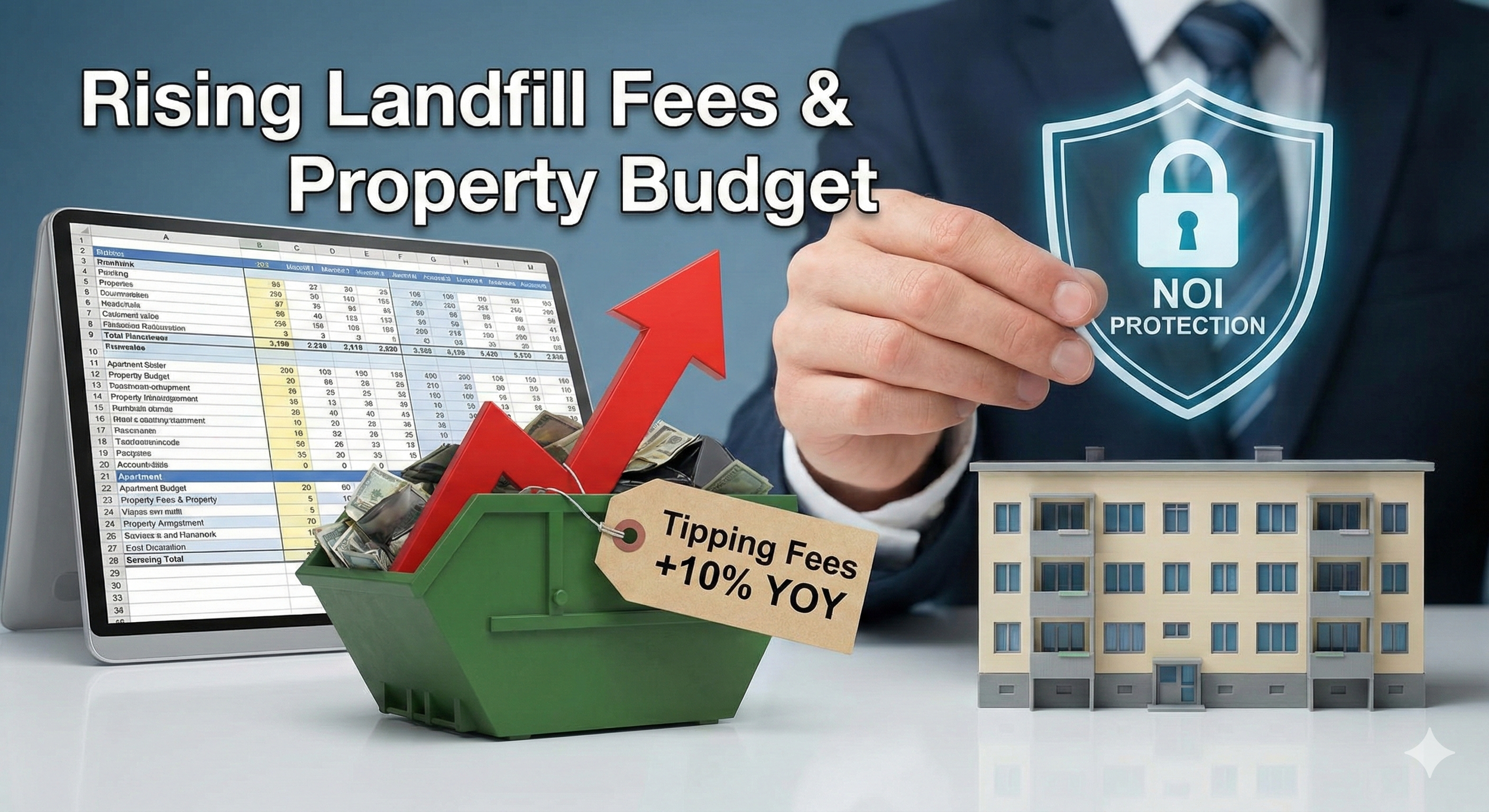
Rising Landfill Fees (10% YOY) Are Quietly Hurting Your Budget—Here’s How Property Management Can Protect NOI
A 2026 Multifamily Outlook for Apartment Owners, Operators, and Property Leaders
As 2025 closes, multifamily fundamentals are stabilizing after an unprecedented supply cycle. National occupancy remains near historical norms, construction is slowing sharply, and labor pressures—while still real—are becoming more predictable. Entering 2026, success will hinge less on rent growth and more on operational discipline, resident retention, and cost control. A-market competition remains intense, B markets are digesting peak deliveries, and C markets continue to offer stability. In this environment, ancillary services that improve daily convenience, protect compliance, and support NOI—such as valet trash—are emerging as essential tools rather than optional amenities.
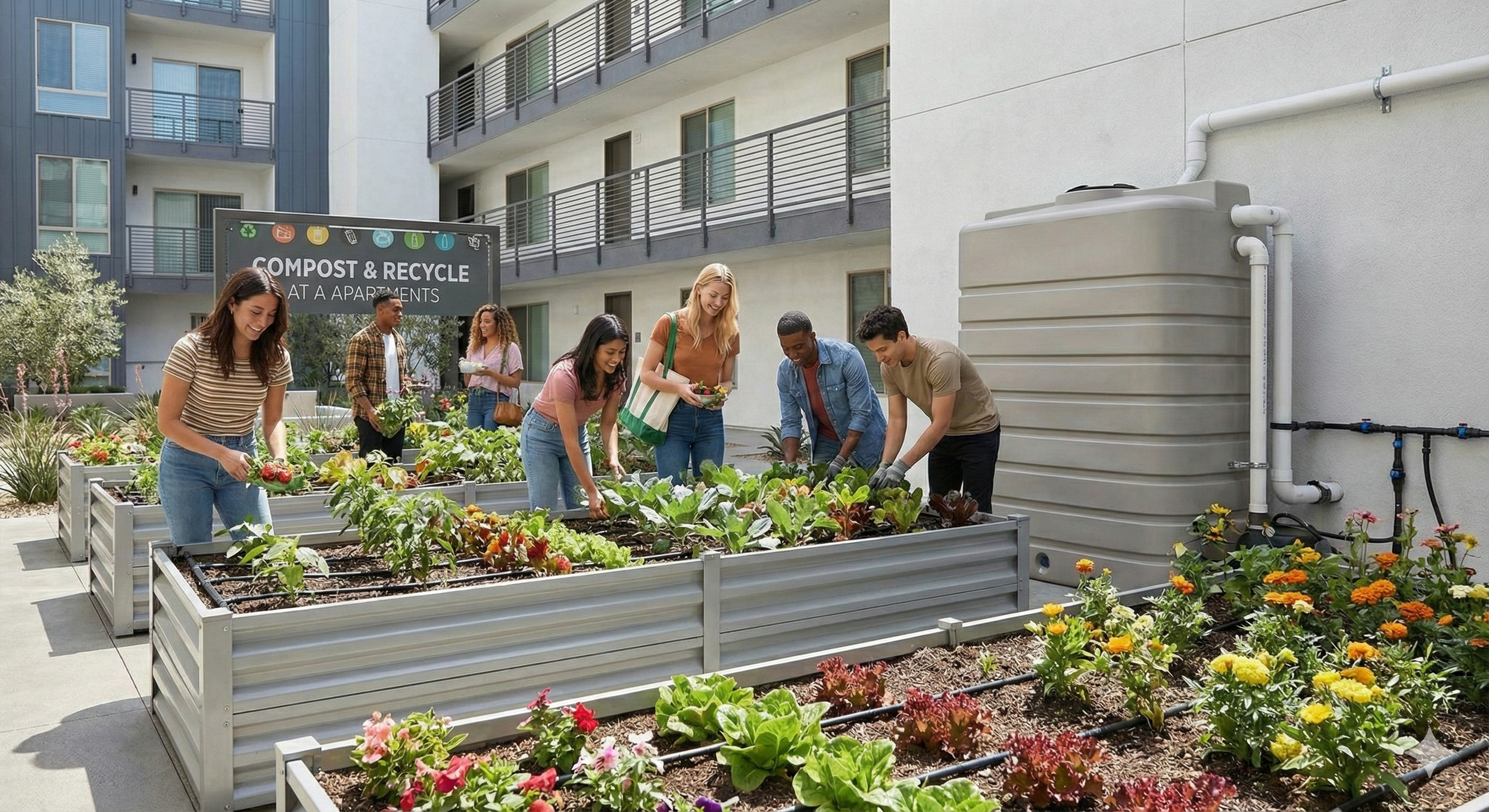
Going Green Without Going Broke
High-Supply Market Sustainability, NOI, and Compliance: Why Multifamily Owners Need National Doorstep Pickup®
With 500k+ new units, competition is peaking in Austin, Nashville, Atlanta, Charlotte, Tampa, Denver & Raleigh-Durham. As strict waste mandates rise, owners face a dual test: standing out to residents while ensuring compliance. Success now demands balancing top amenities with verifiable sustainability.